
Water parameters
Overview
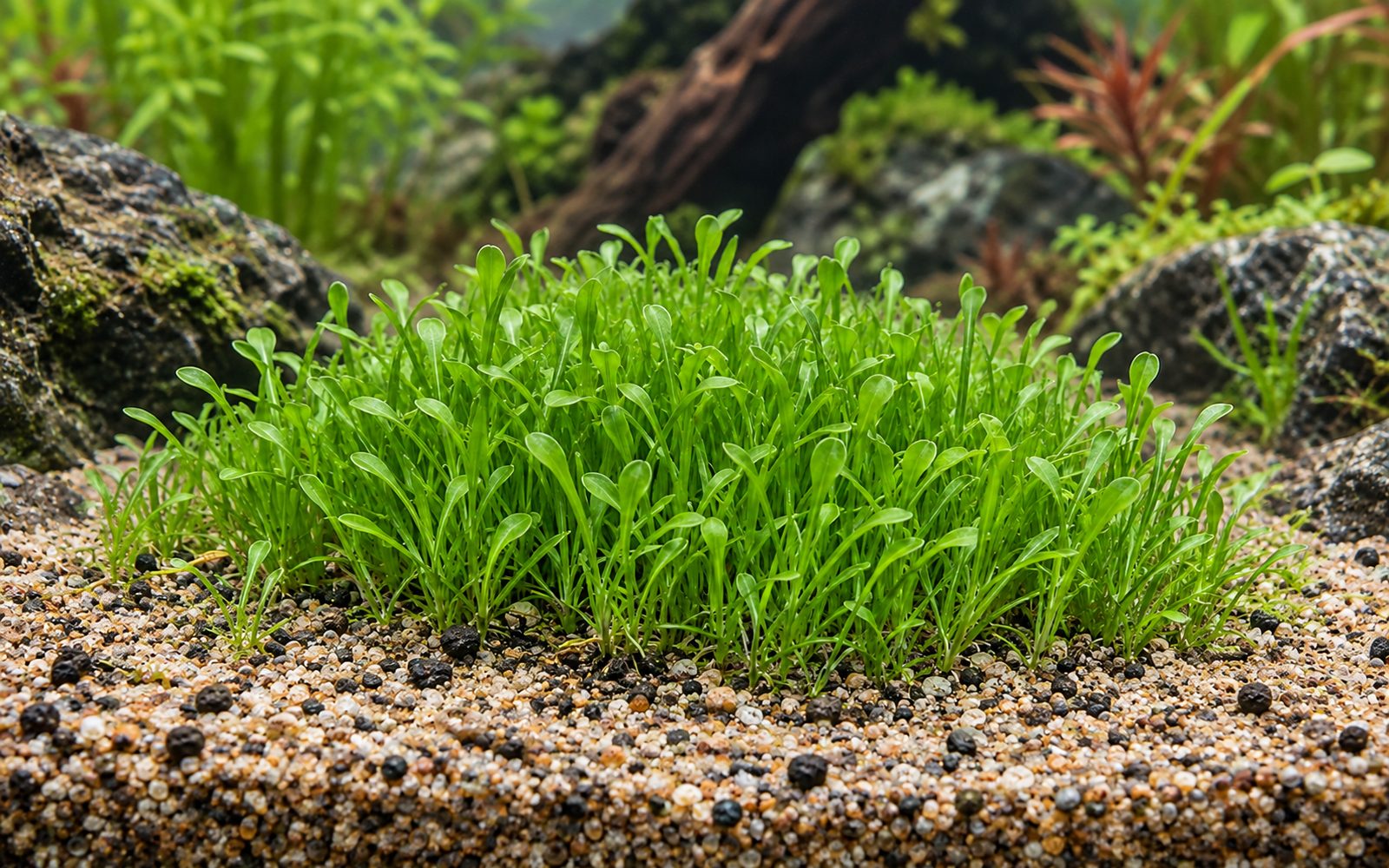
Lilaeopsis brasiliensis is a foreground plant that looks like grass at first glance, but on closer inspection the tip of each leaf widens like a small spoon. The leaves are 5–8 cm tall and stand upright and firm; spreading by underground runners, it gradually forms a neat, low lawn. It belongs to the carrot family (Apiaceae).
Its main advantage over dwarf hairgrass is that it stays short enough not to need trimming. It grows slowly; it also survives under medium light in an aquarium without CO₂, but spreading can take months. With CO₂ and good light the carpet closes much faster.
Planting and Placement
- Divide the clump from the nursery pot into small, rooted bunches with a few leaves each.
- Plant the bunches with tweezers 2–3 cm apart and 1–2 cm deep.
- Plant it in the foreground, in an open area that gets light; along the edges of stones it gives a natural lawn look.
Care and Fertilization
- Light: Medium; under strong light it stays shorter and denser.
- CO₂: Not required, but noticeably speeds up spreading.
- Fertilizer: Root tabs and a nutrient-rich substrate; liquid fertilizer also helps.
- Trimming: Usually not needed. Old, browning leaves are plucked off at the base.
Propagation
It spreads on its own by underground runners; new clumps appear at the ends of the runners. Once rooted, these can be separated and planted elsewhere.
Common Problems
- Algae on the leaf tips: because it grows slowly it can catch algae; keep the photoperiod balanced; grazing shrimp and otocinclus help.
- Very slow spreading: lack of CO₂ and nutrients; be patient.
- Yellowing: nutrient deficiency, especially nitrogen and iron.
Hobbyist notes
Things you won't find in books, learned by trial and error. The most helpful ones are on top.
Change history and contributors
- Page created · October 16, 2026