
Water parameters
Overview
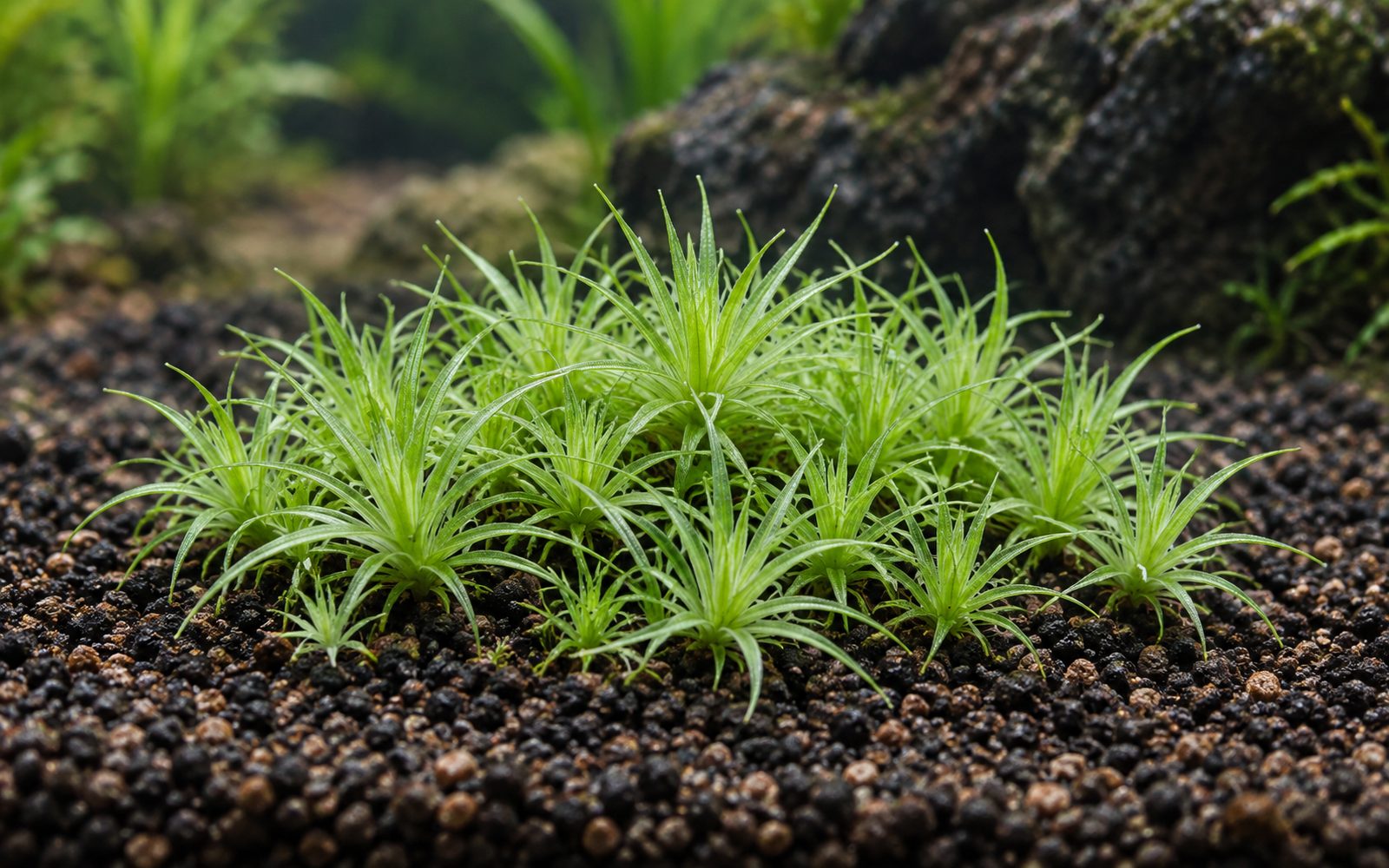
Eriocaulon cinereum is a small rosette plant that grows in rice paddies and seasonally flooded areas in the warm regions of Asia, Africa and Australia. Its thin, pointed, slightly translucent light green leaves open outward from the center, forming a 3–5 cm wide rosette that looks like a star or a small firework. The plant stays at 5–8 cm.
The genus Eriocaulon is known among aquarists as a group of demanding plants; E. cinereum, however, is the most forgiving and most readily available species in the genus. Even so, it needs an aquarium with CO₂, a nutrient-rich substrate and good lighting. In aquascape layouts, planted singly at the base of stones or in the foreground, it provides an eye-catching texture. With enough light and CO₂ it can also produce thin flower stalks reaching up to 10 cm.
Planting and Placement
- Its roots are large and well developed; plant it in a nutrient-rich active substrate (aqua soil) so that the roots are fully buried and the center of the rosette stays exposed.
- Wash the gel off plants that come in tissue-culture cups and divide them into small clumps of 2–3 rosettes.
- Choose an open spot in the foreground that will not be shaded; make sure it does not end up under fast-growing carpeting plants.
Care and Fertilization
- Light: High. Under medium light the rosette stretches and loses its tight star shape.
- CO₂: Required; around 20–30 mg/l.
- Water: Soft, slightly acidic water is ideal; it partly adapts to moderately hard water.
- Fertilizer: It feeds mainly through its roots. Add root tabs once the active substrate is depleted; a liquid fertilizer containing nitrate, phosphate, potassium and trace elements is supportive.
Propagation
Over time the rosette produces new rosettes from its base and forms a small clump. When the clump is large enough, the plant is carefully lifted, divided into separate rosettes without damaging the roots, and replanted. Because the roots are delicate, do not divide it often.
Common Problems
- Rosette stretching and thinning out: light is insufficient.
- Browning and melting leaf tips: CO₂ fluctuations or sudden changes in water parameters. Keep CO₂ stable.
- Weakening after flowering: rosettes that flower often can lose vigor; cutting the flower stalks early protects the plant.
Hobbyist notes
Things you won't find in books, learned by trial and error. The most helpful ones are on top.
Change history and contributors
- Page created · October 16, 2026