
Water parameters
Overview
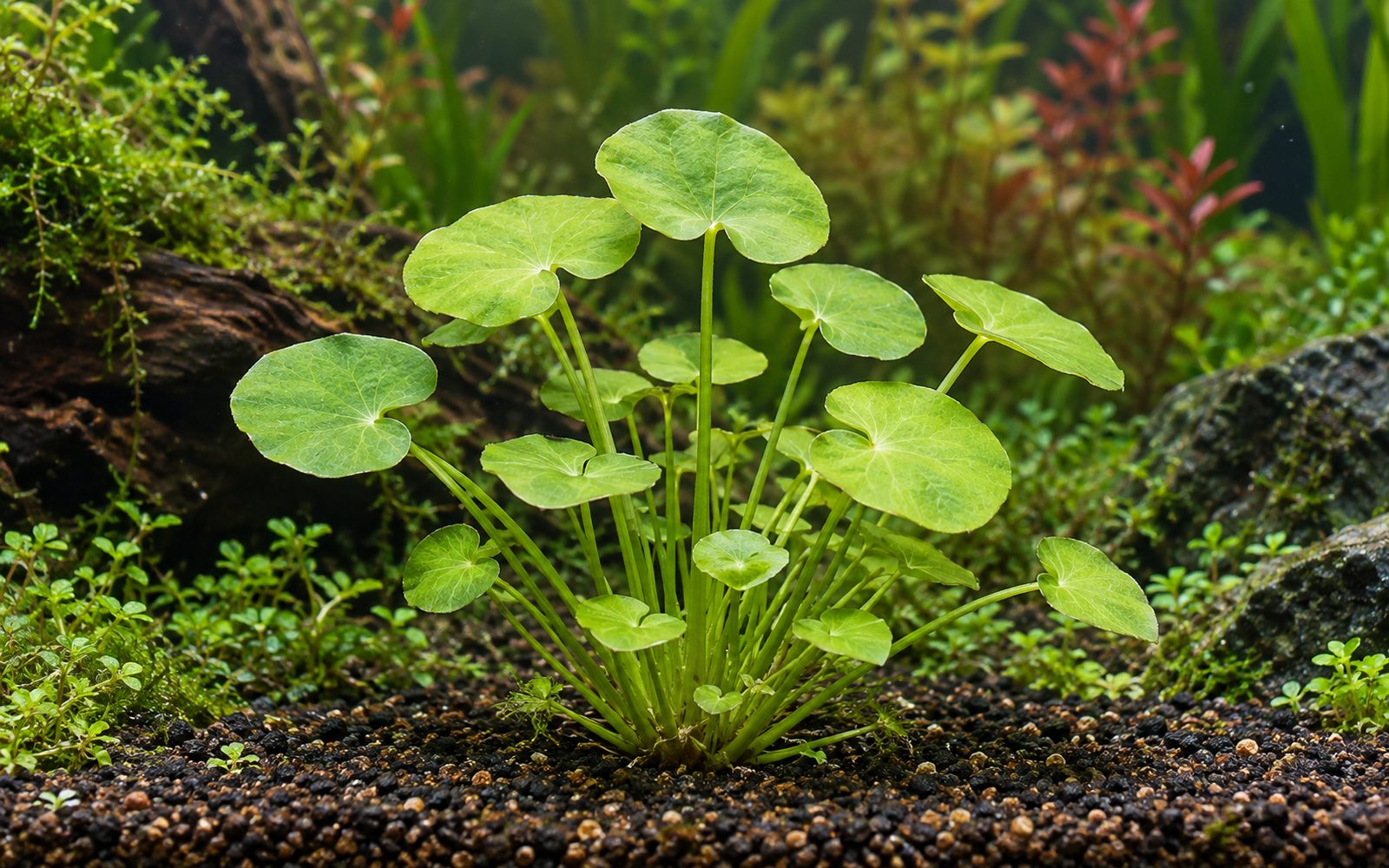
Nymphoides hydrophylla 'Taiwan' is a small relative of water lilies from southern Taiwan that can stay fully submerged in the aquarium. It does not belong to the same family as true water lilies; it is in the family Menyanthaceae and, just like the banana plant, forms heart-shaped leaves. What sets this form apart is that it keeps its leaves underwater as a lush rosette instead of sending them to the surface.
The plant reaches 15–25 cm in height and 10–15 cm in width. Its round, light green leaves create a nice textural contrast with fine-leaved stem plants and grass-like plants. It is easy; it also grows in an aquarium without CO₂, but speeds up as light and nutrients increase.
Planting and Placement
- The roots are buried in the substrate and the crown where the leaves emerge is left exposed.
- It is used in the midground on its own or in a small group of 2–3 plants.
- Because the rosette widens over time, leave 10–15 cm of open space around it.
Care and Fertilization
- Light: Medium. In weak light its stalks lengthen and the leaves climb toward the surface; under stronger light it stays low and dense.
- CO₂: Not required, but noticeably speeds up growth.
- Fertilizer: It feeds through its roots; root tabs next to the roots and regular liquid fertilizer are recommended.
- Maintenance: Because it grows fast, regularly cut the oldest leaves and those reaching for the surface off at the base of the stalk. This keeps the rosette low and tidy.
Propagation
Plantlets grow from the blades of old leaves. Once the plantlets have formed a few leaves and roots, they can be separated and planted in the substrate. The plant also widens the clump by producing new shoots from its base; these shoots can be divided along with their roots.
Common Problems
- Leaves reaching for the surface: the light is insufficient or old leaves have not been cut. Cut the lengthening leaves off at the base.
- Yellowing old leaves: root nutrients have run low; add root tabs.
- Crown rot: the crown has been buried; pull the plant up slightly.
Hobbyist notes
Things you won't find in books, learned by trial and error. The most helpful ones are on top.
Change history and contributors
- Page created · October 16, 2026