
Water parameters
Overview
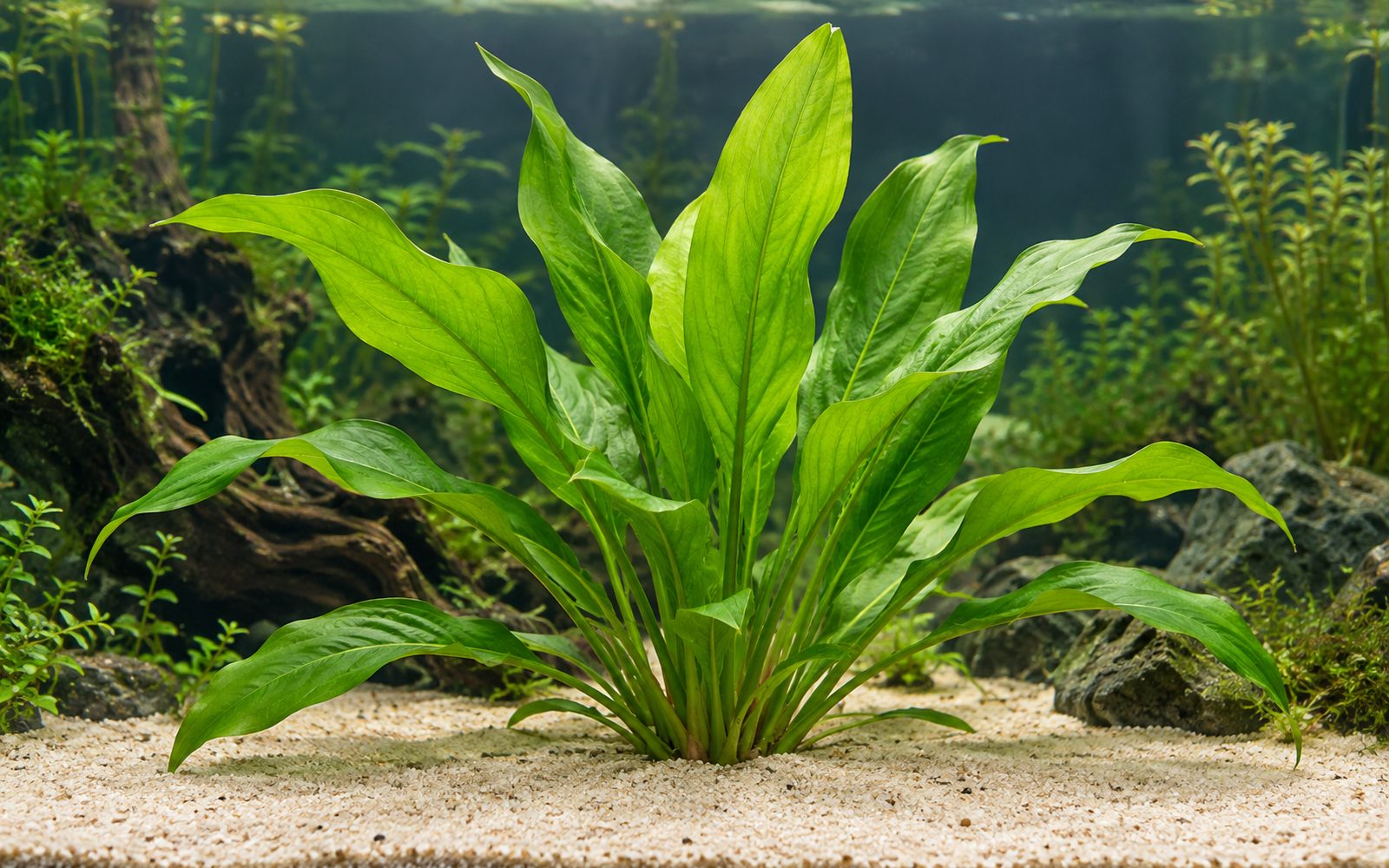
The Amazon sword forms a large rosette of long-stalked, broad, lance- to sword-shaped green leaves. Because it reaches 40–60 cm, it is a showy focal point in the background or center of aquariums of 100 liters or more. It is the classic plant of discus and angelfish tanks; its broad leaves are also used as a spawning surface.
Planting and Placement
The roots are buried in the sand and the crown is left exposed. Because it builds a strong, extensive root system, the substrate needs to be nutrient-rich or root tabs need to be buried next to the roots. Once established, moving it often weakens the plant.
Care and Fertilization
- Light: Medium.
- CO₂: Beneficial but not essential.
- Fertilizer: A root tab once a month; with iron deficiency new leaves come out pale.
- Trimming: Outer leaves yellow as they age; cut them off at the base. If the plant stays large it can shade the plants in the foreground.
Propagation
The plant sends up a long flower stalk on which young plants (adventitious plantlets) develop. When the plantlets have formed roots and a few leaves, they are cut off and planted. If the stalk reaches the surface it can produce small white flowers.
Common Problems
- Yellowing leaves with holes: nutrient deficiency (especially iron and potassium); add root tabs.
- Leaf loss in the first weeks: plants grown out of water (emersed) at the store shed their old leaves while adapting to life underwater; new leaves come out in the submersed form.
- Algae on the leaves: on slow-growing old leaves; remove these leaves.
Hobbyist notes
Things you won't find in books, learned by trial and error. The most helpful ones are on top.
Change history and contributors
- Page created · October 16, 2026