
Water parameters
Overview
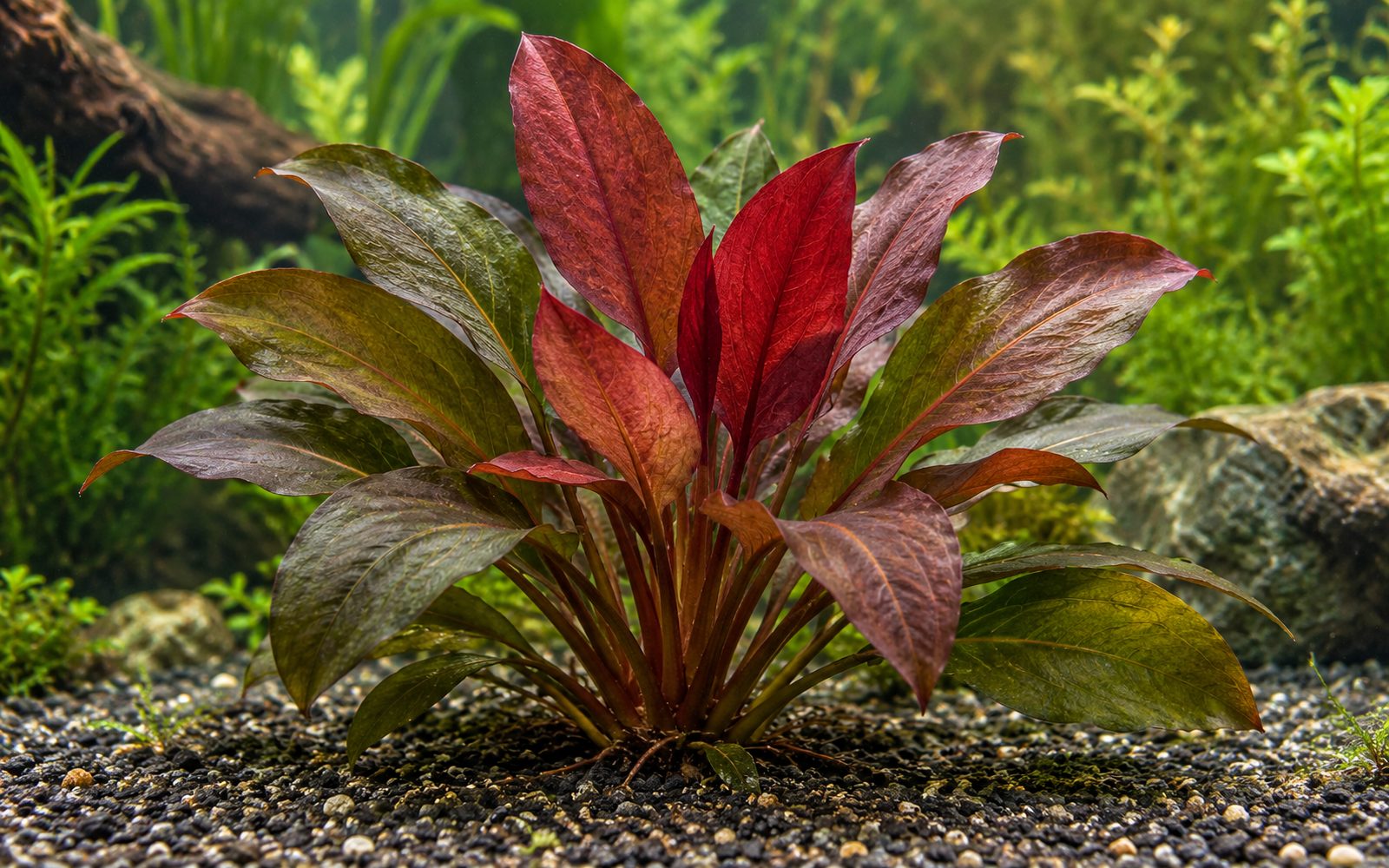
Echinodorus 'Kleiner Bär' ("little bear") is a sword plant cultivar selected by the German grower Julius Hoechstetter and sold since 1995; it is also found in the trade as "Dschungelstar Nr. 2." Young leaves that open underwater range in tone from rusty red to deep red, and they darken as they age. Leaves grown emersed are rounder and green; the red submerged leaves come in during the weeks after planting. Because it stays at 25–30 cm, unlike many sword plants it fits medium-sized aquariums.
Planting and Placement
The roots are buried in the substrate and the crown is left exposed. Because it feeds through its roots, a nutrient-rich substrate or root tabs buried next to the roots are essential. It is used alone in the midground as a color focal point in front of green plants.
Care and Fertilization
- Light: Medium to high; the more light, the more pronounced the red tones.
- CO₂: Not required, but beneficial for color and growth.
- Fertilizer: Root tabs every 1–2 months; liquid fertilizer containing iron.
- Old, algae-covered outer leaves are cut at the base. It is propagated from daughter plants that form on the flower stalk or by dividing the rhizome.
Propagation
Common Problems
Hobbyist notes
Things you won't find in books, learned by trial and error. The most helpful ones are on top.
Change history and contributors
- Page created · October 16, 2026