
Water parameters
Overview
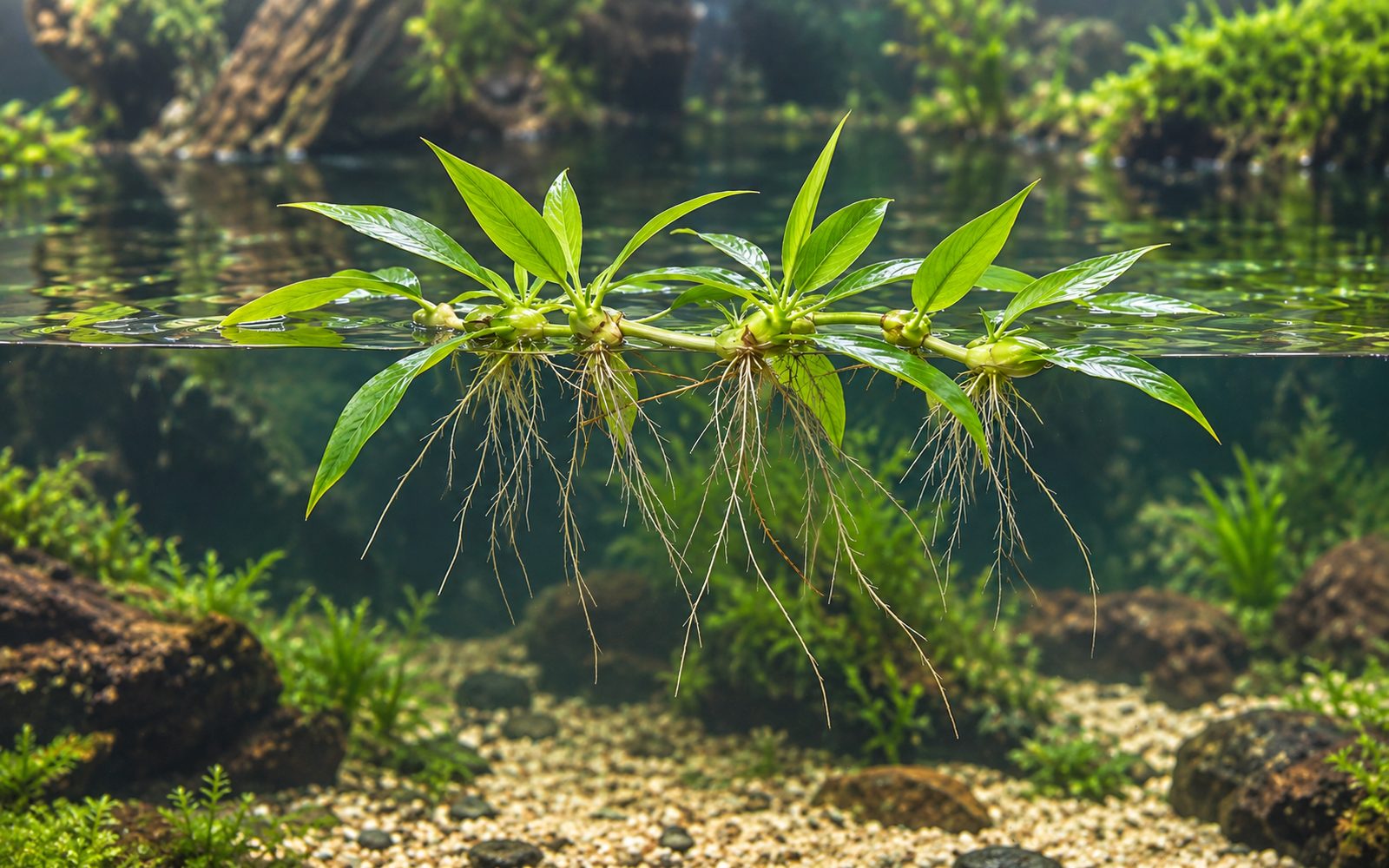
Hygroryza aristata is a grass species that forms dense mats on the surface of lakes and ponds in South and Southeast Asia. The leaf sheaths on its stem are filled with air and keep the plant afloat. Its leaves are broad, lance-shaped and water-repellent; fine roots hang down into the water from the nodes. Unlike other floating plants, its horizontally spreading stems create a lawn-like texture on the surface. In its native range it also grows creeping over wet ground.
Planting and Placement
It is not planted; it is placed directly on the water surface. Choose a spot where the surface is not too turbulent so that the leaves stay dry. There should be a few centimeters of space between the lid and the water surface; if the leaves stick to a wet lid, they rot.
Care and Fertilization
- Light: Moderate to high; in weak light its growth slows down.
- CO₂: Not required; the plant uses carbon dioxide from the air.
- Fertilizer: Liquid fertilizer is enough; when nutrients are lacking, the leaves fade.
- Leave part of the surface open; stems that spread too much are removed by breaking them into pieces, and each piece grows into a separate plant.
Propagation
Common Problems
Hobbyist notes
Things you won't find in books, learned by trial and error. The most helpful ones are on top.
Change history and contributors
- Page created · October 16, 2026