
Water parameters
Overview
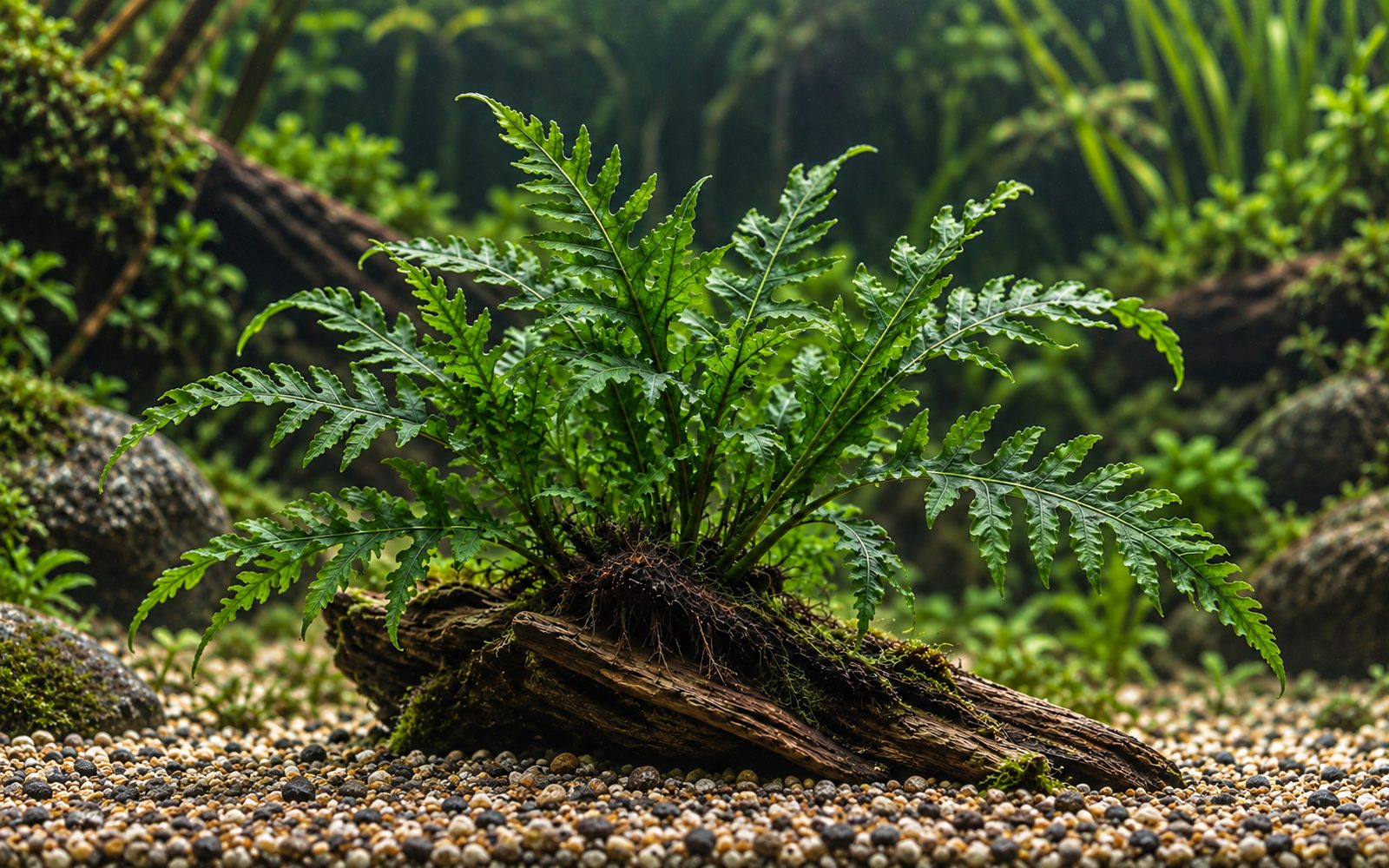
Bolbitis is a fern that lives in the fast-flowing rivers of West and Central Africa, clinging to rocks and roots in rapids and areas of strong current. Its leaves are deeply lobed (pinnate), dark green and translucent; when light passes through them they give an elegant texture. In the aquarium it reaches 20–40 cm in height and over time forms a lush clump on wood.
Like Java fern it grows from a rhizome, but it starts more slowly and is more sensitive to water cleanliness. It does best in clean, slightly soft water with flow.
Planting and Placement
Never bury the rhizome; the dark, hairy rhizome rots if buried.
- Tie it to wood or rock with cotton thread or fishing line; the roots take hold in a few weeks.
- Place it near the filter outlet, in a spot that gets flow.
- In the midground and background, on wood branches, it gives a natural look.
Care and Fertilization
- Light: low to medium. Strong light leads to algae building up on the leaves.
- CO₂: not required but noticeably speeds up growth.
- Flow: it likes moderate to strong flow; in still water the leaves get dirty and growth stops.
- Fertilizer: liquid fertilizer; with iron and potassium deficiency the leaves fade.
- Water: clean water; a 25–30% weekly water change.
Propagation
The rhizome is divided with sharp scissors so that each piece keeps at least 3–4 leaves. The pieces are tied in separate places. Since the rhizome branches slowly, propagation is slow too.
Common Problems
- Leaf loss in a new plant: emersed-grown plants may lose their old leaves when moved underwater; new leaves come in the submersed form. This period can last 1–2 months.
- Algae and darkening on the leaves: too much light and still water; increase the flow and reduce the light.
- Rhizome rot: buried or in contact with the substrate.
Hobbyist notes
Things you won't find in books, learned by trial and error. The most helpful ones are on top.
Change history and contributors
- Page created · October 16, 2026