
Water parameters
Overview
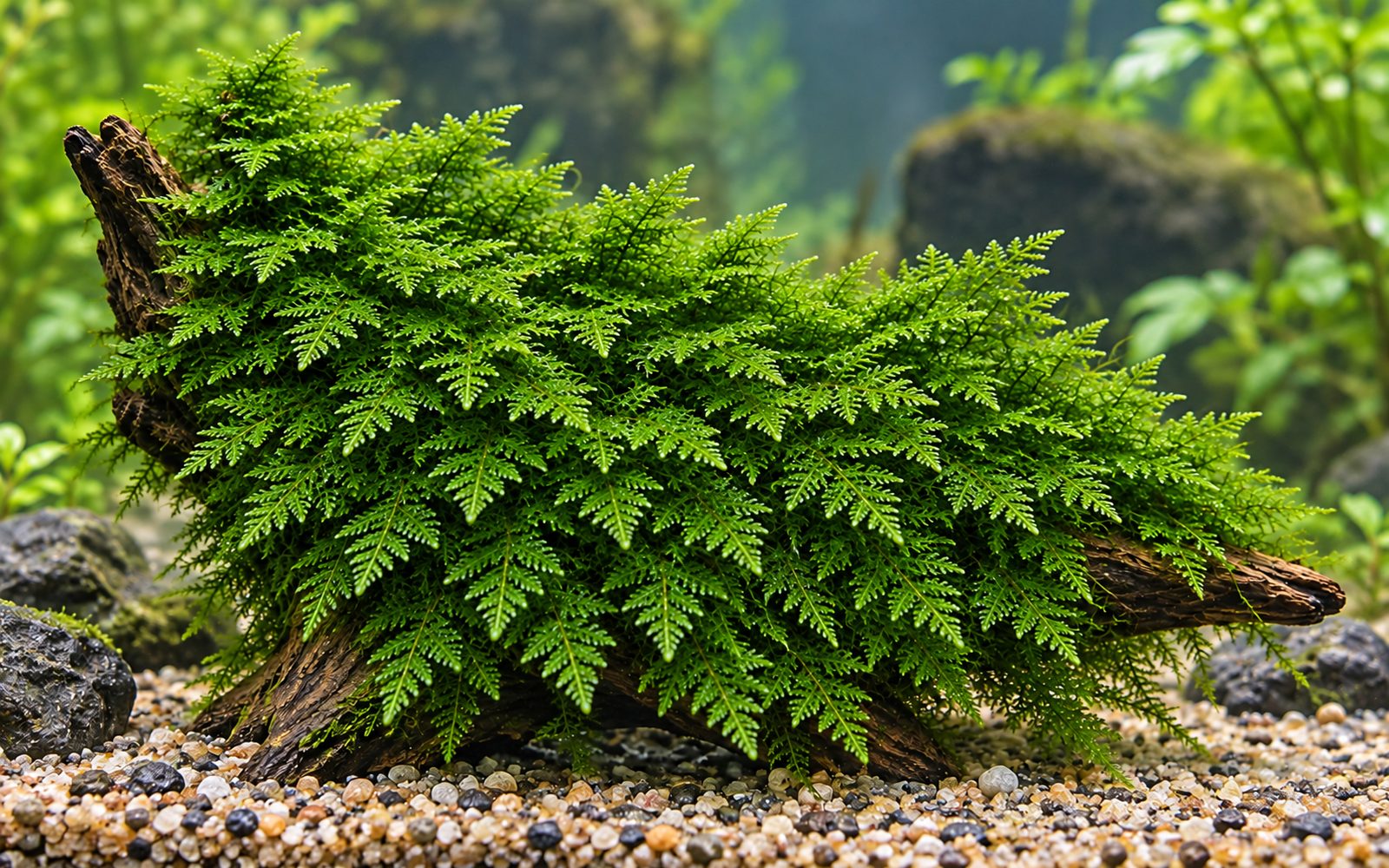
Christmas moss comes from Southeast Asia and is easily told apart from Java moss by the way it branches. Regular side branches grow out to both sides of the main stems, and each branch tip takes on a triangular shape like a tiny fir or Christmas tree branch. These branches layer on top of one another to form a dense, orderly, bright green covering.
It grows more slowly than Java moss and stays neater. That is why it is preferred for covering roots and stones, building "moss walls" and in aquascape layouts. For shrimp it is both a hiding place and a food source, thanks to the microorganisms that collect on it.
Planting and Placement
- Spread it in a thin layer over driftwood or stone; secure it with cotton thread, fishing line or gel glue.
- For a moss wall, place a thin layer between two stainless steel or plastic meshes and attach it to the back glass.
- Do not use thick clumps; the lower parts get no light and turn brown.
Care and Fertilization
- Light: Low to medium. The layered structure becomes more pronounced under medium light.
- Temperature: Above 26°C growth slows and the branches become loose; it grows denser in cooler aquariums.
- CO₂: Not required, but it increases density.
- Fertilizer: Liquid fertilizer and fish waste are enough.
- Trimming: Trim it regularly with scissors; collect the cut pieces from the aquarium.
Propagation
Every cut piece becomes a new plant. Simply tie the trimmings to another stone or root. It takes a few weeks to attach to its new spot.
Common Problems
- Algae tangled in: green thread algae or brush algae can settle into the moss. Reduce the light, add Amano shrimp, and cut away the affected parts.
- Browning: the underside of a thick clump gets no light or debris has built up inside; thin it out and swish it gently during water changes.
- Loose, untidy growth: water that is too warm or light that is too low.
Hobbyist notes
Things you won't find in books, learned by trial and error. The most helpful ones are on top.
Change history and contributors
- Page created · October 16, 2026