
Water parameters
Temperature15–30°C
pH5.5–8
General hardness (GH)2–20 dGH
Recommended range
Overview
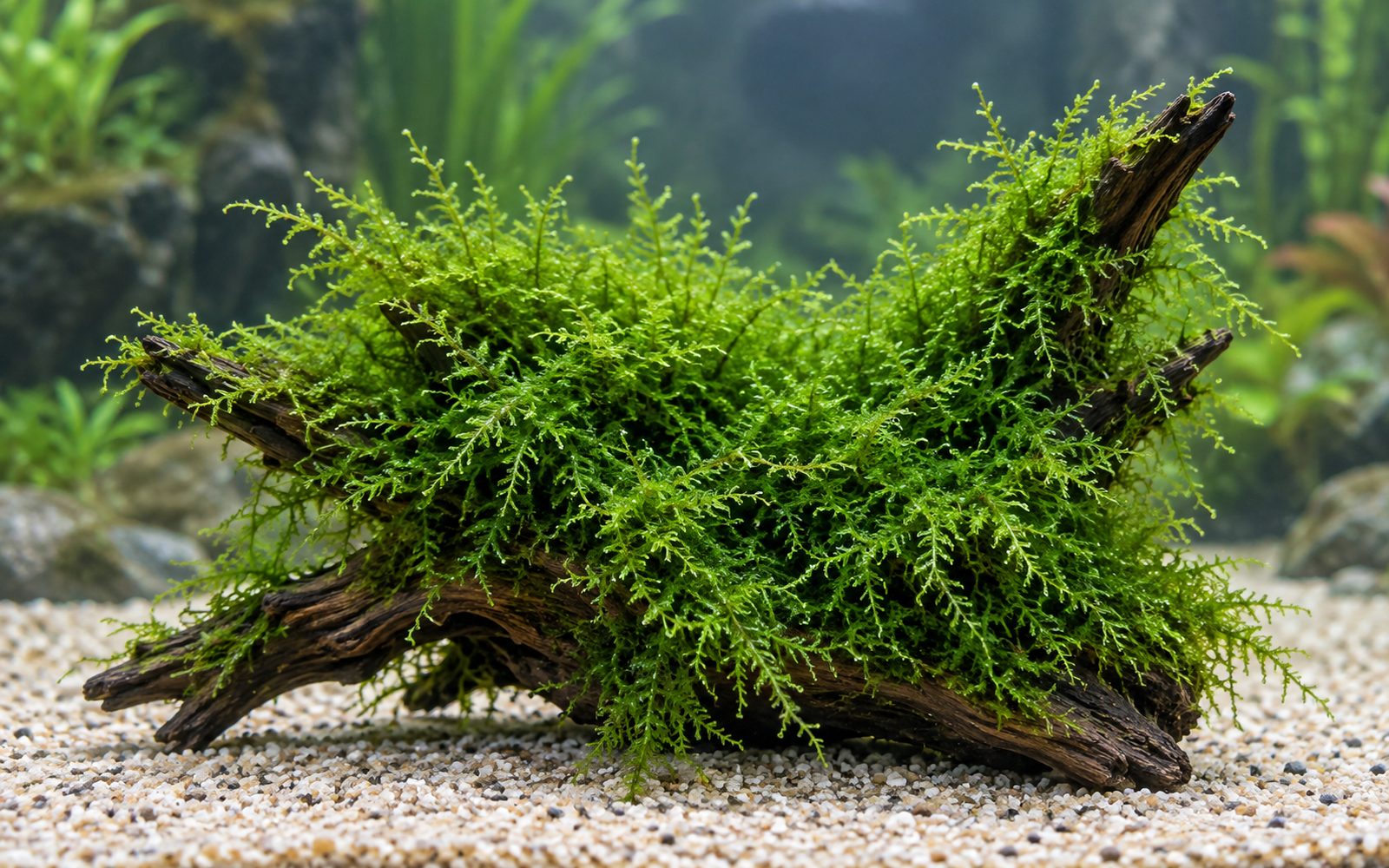
Java moss is the most widely used moss in the hobby. It has no roots; it clings to rocks, wood and decor with fine rhizoids. It is very hardy, and its light and CO₂ needs are low. In shrimp tanks it is invaluable as a biofilm surface, as a hiding place for shrimplets and the fry of livebearers, and as a spawning medium for egg scatterers.
Planting and Placement
- Spread it as a thin layer over wood or rock; secure it with cotton thread, fishing line or aquarium-safe gel glue. It attaches within a few weeks.
- For a "moss wall" or "moss carpet", it can be sandwiched between two pieces of mesh.
- Prefer a thin layer to a thick clump: the lower parts do not get light and turn brown.
Care and Fertilization
- Light: low to medium; in strong light it grows denser and more compact but may collect algae.
- CO₂: not required.
- Fertilizer: fish waste is usually enough.
- Trimming: shape it regularly with scissors; remove the cut pieces from the tank, otherwise it spreads everywhere.
- Cleaning: debris builds up inside the moss; rinse it in tank water from time to time.
Propagation
Every cut piece becomes a new plant: simply tie the trimmed moss to another rock or piece of wood.
Common Problems
- Browning: the underside of a thick clump is not getting light, or the inside of the moss is dirty; thin it out and clean it.
- Algae (green thread) mixed in: too much light and nutrients; reduce the light; Amano shrimp and otocinclus help.
- Very slow growth: the moss slows down at temperatures above 28°C.
Hobbyist notes
Things you won't find in books, learned by trial and error. The most helpful ones are on top.
No notes yet. If you have experience with this species, leave the first note.
Was this page helpful?
Change history and contributors
- Page created · October 16, 2026