
Water parameters
Overview
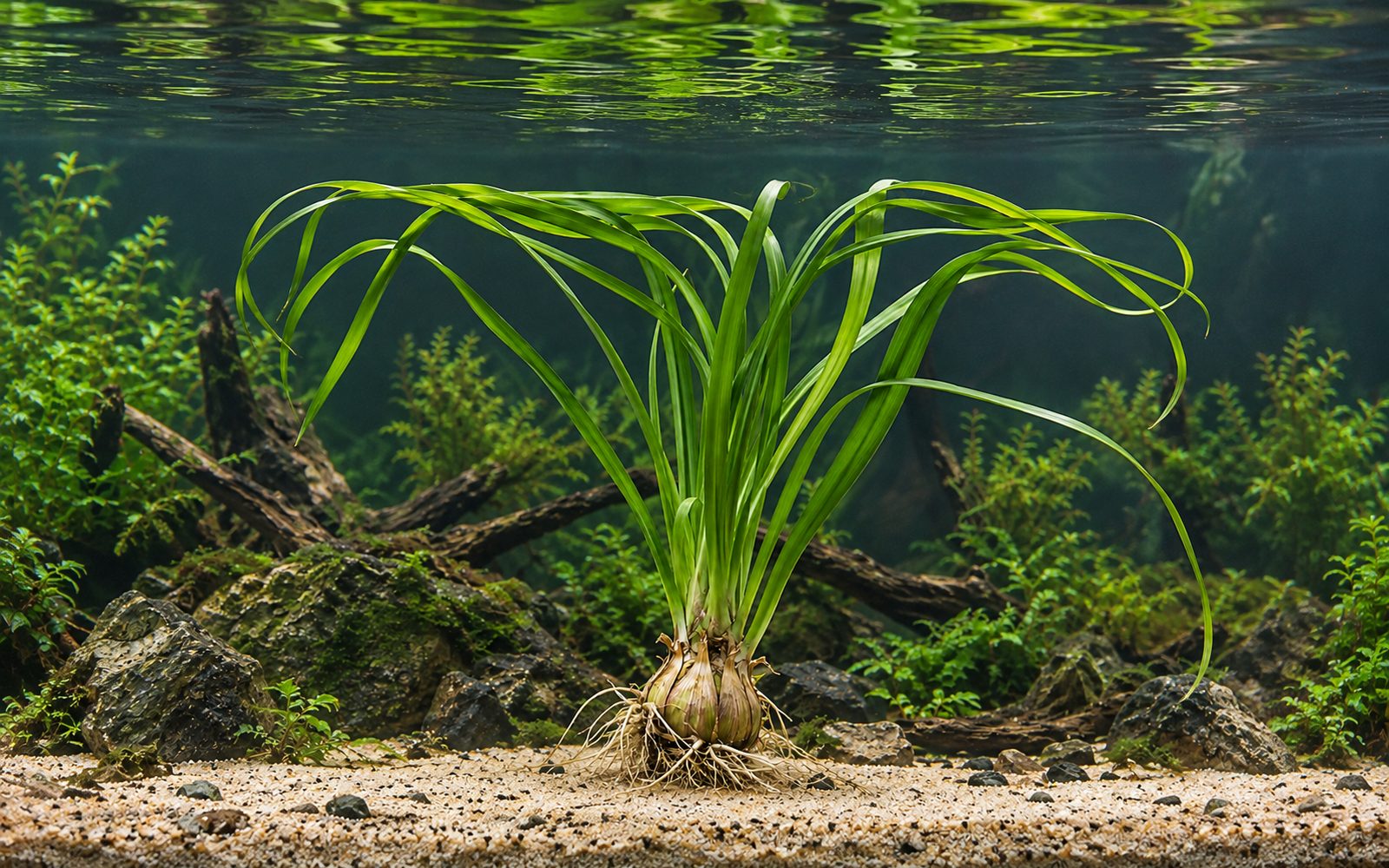
Crinum thaianum is an aquatic plant endemic to the rivers of southern Thailand that grows from a large bulb. Its leaves are smooth-edged, 1–2 cm wide, dark green and ribbon-like; in the aquarium they easily exceed 1 meter and keep growing while lying along the surface. Its tough leaves stand up to many plant-eating fish. Its range is very small and is shrinking because of human activity along the rivers, so the species is threatened in the wild; choose nursery-grown plants rather than ones collected from the wild.
Planting and Placement
Bury the bulb so that its neck stays above the substrate. Its strong, long roots need a substrate at least 8 cm deep, supported with root tabs. It is suitable only for large, tall (at least 60 cm) aquariums.
Care and Fertilization
- Light: Medium.
- CO₂: Not required, but it supports growth.
- Fertilizer: A root tab once a month.
- Cut overly long leaves that pile up on the surface at the base. Daughter bulbs that form next to the bulb can be separated for propagation.
Propagation
Common Problems
Hobbyist notes
Things you won't find in books, learned by trial and error. The most helpful ones are on top.
Change history and contributors
- Page created · October 16, 2026