
Water parameters
Overview
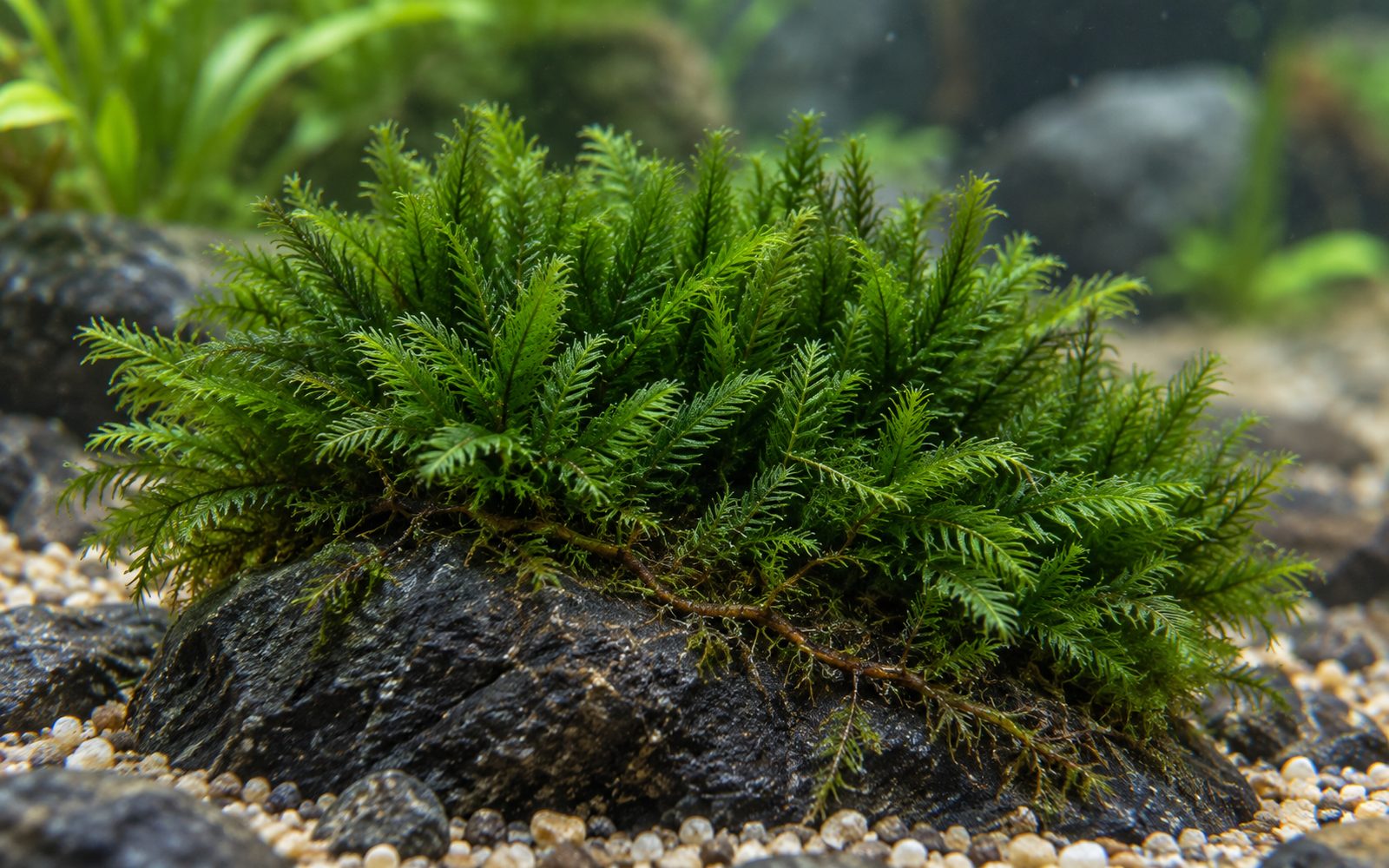
Fissidens fontanus, also known in the hobby as "phoenix moss", is a very small moss. Its shoots are 1–2 cm long, and because the leaves are arranged on both sides, each one resembles a tiny fern frond or a feather. Together these shoots form dark green, velvety, low cushions.
Unlike other mosses, it clings very tightly to rock and wood with its own rhizoids and does not grow out messily. This tidy look makes it popular in nano tanks, rock details and shrimp tanks. Because it grows slowly, it requires patience.
Planting and Placement
- Place it on rock or wood in small tufts, as a thin layer.
- Wrap it lightly with cotton thread or fix it at a few points with gel glue; once it has attached, the thread is no longer needed.
- Spreading tufts 1–2 cm apart gives faster and more even coverage than one large clump.
Care and Fertilization
- Light: low to medium.
- CO₂: not required but noticeably speeds up growth.
- Fertilizer: liquid fertilizer is enough.
- Cleaning: debris settles on top of the cushions; gently clean them with the hose during water changes.
- Caution: it is known to be sensitive to some algaecides and liquid carbon products; use these products carefully.
Propagation
The clump is propagated by dividing it into small pieces with sharp scissors. The pieces are tied to other rocks or wood. It takes a few weeks to attach in its new place and a few months to form a distinct cushion.
Common Problems
- Overgrown by algae: because it grows slowly, green spot and thread algae can cover it. Reduce the light and add Amano and cherry shrimp.
- Browning: debris buildup or a sudden change; clean it and keep the water stable.
- Growth stopping: lack of nutrients or light; add liquid fertilizer.
Hobbyist notes
Things you won't find in books, learned by trial and error. The most helpful ones are on top.
Change history and contributors
- Page created · October 16, 2026