
Water parameters
Overview
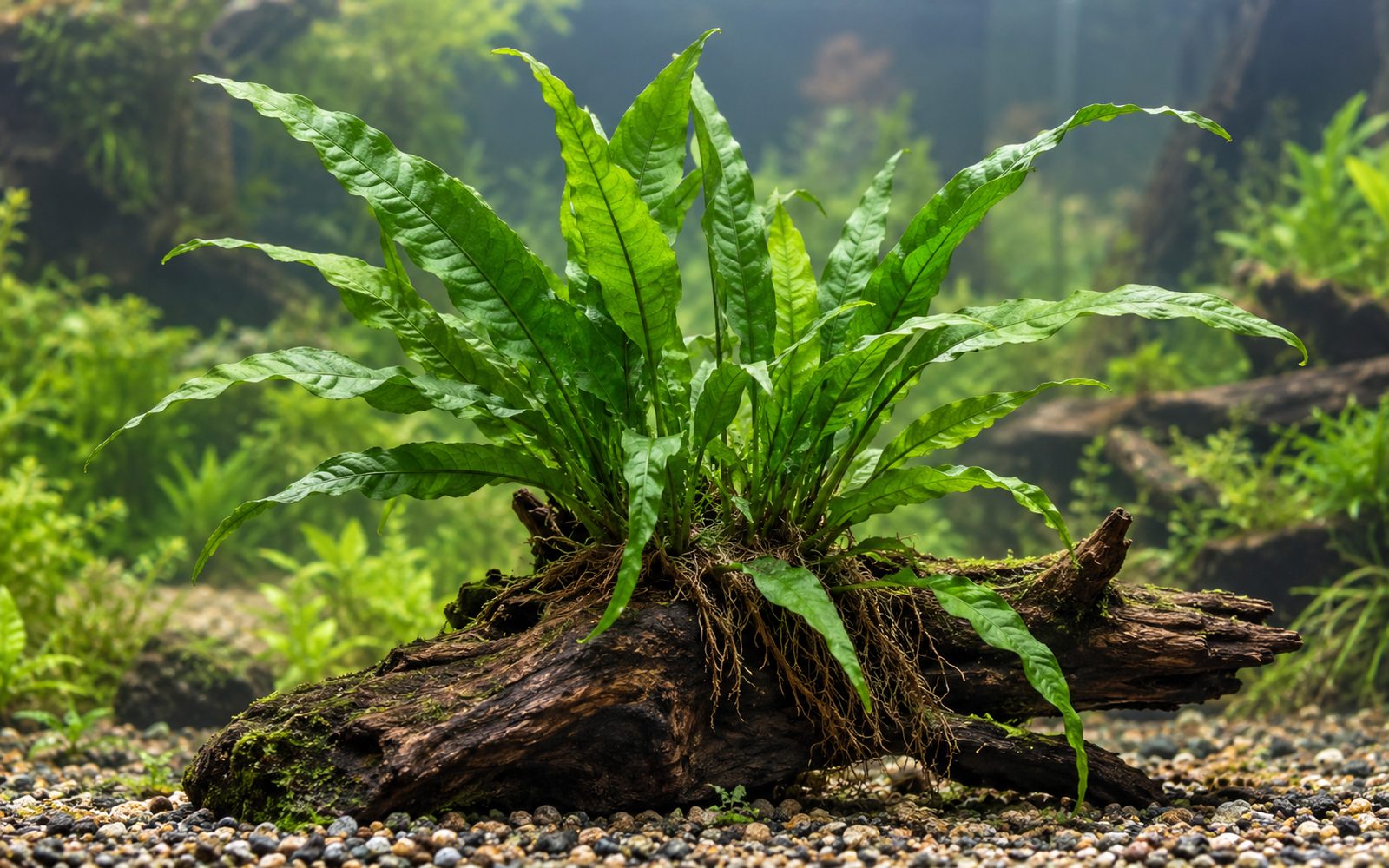
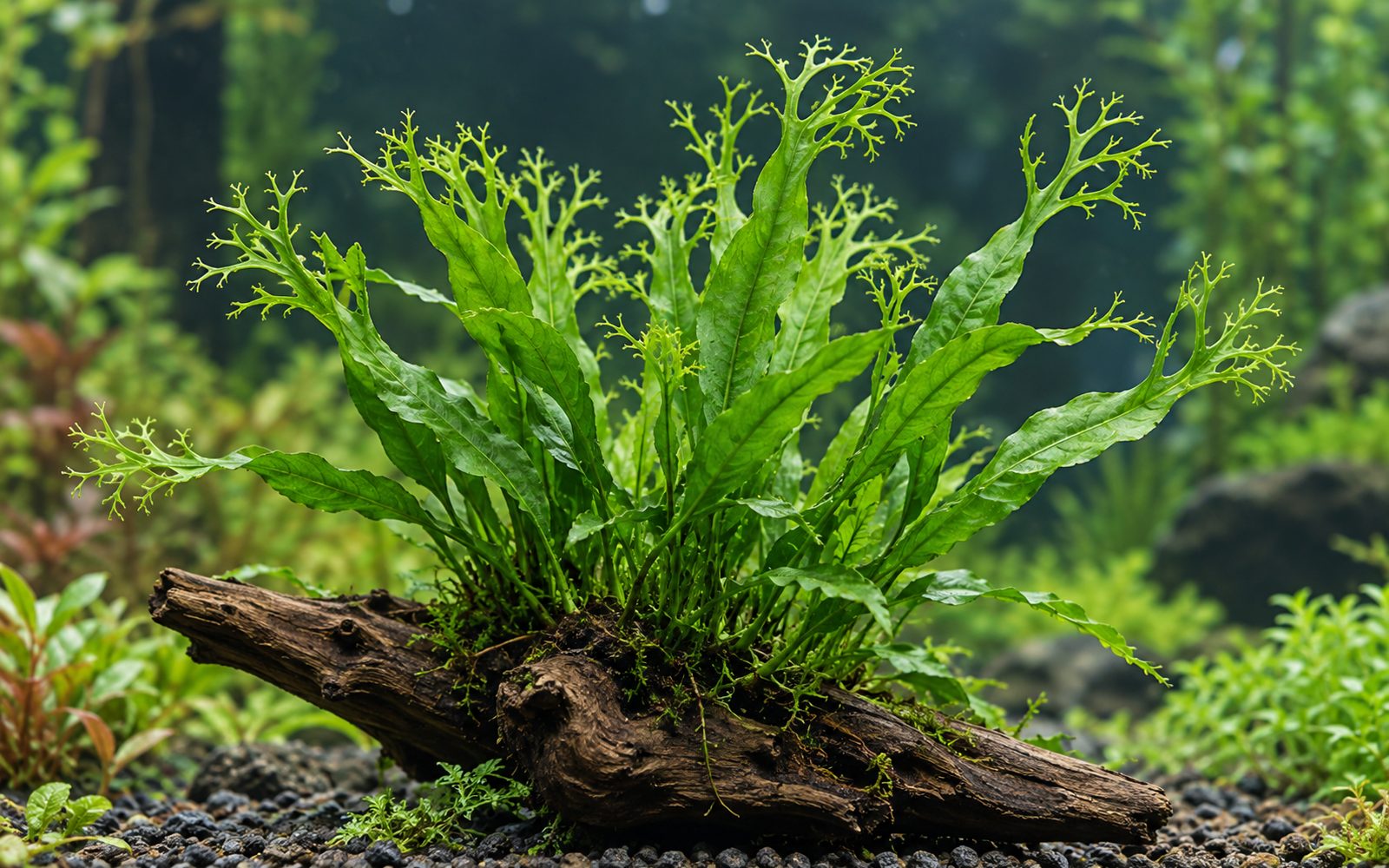
Java fern, together with Anubias, is one of the easiest aquarium plants. Because of the bitter taste of its leaves, most fish leave it alone; this is why it also survives in goldfish and cichlid tanks. In recent classifications the name Leptochilus pteropus is also used. It comes in forms such as "Windelov" (forked tips), "Trident" (three-lobed) and "Narrow" (thin-leaved).
Planting and Placement
Like Anubias, the rhizome is not buried. It is tied or glued onto wood, rock or a sponge filter. Its brown, hairy roots grip the surface within a few weeks. Placed behind wood and in corners it gives a natural look; since it reaches 20–35 cm in height, it suits the midground and background.
Care and Fertilization
- Light: low to medium. In strong light the leaves may turn brown.
- CO₂: not required; with it, the plant grows faster.
- Fertilizer: it takes its nutrients from the water; liquid fertilizer (especially potassium) is beneficial.
- Trimming: cut old leaves that turn brown or develop holes at the base.
Propagation
The easiest method happens on its own: tiny daughter plants (plantlets), complete with roots, form along the edges and tips of old leaves. Once these have opened a few leaves, they can be detached and tied elsewhere. It can also be propagated by dividing the rhizome.
Common Problems
- Black-brown spots: dark dots on the underside of the leaves are usually spore cases (sori), not a disease. Transparency and rot spreading along the leaf, however, is "Java fern melt"; it is linked to potassium deficiency and sudden changes.
- Rhizome rot: the rhizome has been buried.
- Algae on the leaves: since it grows slowly, it collects algae if there is too much light.
Hobbyist notes
Things you won't find in books, learned by trial and error. The most helpful ones are on top.
Change history and contributors
- Page created · October 16, 2026