
Water parameters
Overview
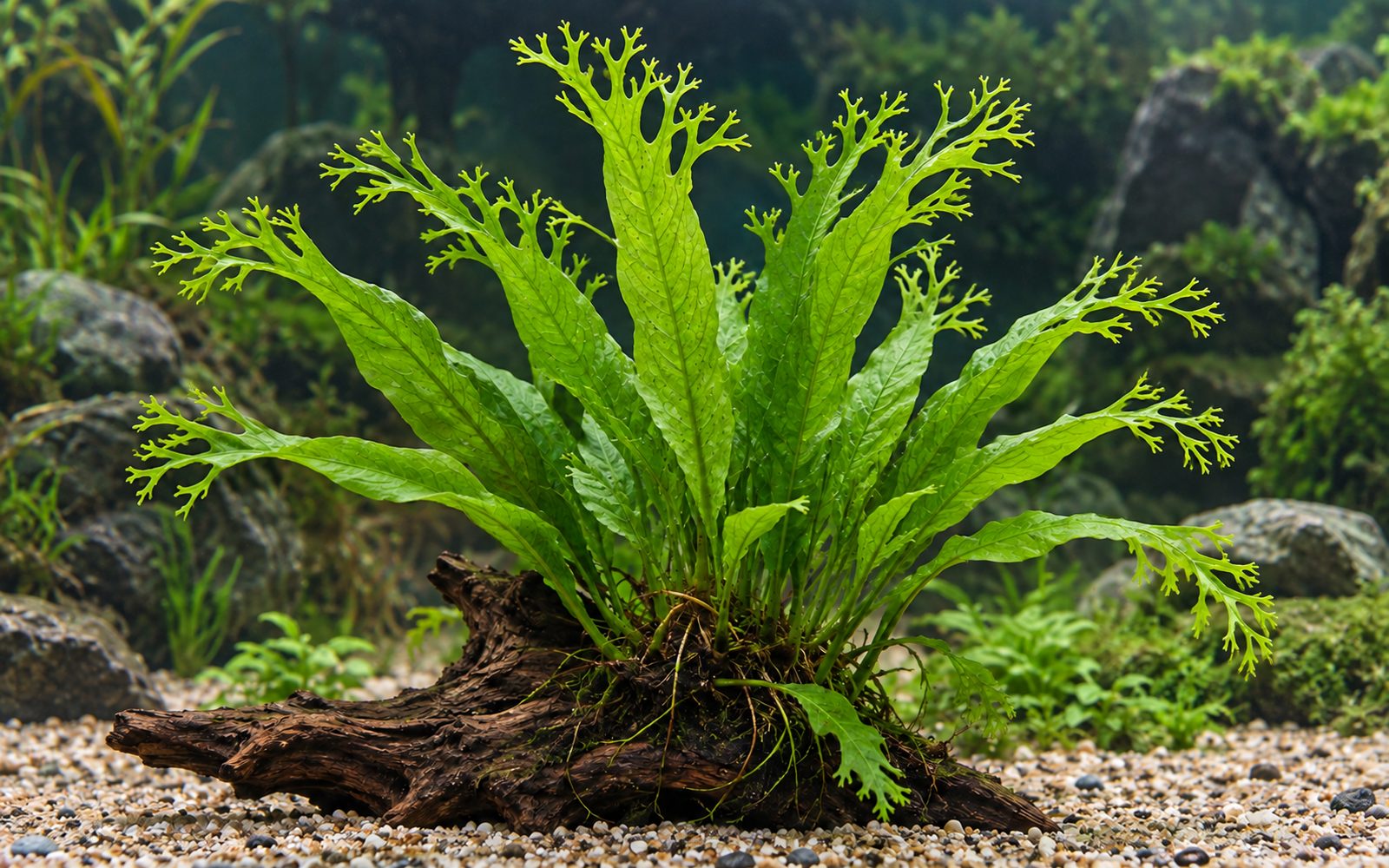
'Windeløv' is one of the best-known cultivated forms of Java fern (Microsorum pteropus); it is named after Holger Windeløv, the Danish plant grower who popularized it. The tips of the lance-shaped leaves fork repeatedly into small, curly lobes, creating a lace-like look. The plant reaches 15–20 cm in height; it stays somewhat smaller and denser than regular Java fern.
In terms of care it is the same as the species itself: because of its bitter taste most fish leave it alone, and it can be used safely in goldfish, cichlid and beginner tanks.
Planting and Placement
Never bury the rhizome; a buried rhizome rots.
- Tie it to wood or rock with cotton thread or fishing line, or fix it with gel glue.
- The brown, hairy roots grip the surface in a few weeks.
- Place it in the midground, on wood branches, behind rocks and in corners.
Care and Fertilization
- Light: low to medium. In strong light the leaves may develop brown spots.
- CO₂: not required.
- Fertilizer: liquid fertilizer and fish waste are enough; with potassium deficiency, brown spots form on the leaves.
- Trimming: cut old, spotted leaves at the base of the stalk.
Propagation
Daughter plantlets form on old leaves, especially on the tip lobes. Once they have produced a few leaves and roots, they can be detached and tied elsewhere. The rhizome can also be propagated by dividing it so that each piece keeps a few leaves.
Common Problems
- Blackening or brown-spotted leaves: too much light, nutrient (especially potassium) deficiency or a buried rhizome.
- Melting: with sudden changes in water parameters, the leaves may darken; if the rhizome is healthy it will sprout again.
- Slow growth: this is natural; do not move the plant around often.
Hobbyist notes
Things you won't find in books, learned by trial and error. The most helpful ones are on top.
Change history and contributors
- Page created · October 16, 2026