
Water parameters
Temperature18–28°C
pH6–7.5
General hardness (GH)2–15 dGH
Recommended range
Overview
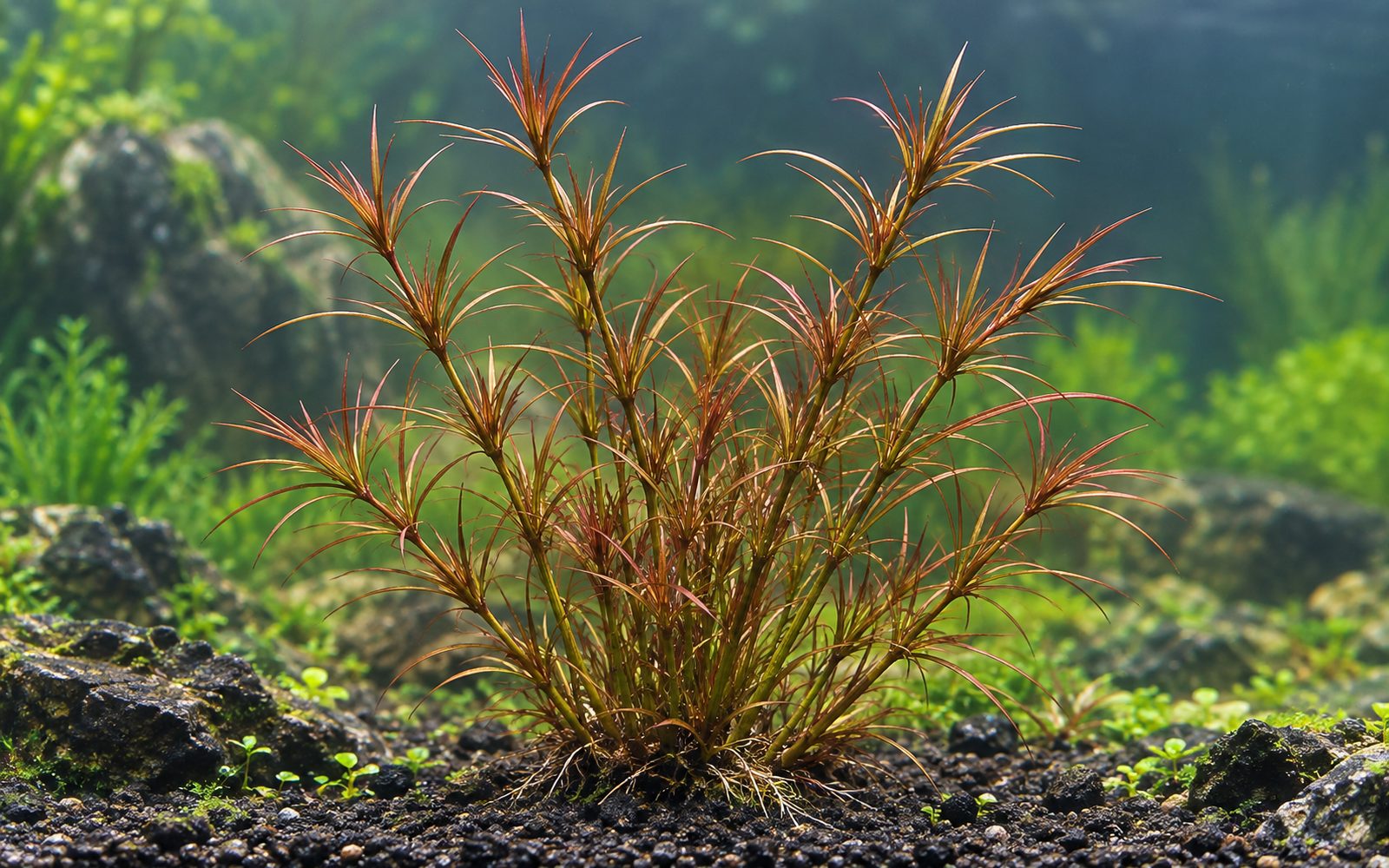
Juncus repens is the only rush (Juncus) species regularly used in aquariums. It comes from the swamps of the southeastern part of North America and grows both submersed and emersed. Its appearance is unusual: small tufts of narrow, pointed leaves are arranged at equal intervals along a flattened stem. This gives the impression of both a grass and a stem plant. In medium light it stays fresh green; with strong light and enough trace elements it turns copper and reddish brown. In the aquarium it grows 10–20 cm tall.
Planting and Placement
- Stems are planted singly or in small bunches, 3 cm apart.
- It is used in the midground as a texture accent or, kept short, in the foreground-to-midground transition.
Care and Fertilization
- Light: Medium; strong light for color.
- CO₂: Not required, but it increases growth and coloration.
- Fertilizer: Liquid fertilizer; iron and trace elements support the reddish tone.
- Trimming and propagation: A top cut just below a leaf tuft grows when replanted, even without roots. Side shoots and daughter plants can also be separated.
- Its slow-growing leaves can collect green spot algae; do not increase the light excessively.
Propagation
This section has not been written yet. How is it propagated?
Be the first to write it
Common Problems
This section has not been written yet. Problems such as melting, yellowing and algae, and how to fix them.
Be the first to write it
Hobbyist notes
Things you won't find in books, learned by trial and error. The most helpful ones are on top.
No notes yet. If you have experience with this species, leave the first note.
Was this page helpful?
Change history and contributors
- Page created · October 16, 2026