
Water parameters
Overview
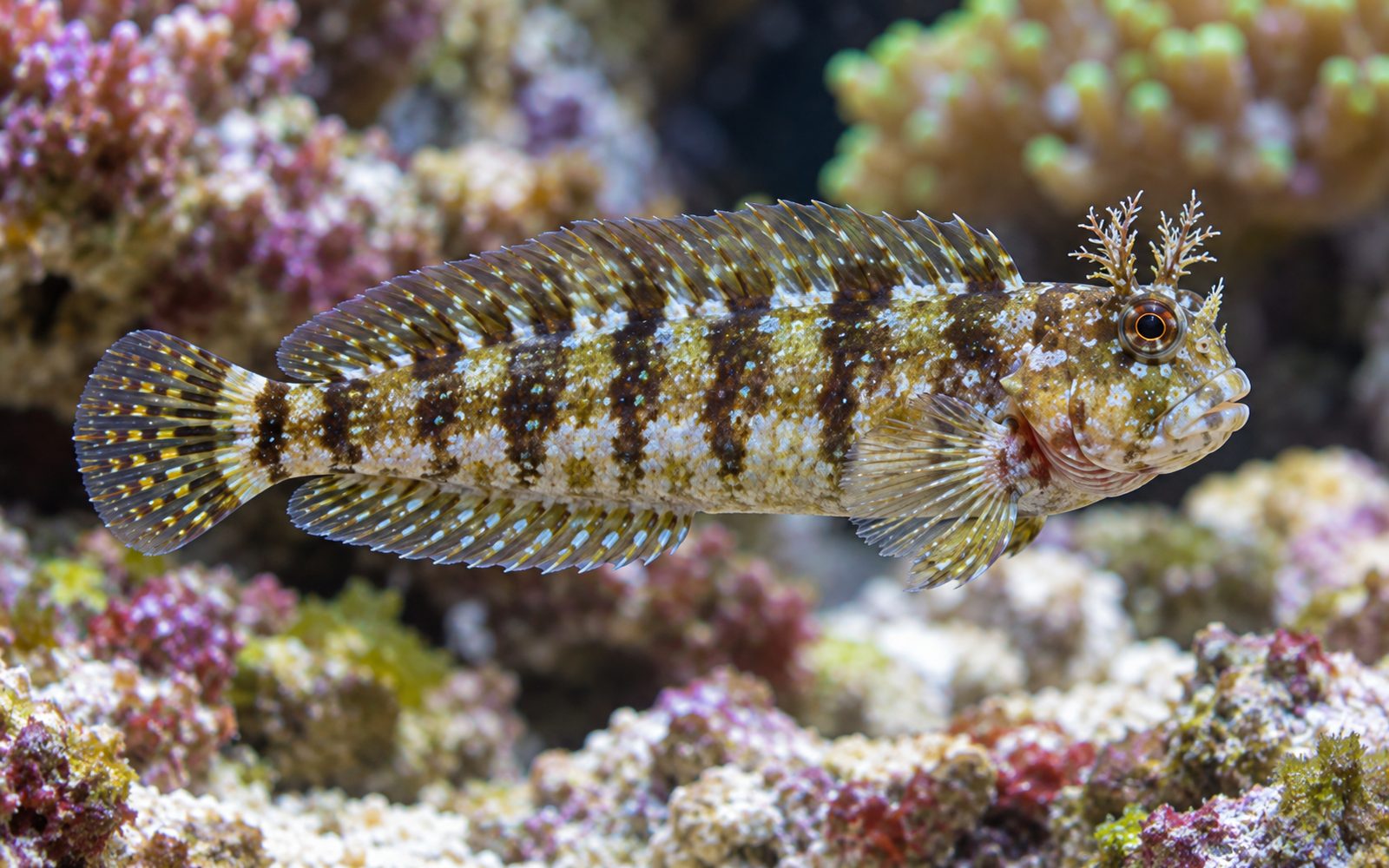
The lawnmower blenny gets its name from scraping and eating filamentous algae off rock surfaces all day long. With its olive-green, brown and white-spotted body, thick lips and the fringe-like cirri above its eyes, it has a cute appearance. It sits propped on its fins on top of rocks, constantly watching its surroundings.
It is sold often because it helps with algae control, but it can go hungry in a tank without algae or in a newly set-up aquarium. Some individuals never switch to prepared food. For this reason it should be added to a mature aquarium with algae on its rocks.
Natural Habitat
It lives on shallow reef flats and in lagoons of the Indo-West Pacific, in rock and rubble areas covered with algae. It is also found in very shallow, wave-washed areas near tide pools, where it scrapes algae all day long.
Tank Setup
- Volume: at least 150 liters; a large rock surface and room for algae to grow.
- Water: salinity 1.023–1.026 specific gravity, pH 8.1–8.4, temperature 24–27°C.
- Maturity: it should be added to an aquarium that is at least a few months old, with natural algae on its rocks.
- Reef compatibility: reef safe; it does not touch corals, shrimp or snails.
- Lid: it may jump when startled; a lid is recommended.
Diet
Herbivorous. Its main food is filamentous algae on the rocks; in addition, dried seaweed (nori) can be offered on a clip, and granules containing spirulina and algae should also be tried. It may also take meaty foods such as frozen mysis. A sunken belly is a sign that it is underfed. It does not eat cyanobacteria, bubble algae or most red algae.
Behavior and Compatibility
Usually calm toward other fish, but territorial toward its own kind, other blennies and similarly shaped bottom dwellers. It may constantly chase a similar fish that has just been added.
Good companions: clownfish, cardinalfish, chromis, tangs, gobies (those of a different shape), cleaner shrimp.
Avoid: other lawnmower blennies and herbivorous blennies sharing the same area, large predators, aggressive dottybacks.
Group and Colony Structure
Keep a single individual. Two individuals can only live together in a very large aquarium with plenty of algae; in a normal-sized tank they fight constantly and there is not enough food. If other algae-eating fish (e.g. tangs) are to be kept in the same aquarium, take into account that the algae supply will not be enough for all of them and increase the supplementary plant-based food.
Breeding
The female lays her eggs on the ceiling of a rock cavity, and the male guards them. Breeding in the aquarium is rare, and raising the planktonic larvae takes expertise.
Health and Common Problems
- Starvation: the most common problem; watch its belly during the first weeks.
- Jumping: a risk in an uncovered aquarium.
- Marine ich and velvet: quarantine new arrivals.
Sexing
There is no reliable external difference. Males are usually slightly larger.
Tank mates
This list is calculated automatically from the species profile and grows as new species are added to the catalog. Try it in the planner for a definite answer.
Should not be kept together

Hobbyist notes
Things you won't find in books, learned by trial and error. The most helpful ones are on top.
Change history and contributors
- Page created · October 16, 2026