
Water parameters
Overview
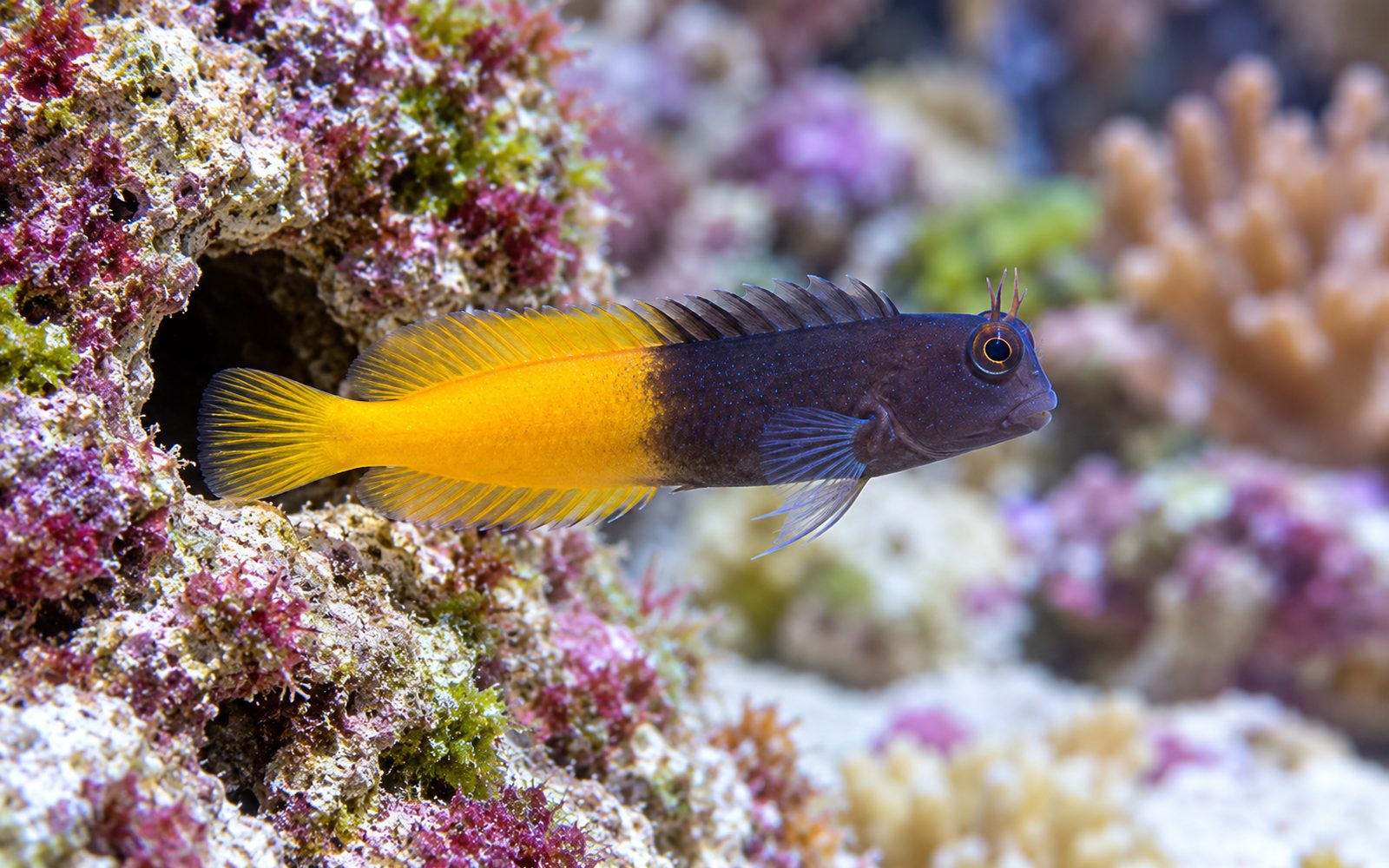
The bicolor blenny is a cute blenny whose front half is dark navy-brown and rear half orange-yellow. It backs tail-first into small holes in the rocks and watches its surroundings with its head poking out; this behavior makes it one of the most curious-looking fish in the aquarium. Its color can change with mood and breeding season; dark and light bands appear in some individuals.
It is hardy and switches easily to prepared food. It also eats algae, but it is not as effective an algae cleaner as the lawnmower blenny.
Natural Habitat
It lives on reef slopes of the Indo-West Pacific, in holes in rocks and corals. Each individual chooses a hole as its home and gathers algae and small organisms from the surrounding surfaces.
Tank Setup
- Volume: at least 110 liters.
- Water: salinity 1.023–1.026 specific gravity, pH 8.1–8.4, temperature 24–27°C.
- Reef compatibility: reef safe with caution. Most individuals do not touch corals, but some pick at LPS corals, zoanthids and Tridacna mantles. Keep an eye on it in an aquarium with a valuable LPS collection.
- Layout: live rock with small holes where it can poke its head out; a mature aquarium with some algae on its rocks.
- Lid: it may jump when startled; a lid is recommended.
Diet
Omnivorous. It scrapes algae off rock surfaces; in addition, offer foods containing algae and spirulina, nori, frozen mysis and brine shrimp. Feeding twice a day is enough. Individuals that get enough plant-based food are less likely to pick at corals, so do not neglect nori and algae-based foods.
Behavior and Compatibility
Usually calm toward other fish, but territorial toward its own kind, other blennies and similarly shaped fish. It may chase small fish that approach its home.
Good companions: clownfish, cardinalfish, chromis, gobies, tangs, cleaner shrimp.
Avoid: other Ecsenius species and blennies (in a small tank), dottybacks, large predators.
Group and Colony Structure
Keep a single individual. A pair can only be tried in a large aquarium with plenty of holey rockwork, adding both at the same time; often there is ongoing rivalry between the individuals.
Breeding
It is known to spawn in the aquarium. The male sets up a nest in a hole and invites the female; the female lays her eggs on the wall of the nest, and the male guards the eggs. In the breeding season the male takes on showy colors. Raising the planktonic larvae is difficult.
Health and Common Problems
- A hardy species; in a new aquarium it is normal for it not to leave its hole for the first few days.
- Marine ich and velvet: quarantine new arrivals.
- Jumping: a risk in an uncovered aquarium.
Sexing
There is no reliable external difference. In the breeding season the male changes color markedly and looks larger.
Tank mates
This list is calculated automatically from the species profile and grows as new species are added to the catalog. Try it in the planner for a definite answer.
Should not be kept together


Hobbyist notes
Things you won't find in books, learned by trial and error. The most helpful ones are on top.
Change history and contributors
- Page created · October 16, 2026