
Water parameters
Overview
The miniatus grouper is the most colorful species of the genus Cephalopholis and the one most often kept in aquariums. Its orange–red body, including the head and fins, is covered with small bright blue spots; the body darkens slightly toward the rear. Juveniles are more yellowish and sparsely spotted. With its large mouth and stocky build, it is a typical ambush predator.
Individuals are collected from the wild. It is a fish that resists disease and switches to prepared food immediately; but because of its large size and predatory nature, the choice of tankmates must be planned from the start. In the wild, small fish, especially anthias, make up most of its diet.
Natural Habitat
It lives on clear coral reefs of the Indo-Pacific, more in exposed, surge-swept areas than in sheltered ones, at 2–150 meters. It lives in harems of one male and 2–12 females, each female defending her own small territory. During the day it hunts by waiting at the mouths of caves and overhangs.
Tank Setup
- Volume: at least 800 liters for an adult; length and a large footprint matter more than depth.
- Water: salinity 1.023–1.026 specific gravity, pH 8.1–8.4, temperature 24–27°C. It eats a lot and is a messy fish; strong filtration and a protein skimmer are needed.
- Decor: a large cave or overhang that its whole body can fit into; the rocks must be firmly secured.
- Reef compatibility: reef safe with caution. It leaves corals alone, but eats small fish, shrimp and crabs; cleaner shrimp are not safe either.
Diet
Carnivorous. Offer frozen or fresh pieces of whole fish, shrimp, squid, mussels and large mysis; it also accepts large granules or sticks made for marine fish. Juveniles should be fed once a day, adults 3–4 times a week. Avoid feeding it freshwater fish (e.g. live goldfish).
Behavior and Compatibility
A calm but watchful predator; it spends most of the day waiting at the mouth of its cave. It generally gets along with fish too large to fit in its mouth. It may act territorial toward similarly sized bottom-dwelling fish that approach its cave.
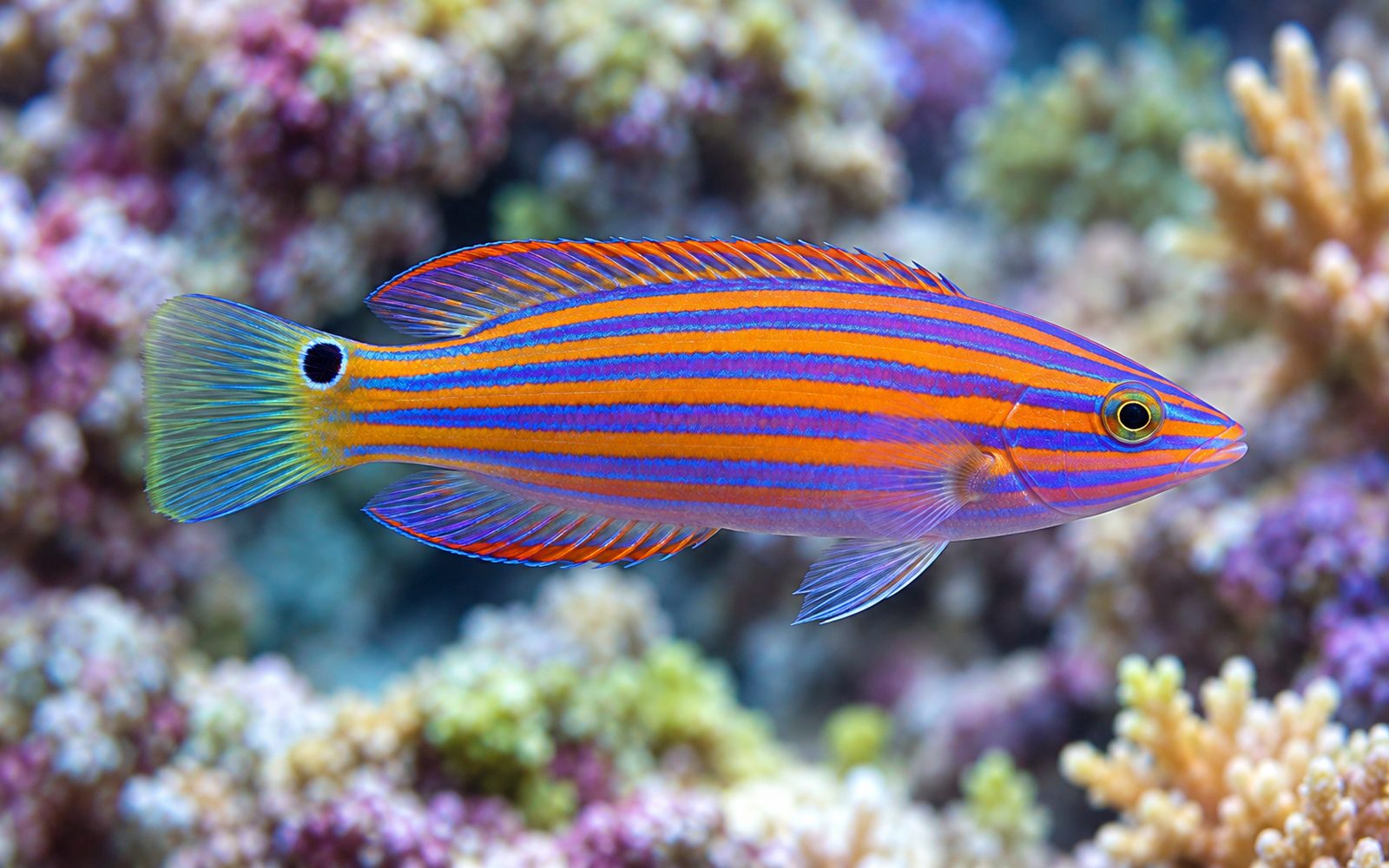
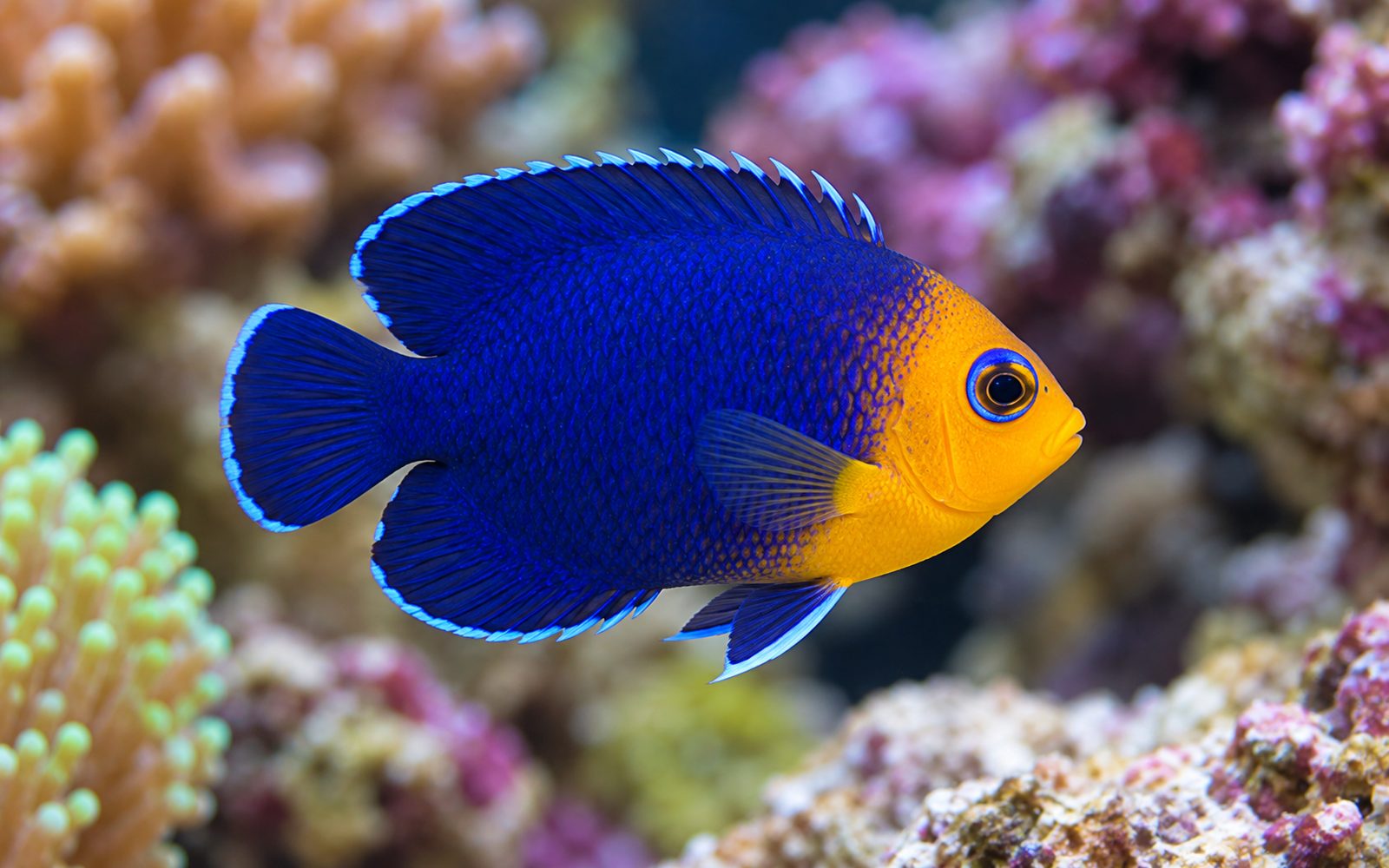
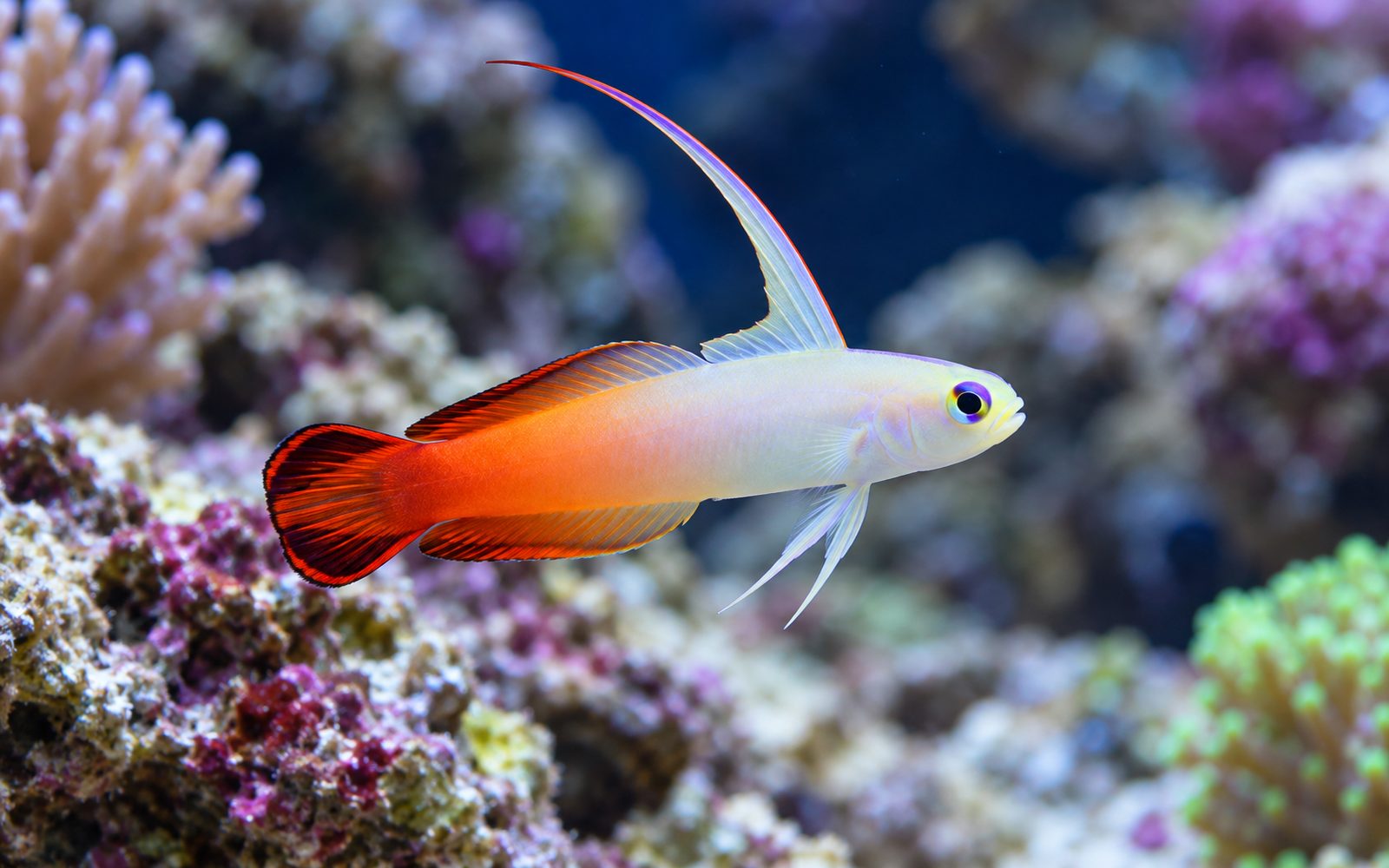
Good companions: fish larger than itself or of similar size: large tangs, large angelfish, foxface, triggerfish, large wrasses, morays, lionfish (with enough space).
Avoid: anthias, chromis, damsels, gobies, cardinalfish and any fish that fits in its mouth; cleaner shrimp, crabs.
Group and Colony Structure
Kept as a single individual in the aquarium.
Breeding
It is a female-first species. In the wild, the harem male spawns with the females one by one and pelagic eggs are released. It does not breed in home aquariums.
Health and Common Problems
- Overfeeding and fat buildup: fatty liver is seen in adults fed heavily every day.
- Water quality: food leftovers and its heavy waste quickly raise nitrate and phosphate.
- Marine white spot and velvet: it is hardy, but quarantine is still recommended.
Sexing
The sexes cannot be reliably told apart externally; in a group the largest individual is usually the male.
Tank mates
This list is calculated automatically from the species profile and grows as new species are added to the catalog. Try it in the planner for a definite answer.
Should not be kept together

Hobbyist notes
Things you won't find in books, learned by trial and error. The most helpful ones are on top.
Change history and contributors
- Page created · October 16, 2026