
Water parameters
Overview
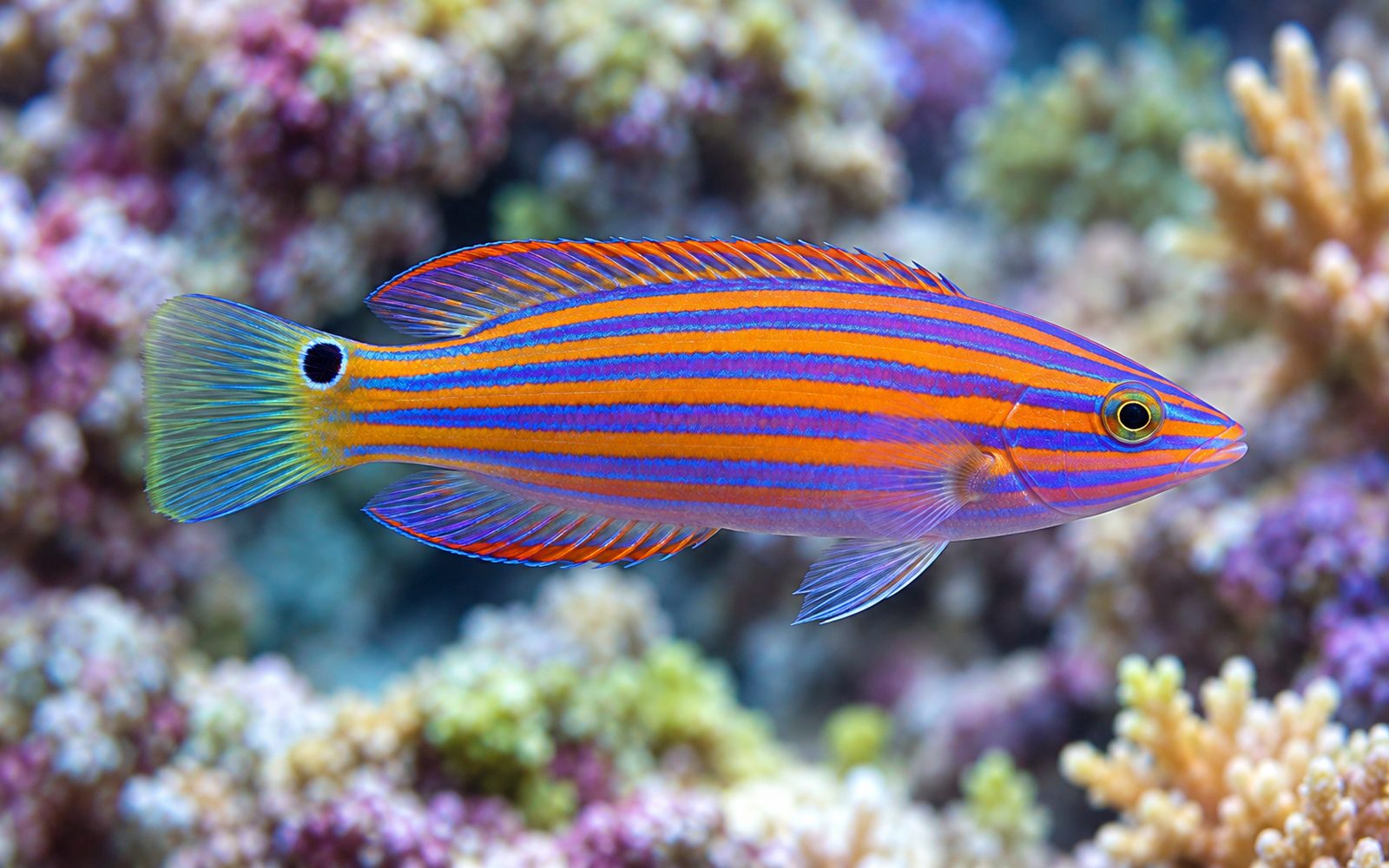
The sixline wrasse is a small member of the wrasse family (Labridae), recognized by the six orange stripes running along its body and the purple-blue lines between them. It carries a small black eyespot on the upper part of the caudal peduncle. Because it is hardy, quick to take food and adapts easily, it is very common in reef aquariums.
Its real fame comes from its useful hunting: roaming among the rocks, it hunts red flatworms, the small parasitic snails (pyramidellids) that infest Tridacna clams, and small bristle worms. All individuals are wild-collected.
Natural Habitat
It lives on Indo-Pacific reefs, deep among branching corals and rock crevices; it rarely comes out into the open and constantly moves from hollow to hollow.
Tank Setup
- Volume: at least 100 liters; a live rock aquascape with plenty of crevices.
- Water: salinity 1.023–1.026 specific gravity, pH 8.1–8.4, temperature 24–27°C.
- Lid: like most wrasses it jumps; use a mesh or fine-holed lid.
- Maintenance: a 10% water change weekly; nitrate should be kept low. It also lives comfortably in small reef aquariums, but in tanks under 100 liters territoriality and aggression increase noticeably.
- Reef compatibility: reef safe. It does not touch corals and is a useful pest hunter. Very small ornamental shrimp (e.g. Thor species) may be at risk.
Diet
Carnivorous. It finds small crustaceans and worms in the rocks by itself; also offer frozen mysis, brine shrimp, copepods and small marine fish granules. Small amounts twice a day.
Behavior and Compatibility
Active and curious. When added to the tank early it claims its territory and may harass small, peaceful fish added later (firefish, small fairy and flasher wrasses, royal gramma). To reduce this risk, it is recommended to add it after such fish, as the last addition to the aquarium.
Good companions: clownfish, tangs, dwarf angelfish, cardinalfish, large gobies, cleaner shrimp.
Avoid: another sixline wrasse or similar Pseudocheilinus, very timid small fish (in a small tank), lionfish and large predators.
Group and Colony Structure
Keep a single individual in the aquarium; two individuals will chase each other. Other small wrasses of similar size that use similar living space in the same tank can also lead to fights.
Breeding
A pelagic spawner; in the wild the male makes a short rise into the water column together with the female to release the eggs. Like most wrasses it starts out as a female and may later change into a male. It is not bred in home aquariums.
Health and Common Problems
- Hardiness: one of the toughest small fish in the marine aquarium; still, a new individual should be observed in quarantine.
- Marine ich and velvet: can be passed on from other fish.
- Jumping: the most common cause of loss in an uncovered aquarium.
Sexing
The sexes cannot be told apart externally.
Tank mates
This list is calculated automatically from the species profile and grows as new species are added to the catalog. Try it in the planner for a definite answer.
Should not be kept together



Hobbyist notes
Things you won't find in books, learned by trial and error. The most helpful ones are on top.
Change history and contributors
- Page created · October 16, 2026