
Water parameters
Overview
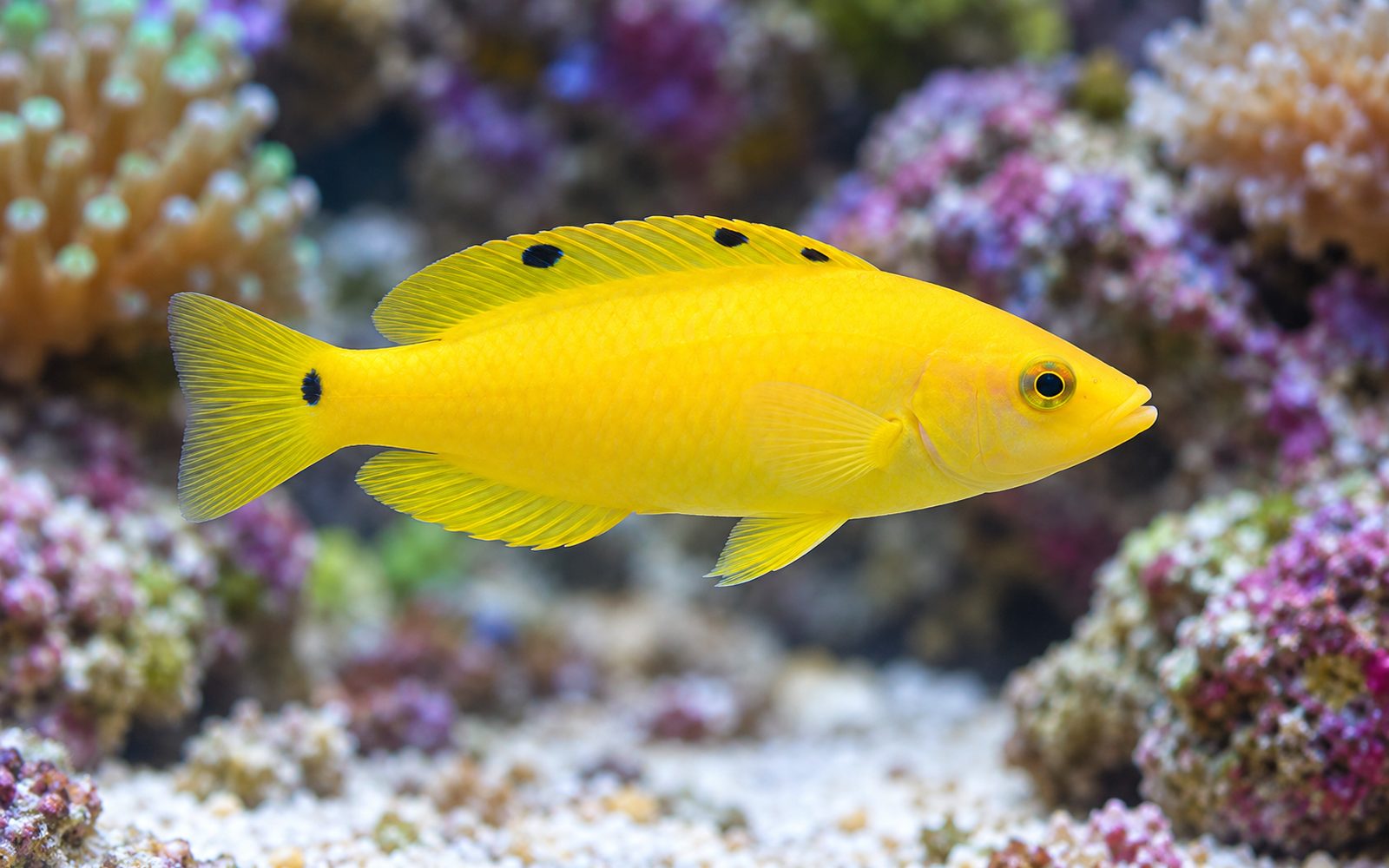
The canary wrasse is a small wrasse of the genus Halichoeres that stands out immediately in the aquarium with its bright yellow color from head to tail. It carries one or more black eyespots on the dorsal fin and a small dark dot on the caudal peduncle; the number of spots varies with age and sex. It is hardy and takes food quickly.
The most interesting trait of this wrasse is that it spends the night buried in the sand. When first added to the aquarium it may not be seen at all for a few days; it is buried in the sand and will come out when it is ready. All individuals are collected from the wild.
Natural Habitat
It lives on western Pacific reefs, where sand and coral rubble areas meet rocks. All day long it searches the bottom and rock surfaces for small creatures, and it dives into the sand when in danger and at night.
Tank Setup
- Volume: at least 150 liters.
- Sand: a soft, fine-grained sand bed at least 5 cm deep is essential; in coarse, sharp gravel it cannot bury itself and its skin gets injured.
- Water: salinity 1.023–1.026 specific gravity, pH 8.1–8.4, temperature 24–27°C.
- Lid: it jumps when startled; use a lid.
- Maintenance: a 10% water change weekly. When siphoning the sand bed, clean the areas where the fish buries itself carefully; avoid stirring the sand, especially in the evening.
- Reef compatibility: reef safe. It leaves corals and large invertebrates alone; it hunts flatworms, small bristle worms and parasitic snails.
Diet
Carnivorous. Offer frozen mysis, brine shrimp, copepods, chopped seafood and small marine fish granules. Feed small amounts 2–3 times a day; it supplements its diet with small creatures it finds in the rock and sand.
Behavior and Compatibility
Peaceful, constantly on the move and curious. It generally gets along with other fish; it can only be grumpy toward yellow wrasses that look very similar to it. Because it stirs the sand, it also helps aerate the aquarium bottom.
Good companions: clownfish, tangs, dwarf angelfish, anthias, gobies, cardinalfish, cleaner shrimp, corals.
Avoid: lionfish and large predators, very aggressive wrasses and triggerfish; an aquarium without sand.
Group and Colony Structure
Usually kept as a single individual. In a large aquarium, 2–3 fish added at the same time can live together; the dominant one among them eventually changes into a male.
Breeding
Like most wrasses, it starts life as a female; the dominant individual can change into a male. It is a pelagic spawner and is not bred in home aquariums.
Health and Common Problems
- Hardiness: a robust species; still, a new fish should be watched in quarantine.
- Sand injuries: skin abrasions and infection on a sharp or very coarse substrate.
- Jumping: the most common cause of loss in an uncovered aquarium.
Sexing
The sexes cannot be reliably told apart externally. The number and placement of the eyespots vary between individuals; although some sources link this to sex, it is not a definite criterion.
Tank mates
This list is calculated automatically from the species profile and grows as new species are added to the catalog. Try it in the planner for a definite answer.
Should not be kept together




Hobbyist notes
Things you won't find in books, learned by trial and error. The most helpful ones are on top.
Change history and contributors
- Page created · October 16, 2026