

Water parameters
Overview
With its dark red-maroon body and three thin white bands, the maroon clownfish is the largest of the clownfish; females can exceed 15 cm. The sharp spines on the cheek below the eye set it apart from all Amphiprion species and are the reason for its old genus name, Premnas. Some recent sources have moved the species into the genus Amphiprion as Amphiprion biaculeatus; in the hobby it is still referred to as Premnas.
It is hardy and captive-bred fish are widely available, but it is the most aggressive of the clownfish. As the female grows, she claims a large part of the aquarium and chases other fish. For this reason it should be the last fish added to a community tank.
Color and Fin Varieties
- Gold stripe: a form originating from Sumatra; the bands turn yellow-gold with age.
- White stripe: the usual form, whose bands stay white.
- Lightning: a captive-bred form produced from an individual from Papua New Guinea, whose white bands branch irregularly.
Natural Habitat
It lives in shallow lagoons and sheltered reefs of the Indo-West Pacific. In the wild it partners only with the bubble-tip anemone (Entacmaea quadricolor). The pair defends the area around the anemone with great determination, and the anemone in turn protects the fish from predators.
Tank Setup
- Volume: at least 150 liters for a pair; larger if there are many fish.
- Water: salinity 1.023–1.026 specific gravity, pH 8.1–8.4, temperature 24–27°C; zero ammonia and nitrite, low nitrate.
- Reef compatibility: reef safe; it does not touch corals or invertebrates, but it can cause problems for small fish.
- Anemone: not essential. It accepts a bubble-tip anemone, which is relatively easy to care for in the aquarium; the anemone should be added to a mature tank, and pump intakes should be covered with sponges.
- Order of addition: add it last, after the other fish have settled in.
Diet
Omnivorous and greedy. Offer marine fish granules and flakes, frozen mysis, brine shrimp, krill and chopped seafood. Foods with algae keep the colors vivid. Twice a day.
Behavior and Compatibility
A female maroon clownfish attacks anything that approaches her home; biting the keeper's hand is routine. It may chase fish smaller than itself or of similar color to the death. It can be kept with large fish able to defend themselves, in a sufficiently large volume.
Good companions: tangs, large sweetlips, dwarf angelfish, cleaner shrimp.
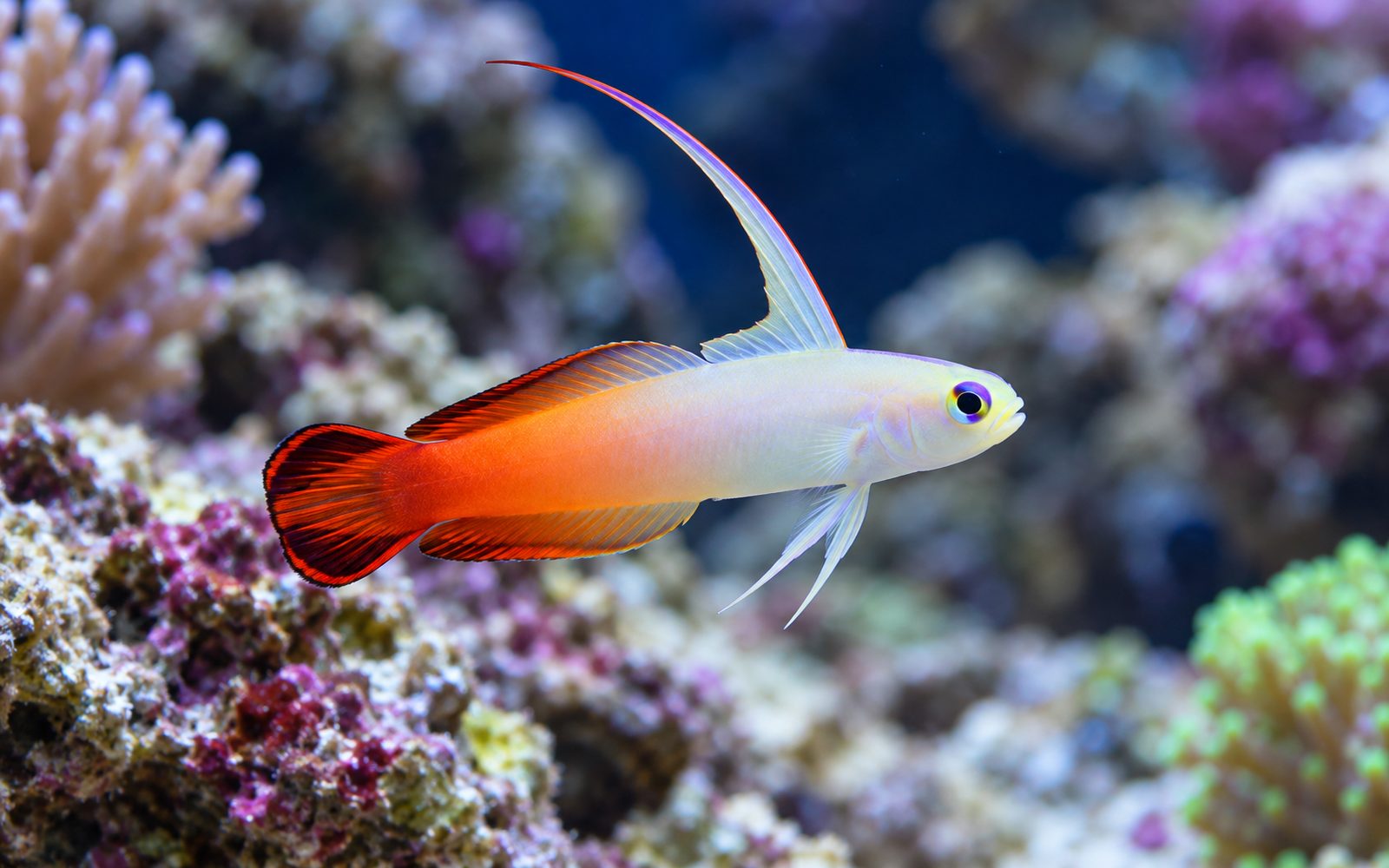
Avoid: other clownfish species, small and shy species such as firefish, mandarins and neon gobies, other aggressive damsels.
Group and Colony Structure
Keep a single pair or a single fish in the aquarium; no other clownfish species is added. Pairing is harder than with other clownfish: two adult females of the same size fight to the death. The safest approach is to add a juvenile that is clearly smaller than an established large fish; the smaller one remains male. Buying an already mated pair is also a good option.
Breeding
Clownfish are born male; the larger fish of the pair turns into the female. The pair lays orange eggs on a rock surface at the base of the anemone; the male fans and guards the eggs. The eggs hatch in about a week. The larvae are planktonic; they can be raised in a separate container on rotifers and newly hatched brine shrimp.
Health and Common Problems
- Brooklynella and Uronema: more common in wild fish; excess mucus and peeling skin.
- Velvet and marine ich: quarantine is the best protection.
- Fin and skin wounds from fighting: watch closely while pairing.
Sexing
The female can reach two to three times the size of the male and is darker in color. The male stays small and brighter red.
Tank mates
This list is calculated automatically from the species profile and grows as new species are added to the catalog. Try it in the planner for a definite answer.
Should not be kept together

Hobbyist notes
Things you won't find in books, learned by trial and error. The most helpful ones are on top.
Change history and contributors
- Page created · October 16, 2026