
Water parameters
Overview
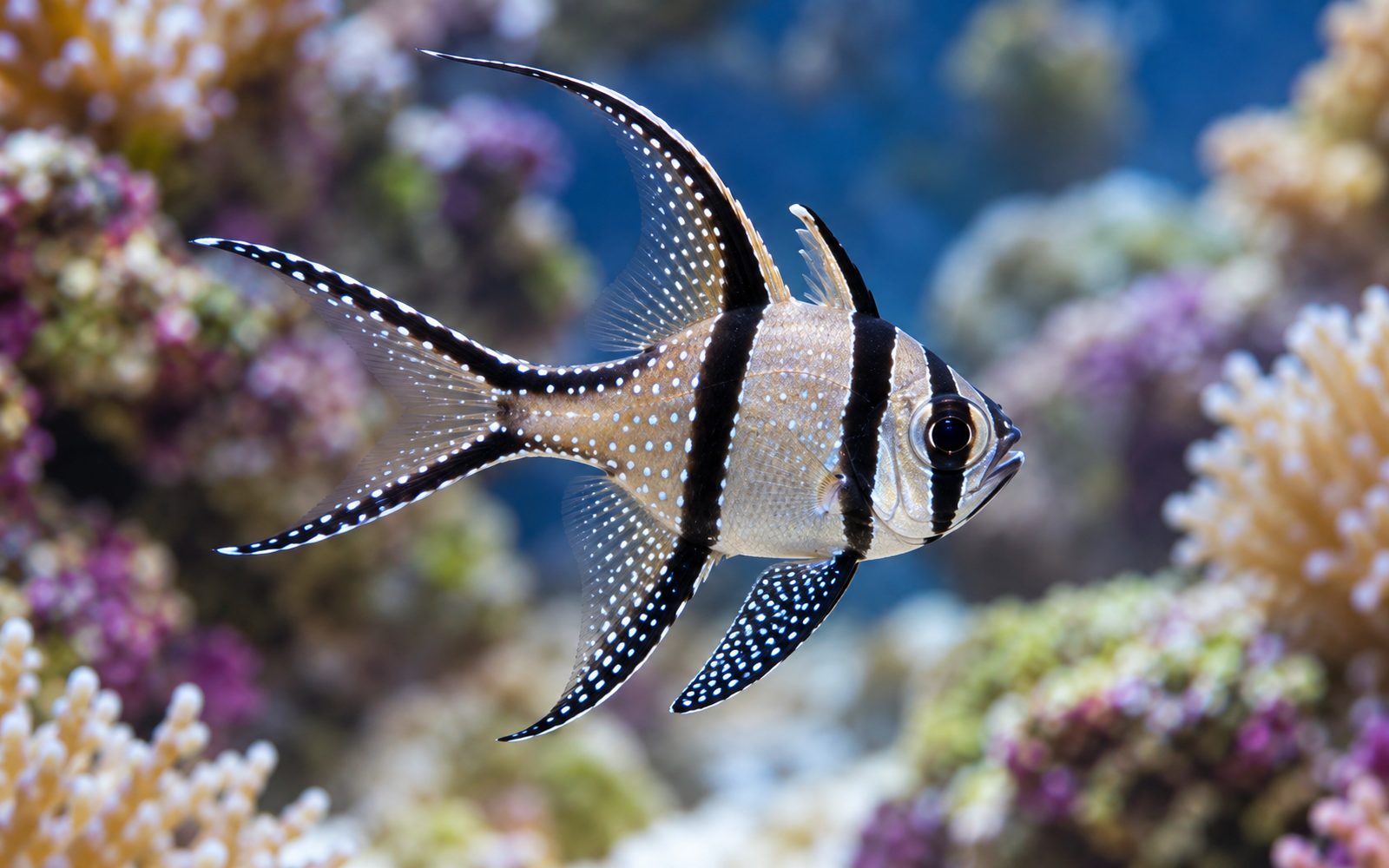
With three thick black bands on its silver body, white pearl spots decorating its rear body and fins, and long, trailing fins, the Banggai cardinalfish is one of the most elegant fish for reef aquariums. It is calm, slow-moving and docile.
It is endangered in the wild. It lives only around the small Banggai Islands in Indonesia, and overcollection for the aquarium trade has seriously reduced its populations; it is classified as "Endangered" by the IUCN. Today captive-bred fish are easy to find; for this species, buy only captive-bred fish. Mass deaths after import and viral diseases have also been reported in wild individuals.
Natural Habitat
It lives in small groups in the shallow, calm bays, seagrass beds and reef edges of the Banggai Islands. Juveniles hide among the spines of long-spined sea urchins (Diadema) and next to anemones and branching corals.
Tank Setup
- Volume: at least 100 liters for a pair.
- Water: salinity 1.023–1.026 specific gravity, pH 8.1–8.4, temperature 24–27°C.
- Reef compatibility: reef safe; it does not touch corals, shrimp or snails.
- Flow: it prefers calm to moderate flow; it tires in strong-current areas.
- Layout: shaded corners, branching corals or rock overhangs; decor without sharp edges for its long fins.
Diet
Carnivorous. Make frozen mysis, brine shrimp, copepods and krill the staple; captive-bred fish also accept granules. Feeding twice a day is enough.
Behavior and Compatibility
Peaceful toward other species and considered shy. Within its own species, however, territorial fights break out as the fish mature, especially between males.
Good companions: clownfish, gobies, firefish, blennies, royal gramma, pajama cardinalfish, cleaner shrimp.
Avoid: aggressive damsels, dottybacks, lionfish and large predators, active species that may nip its long fins.
Group and Colony Structure
The most trouble-free setup is a single fish or a mated pair. A group of juveniles looks compatible at first, but as the fish mature the males chase each other and the group shrinks. If a group is to be kept, it needs a large aquarium, plenty of hiding places and all fish added at the same time.
Breeding
It is a mouthbrooder: after the female releases the eggs, the male takes them into his mouth and carries them for about 3–4 weeks without eating. The young leave the mouth as tiny adults without going through a planktonic stage and can eat newly hatched brine shrimp right away. This makes it one of the easiest marine fish to breed in the aquarium. Moving the young to a separate container prevents the adults from eating them.
Health and Common Problems
- Captive-bred fish are hardy.
- Wild individuals: very sensitive to shipping stress and diseases.
- Marine ich and velvet: quarantine new arrivals.
- The male loses condition during brooding; feed him well afterward.
Sexing
Difficult to tell apart externally. The male's mouth and jaw area looks wider as he prepares to brood; a female carrying eggs has a fuller belly.
Tank mates
This list is calculated automatically from the species profile and grows as new species are added to the catalog. Try it in the planner for a definite answer.
Should not be kept together



Hobbyist notes
Things you won't find in books, learned by trial and error. The most helpful ones are on top.
Change history and contributors
- Page created · October 16, 2026