
Water parameters
Overview
The diadem dottyback is recognized by the broad purple-magenta stripe on the upper part of its bright yellow body, which starts at the snout, runs over the top of the head and covers the entire dorsal fin. It belongs to the same genus as the royal dottyback (half purple, half yellow) and the purple dottyback, which have their own pages on the site. In older sources it appears as Pseudochromis diadema.
It reaches about 6 cm, is easy to feed and resistant to disease. Despite its small size, however, it is one of the tougher-tempered dottybacks: it persistently chases fish that enter its territory, especially those smaller than itself and of similar shape. Most individuals sold are wild-caught.
Natural Habitat
It lives around the Malay Peninsula, the Philippines and northern Borneo, on sheltered reefs rich in coral at depths of 5–25 meters. It is usually found in small groups in crevices among corals and rocks; when in danger it instantly retreats inside.
Tank Setup
- Volume: at least 75 liters; a larger aquarium softens its aggression.
- Water: salinity 1.023–1.026 specific gravity, pH 8.1–8.4, temperature 24–27°C.
- Layout: plenty of crevices and hollows; rock structures that break lines of sight reduce chasing.
- Reef compatibility: it does not touch corals. It hunts small ornamental shrimp and small crustaceans; large cleaner shrimp are usually safe.
- Lid: it can jump; a lid is recommended.
Diet
Carnivorous. It accepts frozen mysis, brine shrimp, copepods and granules. Feed small amounts twice a day; enriched frozen foods keep the yellow and purple bright.
Behavior and Compatibility
Territorial and bold. It defends the area around its hollow; gobies, grammas and other small cave-dwelling fish are the most frequent targets. It lives more compatibly with much larger, active fish.
Good companions: clownfish, damsels, tangs, dwarf angelfish, large wrasses, foxface.
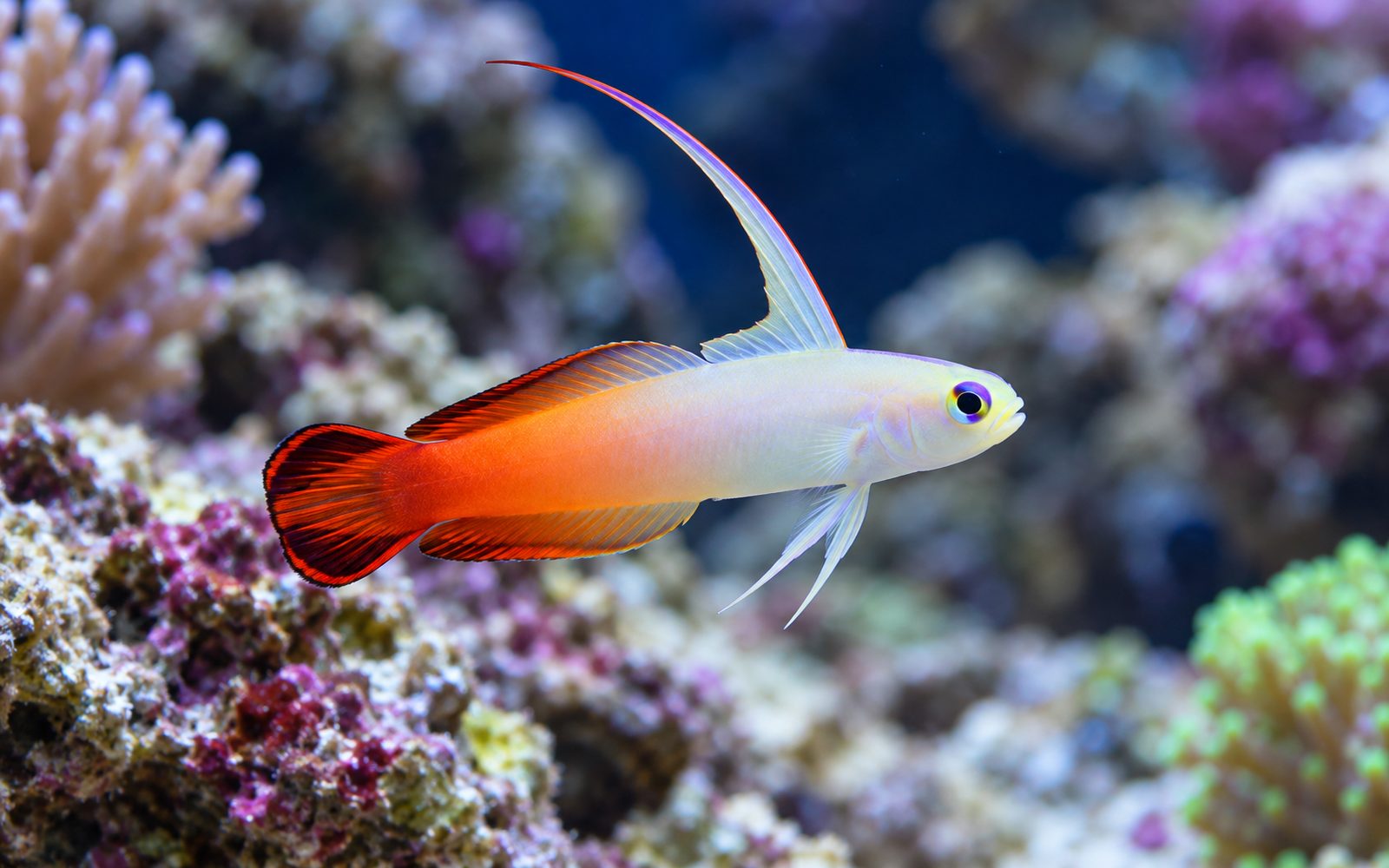
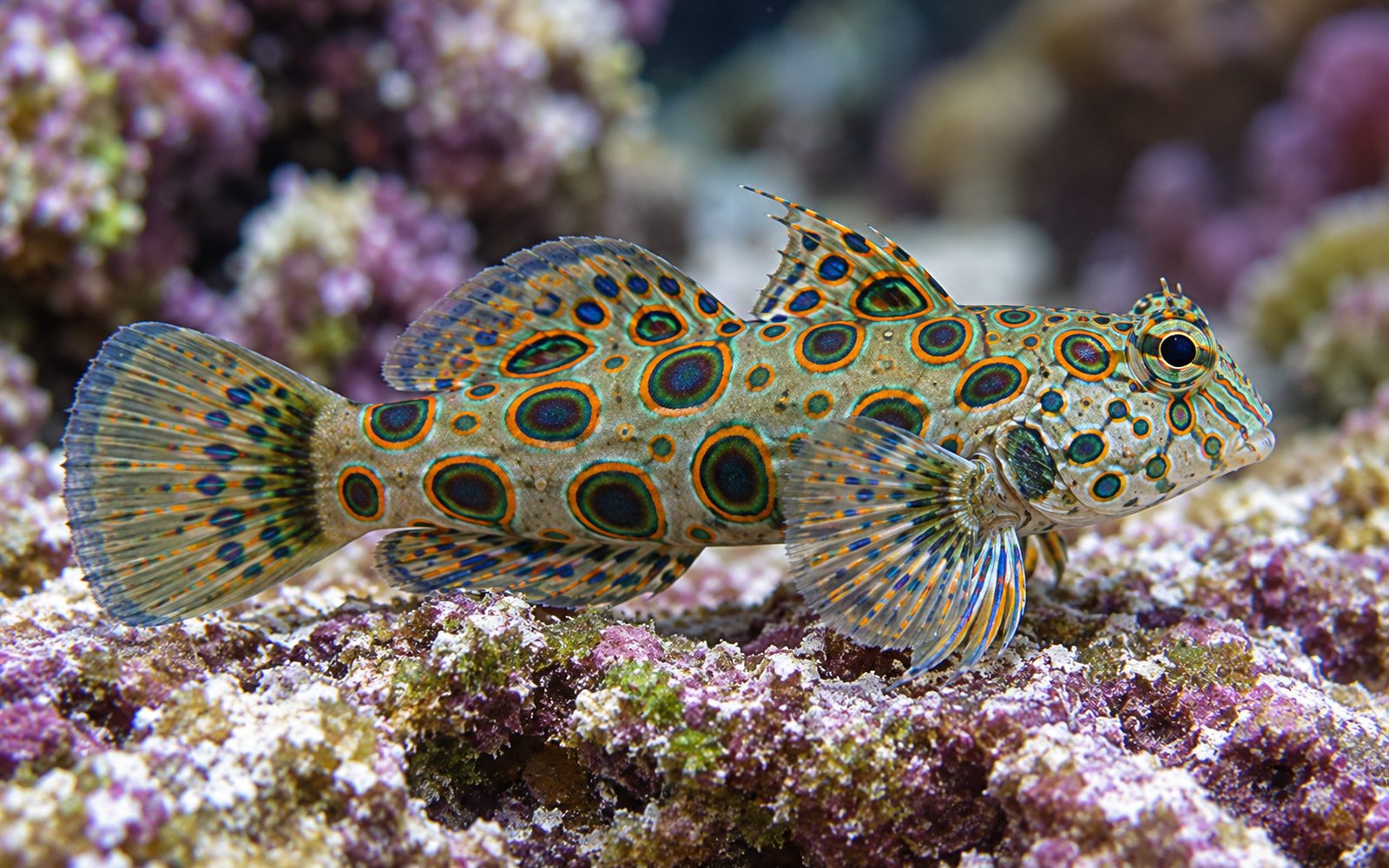
Avoid: other dottybacks, royal gramma, firefish and dartfish, small gobies, small ornamental shrimp such as the sexy shrimp.
Group and Colony Structure
Keep it singly. Although it is seen in small groups in the wild, in the limited space of an aquarium two individuals usually fight constantly. Do not put another Pictichromis or Pseudochromis species in the same aquarium.
Breeding
A mature male courts the female and lures her into a hollow he has prepared; the female lays a ball of eggs and the male guards them. Spawning has been observed in the aquarium, but raising the larvae requires live food cultures and is rare in home aquariums.
Health and Common Problems
- A hardy species; quarantine a new fish for 3–4 weeks.
- Marine ich and velvet: watch for them in quarantine.
- Torn fins seen on other fish may be a sign of its chasing.
Sexing
There is no reliable external difference. Dottybacks can start out as females and change into males; the large, dominant individual is usually the male.
Tank mates
This list is calculated automatically from the species profile and grows as new species are added to the catalog. Try it in the planner for a definite answer.
Should not be kept together


Hobbyist notes
Things you won't find in books, learned by trial and error. The most helpful ones are on top.
Change history and contributors
- Page created · October 16, 2026