
Water parameters
Overview
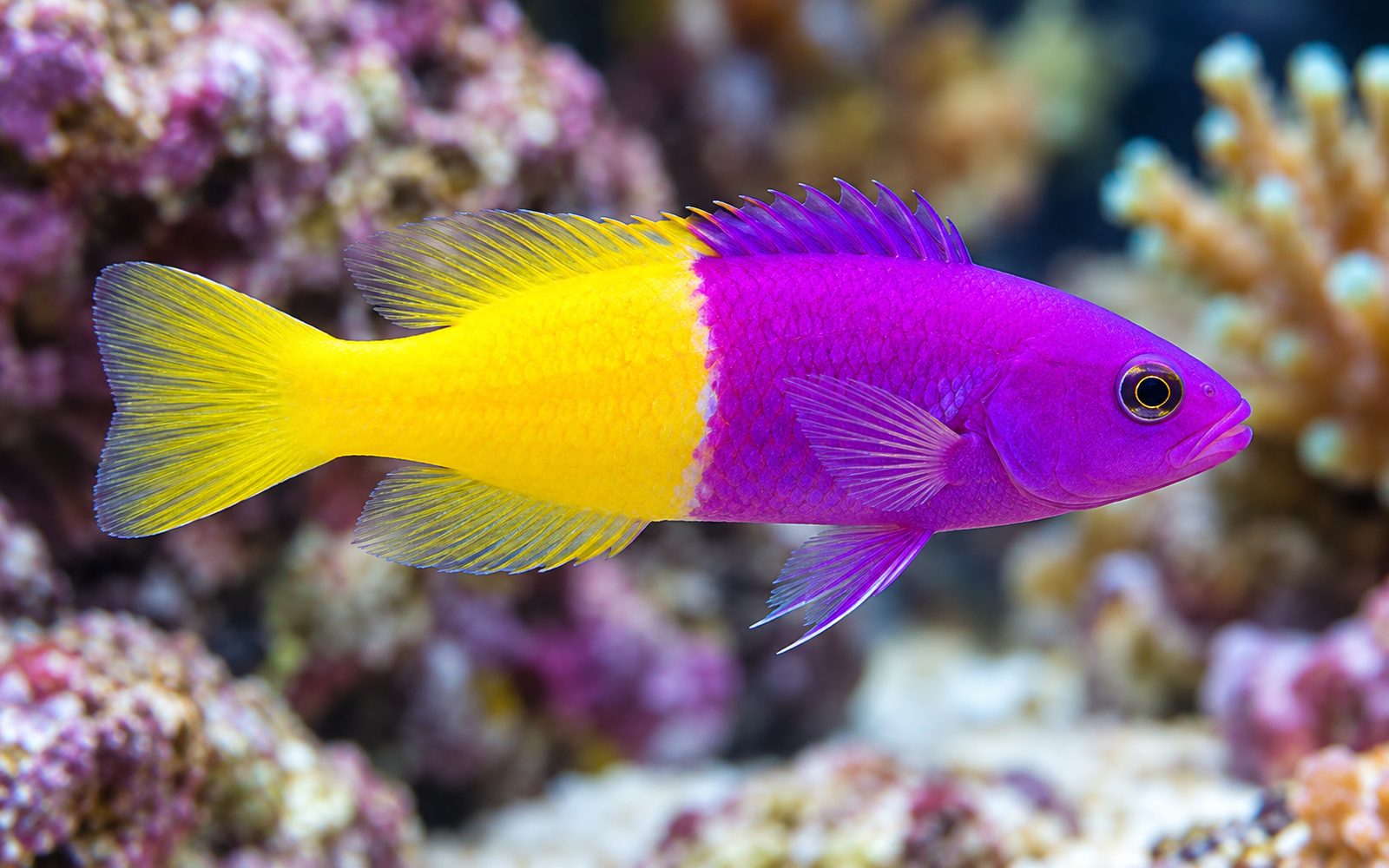
With the front half of its body a vivid purple and the rear half bright yellow, the royal dottyback looks very much like the royal gramma (Gramma loreto); for this reason it is also called the "false gramma." Telling them apart is easy: in the dottyback the two colors are separated by a sharp line, and there is no black spot on the dorsal fin and no black line through the eye.
The real difference is in behavior: despite its small size, the royal dottyback is aggressive. It chases fish that come near its den, especially those similar in shape to itself and newly added ones. It is hardy and easy to feed; with the right companions it is a trouble-free reef fish.
Natural Habitat
It lives on reef slopes of the western Pacific, inside or just in front of rock and coral holes; crevices in steep rock walls are its favorite places. It does not stray far from its den and hunts small crustaceans and plankton passing nearby. When in danger it instantly retreats deep into the crevice.
Tank Setup
- Volume: at least 75 liters.
- Water: salinity 1.023–1.026 specific gravity, pH 8.1–8.4, temperature 24–27°C.
- Reef compatibility: reef safe; it leaves corals alone. However, it may hunt small ornamental shrimp; larger shrimp such as cleaner shrimp are usually safe.
- Layout: a rock structure with plenty of caves and holes; the fish claims one of them.
- Order of introduction: it should be one of the last fish added, after the peaceful ones.
Diet
Carnivorous. Offer frozen mysis, brine shrimp, krill and granules. Feeding twice a day is enough; its colors stay vivid with a varied diet. At feeding time it darts out of its den and adapts easily to dry food.
Behavior and Compatibility
It defends its den with determination. It may constantly chase fish of similar size and shape (grammas, other dottybacks, small gobies). It is calmer toward fish that are clearly larger and faster than itself.
Good companions: clownfish (in enough volume), tangs, chromis, large blennies, cleaner shrimp.
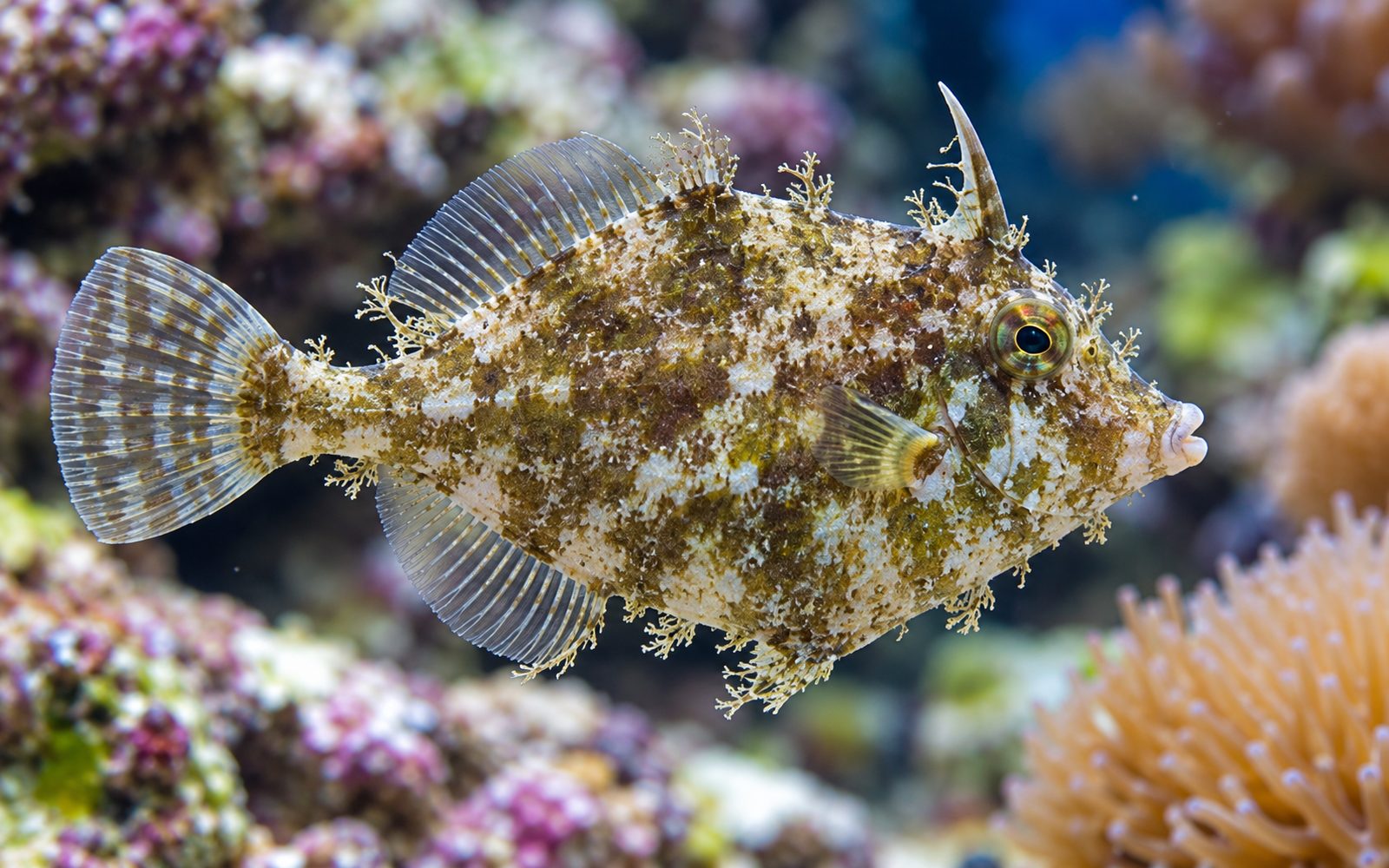
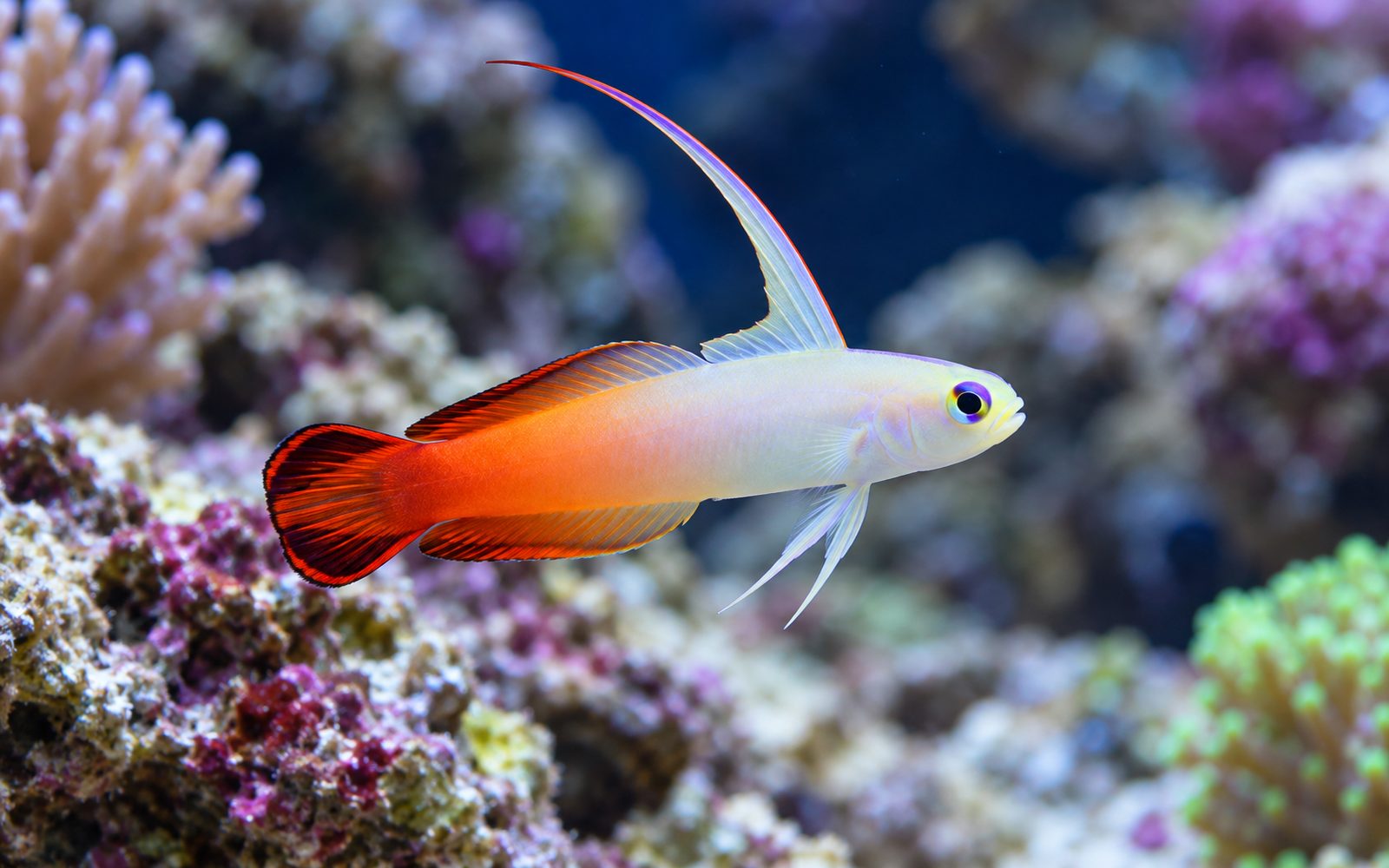
Avoid: royal gramma, other dottybacks, firefish, neon goby, mandarin, small ornamental shrimp.
Group and Colony Structure
Kept as a single individual. A second fish of its own species can be tried only as a mated pair and in a very large aquarium; otherwise one will chase the other until it kills it.
Breeding
The female lays her eggs as a ball inside a cave; the male guards the egg ball. Spawning can be seen in the aquarium; raising the fry requires expertise. Some dottyback species are bred commercially.
Health and Common Problems
- A hardy species; in suitable water it rarely gets sick and adapts easily to a new aquarium.
- Marine white spot and velvet: quarantine new fish.
- Injuries on other fish caused by its aggression show that the aquarium setup needs to change.
Sexing
There is no reliable external difference. Males are usually a little larger.
Tank mates
This list is calculated automatically from the species profile and grows as new species are added to the catalog. Try it in the planner for a definite answer.
Should not be kept together


Hobbyist notes
Things you won't find in books, learned by trial and error. The most helpful ones are on top.
Change history and contributors
- Page created · October 16, 2026