
Water parameters
Overview
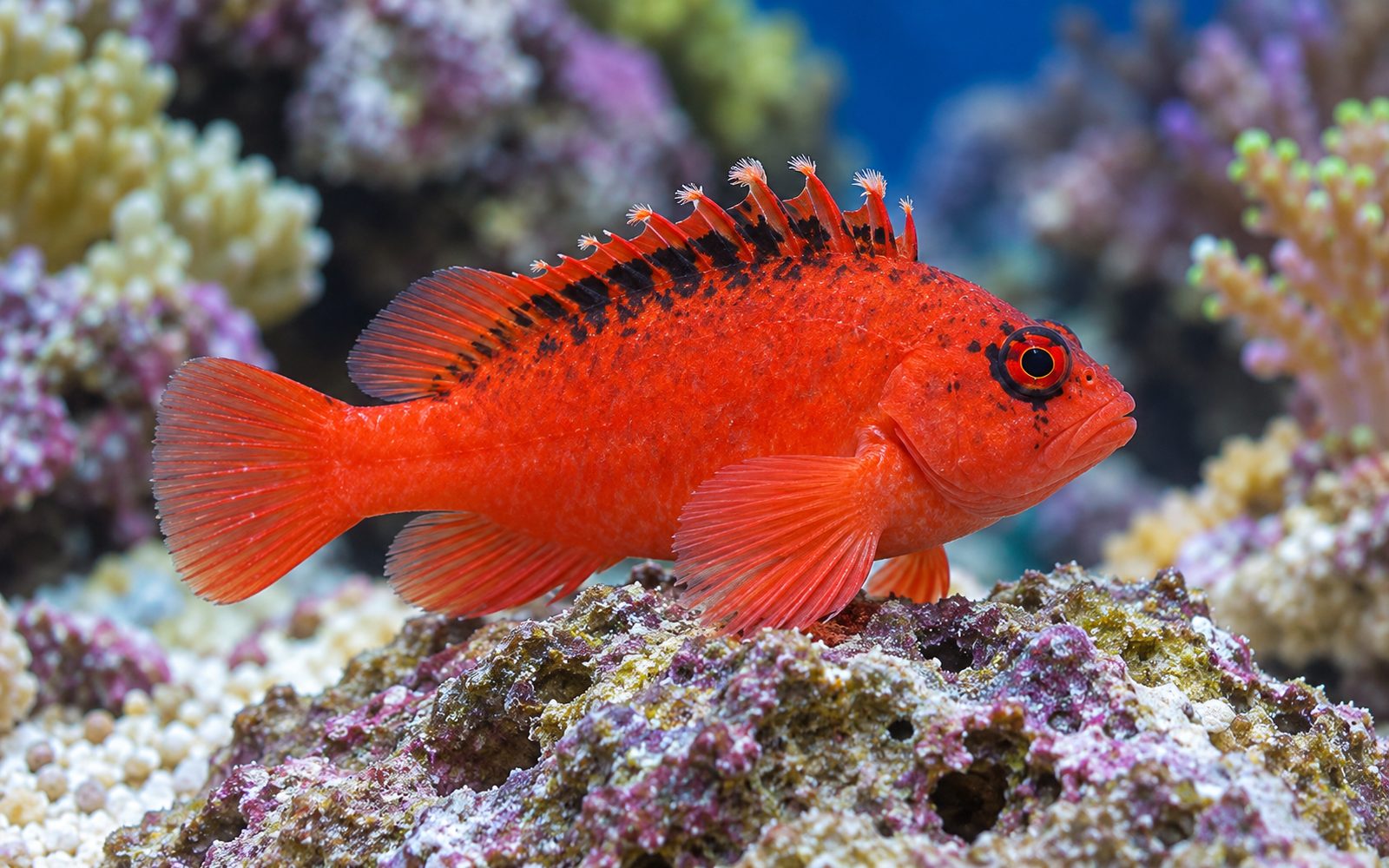
With its bright red body, the black stripe running along the base of the dorsal fin and the black rings around its eyes, the flame hawkfish is one of the most eye-catching fish for reef aquariums. Hawkfish have no swim bladder; they perch on top of rocks and corals with their thick pectoral fins, watch their surroundings and pounce on prey passing nearby.
It is a hardy, greedy fish with plenty of personality. The only point where it causes trouble is its feeding habit: it hunts small shrimp, crabs and very small fish.
Natural Habitat
It lives on the outer reefs of the Pacific, in areas exposed to waves and currents, especially among branching Pocillopora corals. It perches among the coral branches and hardly ever moves away.
Tank Setup
- Volume: at least 110 liters.
- Water: salinity 1.023–1.026 specific gravity, pH 8.1–8.4, temperature 24–27°C.
- Reef compatibility: reef safe with caution. It does not eat corals, but it hunts small ornamental shrimp, hermit crabs and small invertebrates. Perching constantly on the same coral can irritate sensitive corals. Large cleaner shrimp are usually safe, but the risk is still not zero.
- Layout: rock tops and branching corals to perch on; it likes strong flow.
- Order of addition: if it is to be tried with shrimp, adding the shrimp first and the hawkfish afterward reduces the risk but does not eliminate it.
Diet
Carnivorous. Offer frozen mysis, krill, brine shrimp, chopped seafood and granules. 1–2 times a day. It does not chase food through the water; it catches it by darting out as it drifts past its perch, so releasing food into the current makes things easier for it. It is greedy; avoid overfeeding.
Behavior and Compatibility
Usually calm toward other fish, but it may eat very small fish that fit in its mouth (small gobies, juvenile fish). It is territorial toward its own kind and other hawkfish.
Good companions: clownfish, tangs, dwarf angelfish, chromis, large blennies, damselfish.
Avoid: small ornamental shrimp, hermit crabs, small fish such as firefish and neon gobies, other hawkfish.
Group and Colony Structure
Keep a single individual. Two hawkfish together will fight; a mated pair can only be tried in a very large aquarium.
Breeding
Hawkfish are pelagic spawners that release their eggs into the water: the pair rises at dusk and releases eggs and sperm into the water, and the eggs drift with the current. Breeding is almost never seen in the aquarium.
Health and Common Problems
- A hardy species; in suitable water and with a varied diet it can live for many years.
- Marine ich and velvet: quarantine new arrivals.
- In individuals fed only dry food the red color may fade; a varied diet preserves the color.
Sexing
Some hawkfish species are known to start out as females and later change into males. There is no reliable external way to tell the sexes apart; the male is usually larger.
Tank mates
This list is calculated automatically from the species profile and grows as new species are added to the catalog. Try it in the planner for a definite answer.
Should not be kept together



Hobbyist notes
Things you won't find in books, learned by trial and error. The most helpful ones are on top.
Change history and contributors
- Page created · October 16, 2026