
Water parameters
Overview
The peacock-tail anemone shrimp is recognized by the large white spots on its glass-clear body and the white eyespots with orange-black rings lined up on its tail fan; this is why the name "peacock-tail" is also used in English. For many years it was known as Periclimenes brevicarpalis and in 2017 it was moved to the re-established genus Ancylocaris. In the wild it lives among the tentacles of large anemones, above all carpet anemones, mostly as one female and a small male. Females reach 2.5 cm, males are noticeably smaller. Specimens in the trade are wild-collected.
Tank Setup
- At least 60 liters, a mature reef and preferably a host anemone; in the aquarium it may also accept a bubble tip anemone.
- Salinity 1.023–1.026 specific gravity, pH 8.1–8.4, temperature 24–27°C.
- Reef-safe; it does not harm corals.
- It should be acclimated by the drip method for at least 1 hour; copper-based medications are lethal.
Diet
Omnivorous; it picks up the anemone's leftover food, plankton and detritus. Finely chopped mysis and small granules should be given a few times a week; it also takes a share of the food given to the anemone.
Behavior and Compatibility
Peaceful and sedentary; it rarely leaves its anemone. Clownfish sharing the anemone sometimes chase it away.
Good companions: carpet and bubble tip anemones, gobies, cardinalfish, calm clownfish; porcelain crab.
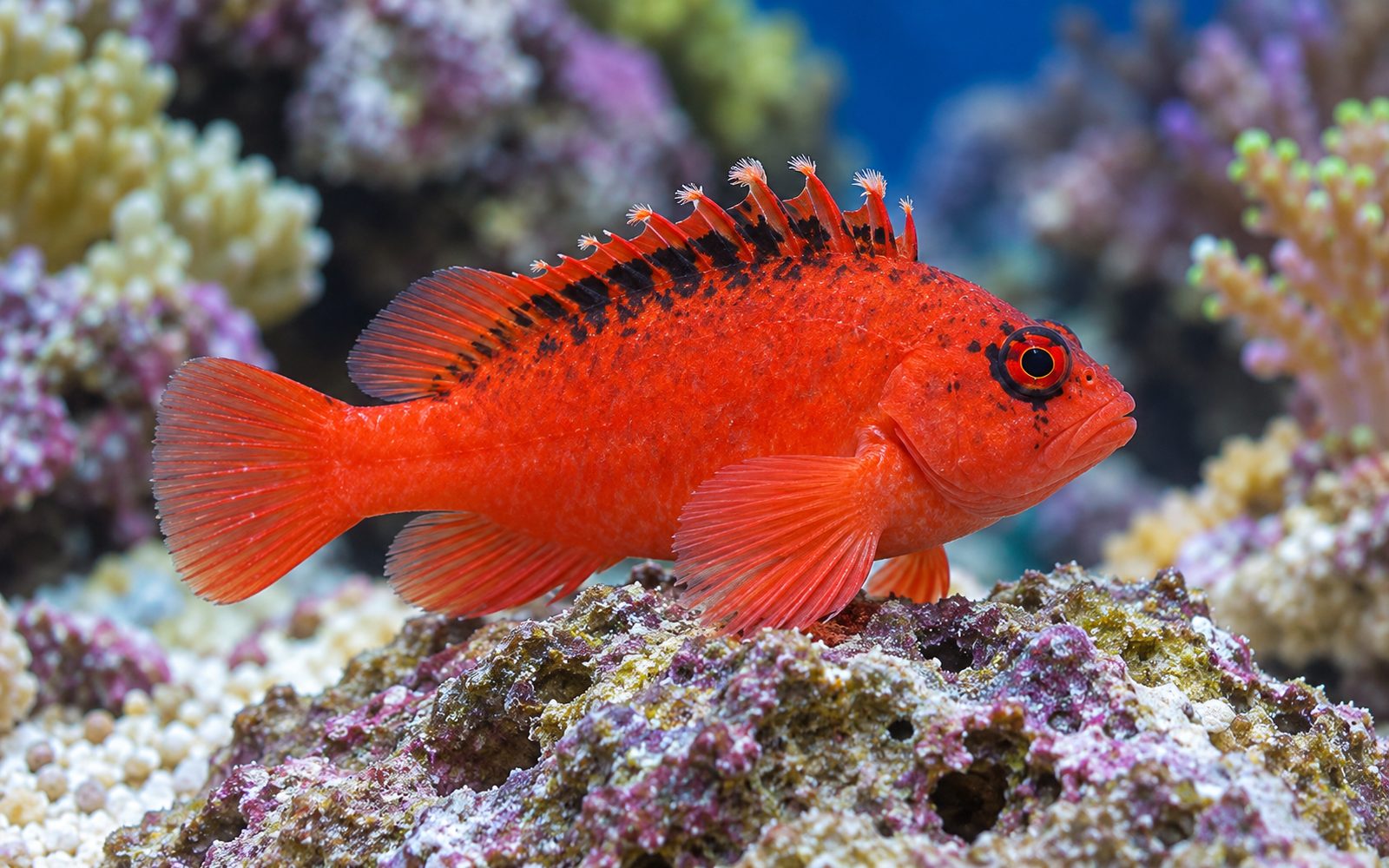
Avoid: hawkfish, wrasses and other shrimp predators; large crabs and boxer shrimp.
A short profile for this species
The Peacock-tail Anemone Shrimp page has the basics, but the sections below have not been written yet. If you keep this species, write a section from your own experience; it will be published under your name after editor approval.
Tank mates
This list is calculated automatically from the species profile and grows as new species are added to the catalog. Try it in the planner for a definite answer.
Should not be kept together



Hobbyist notes
Things you won't find in books, learned by trial and error. The most helpful ones are on top.
Change history and contributors
- Page created · October 16, 2026