
Water parameters
Overview
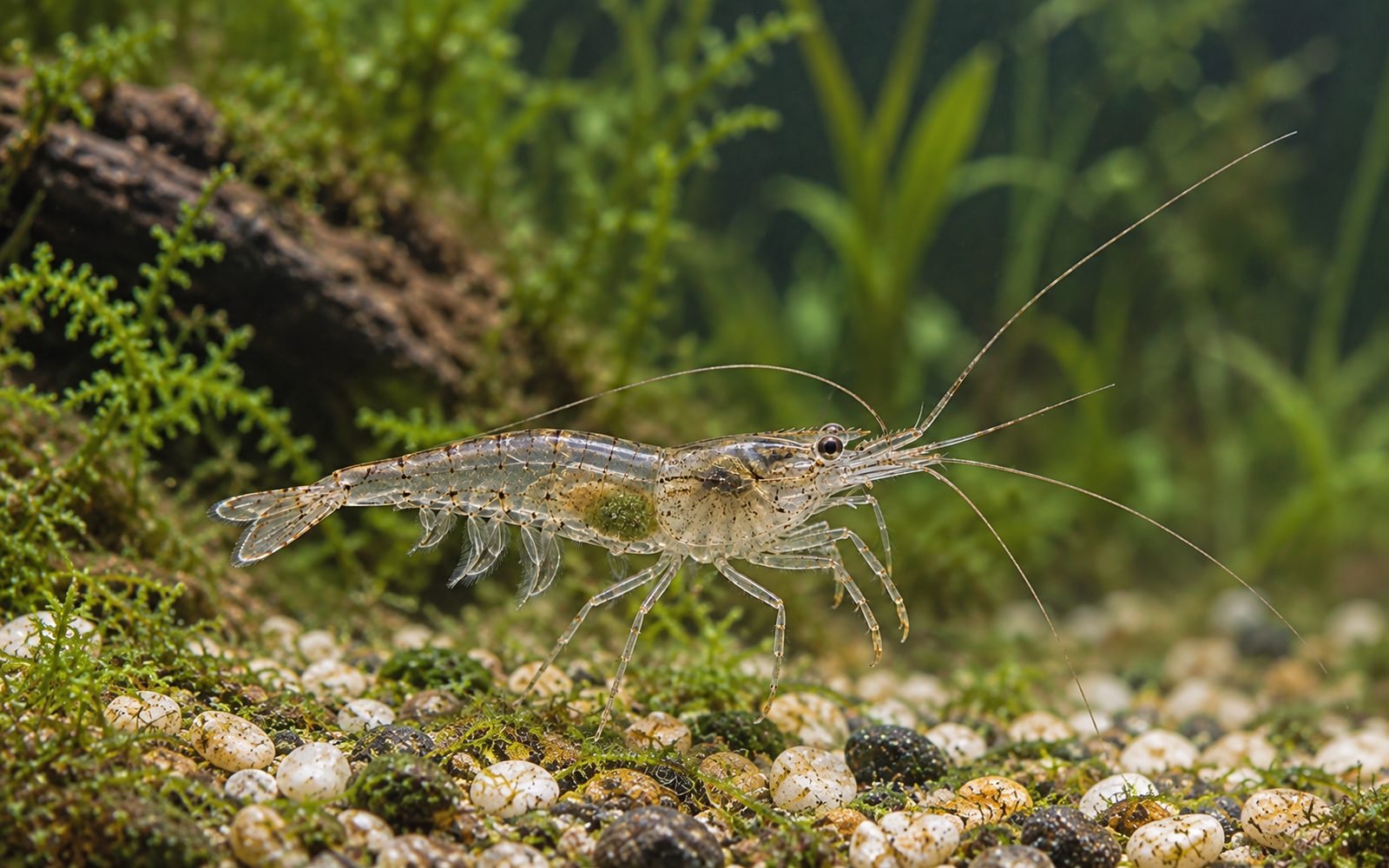
The ghost shrimp earns its name with its glass-clear body: you can even watch the food it has eaten moving through its digestive tract from the outside. It was long known as Palaemonetes paludosus and was later moved to the genus Palaemon.
It is a cheap, hardy and active scavenger; in the US it is bred largely as feeder shrimp. Because of this, other species are sometimes found mixed in for sale under the name "ghost shrimp". Individuals with noticeably long, thick claws are usually a Macrobrachium species and are far more dangerous to fish; be careful when buying.
Natural Habitat
It lives along the vegetated shores of lakes, ponds, canals and slow-flowing streams in the eastern US. It is an entirely freshwater species.
Tank Setup
- Volume: 30 liters or more for a small group.
- Plants: Dense plants and moss are important both for hiding and as a food source.
- Water: 20–26°C, neutral to slightly alkaline, moderately hard water. Stay away from products containing copper.
- Filter: A sponge filter if you plan to raise young; protect the intakes of powered filters with a sponge.
Diet
Omnivorous with a big appetite. It eats everything: leftover food, biofilm, decaying plant matter, flakes and granules, sinking tablets and frozen foods. In a community aquarium, while cleaning up leftovers it also helps itself to the other animals' food.
Behavior and Compatibility
Usually peaceful but an opportunistic predator: it can catch fish fry, very small fish and dwarf shrimp babies. It rarely touches adult Neocaridina. Individuals jostle each other at feeding time.
Good companions: Medium-sized peaceful fish (tetras, barbs, gouramis), corydoras, large snails.
Avoid: Very small fish and aquariums where fry are being raised, valuable dwarf shrimp colonies, fish large enough to eat them (cichlids, bettas).
Group and Colony Structure
It has no distinct social structure, but hides less in a larger group. 3–6 individuals is a good start. If the group becomes too crowded or food runs short, they may eat each other, especially individuals that are molting.
Breeding
It breeds in the aquarium. The female carries her eggs under her abdomen for about 2–3 weeks. The young hatch as small, free-swimming larvae; they develop in fresh water but need very fine food such as infusoria and powdered food during the first days. Because adults eat the larvae, the berried female should be moved to a separate aquarium.
Health and Common Problems
- Sudden death: Usually copper, ammonia or the use of medications.
- Losses during molting: Sudden water changes or insufficient minerals.
- Poor-quality stock: Shrimp shipped as feeders may suffer losses in the first days; quarantine is recommended.
Sexing
Females are larger with a wider abdomen; the eggs are clearly visible under the abdomen. Males are smaller and slimmer.
Tank mates
This list is calculated automatically from the species profile and grows as new species are added to the catalog. Try it in the planner for a definite answer.
Usually compatible
 Blackfin Corydoras
 Polystictus Corydoras
 Emerald Betta
 Emerald Cory
 Porthole Catfish
 Cryptocoryne Parva
 Gold Spot Pleco (L001)
 European Bitterling
 African Glass Catfish
 African Butterflyfish
Should not be kept together






Hobbyist notes
Things you won't find in books, learned by trial and error. The most helpful ones are on top.
Change history and contributors
- Page created · October 16, 2026