
Water parameters
Overview
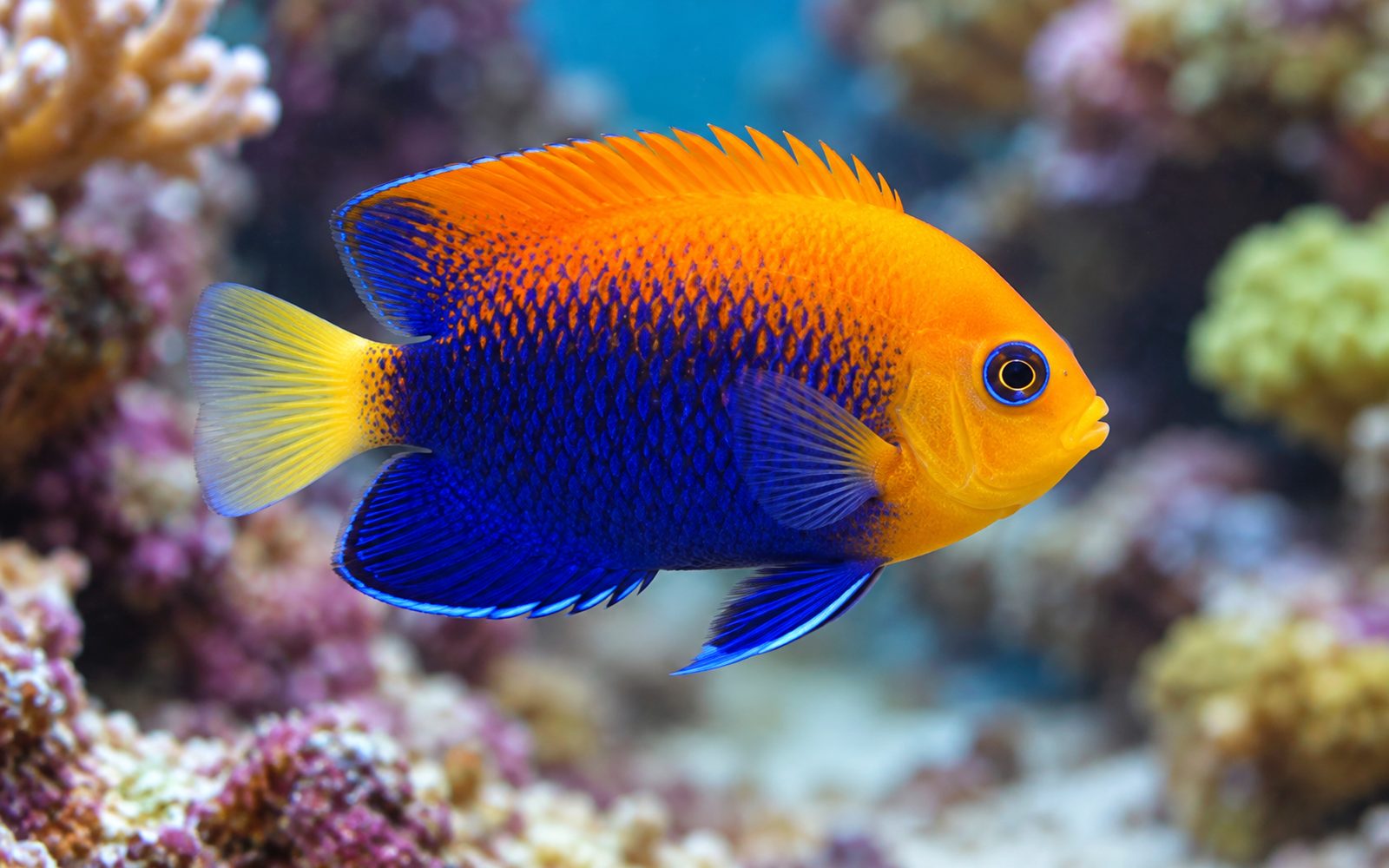
The African flameback angelfish is a small, colorful dwarf angelfish from the coasts of East Africa. Its head and back are orange–yellow, the rest of the body and the fins are dark navy blue, and the tail is pale yellowish. Adults reach about 8 cm. In the wild it usually lives in small groups in deep rubble areas. Specimens are wild-collected; because of the long shipping journey they may be timid in the first days.
Tank Setup
- At least 100 liters; plenty of rock crevices and hiding places.
- Salinity specific gravity 1.023–1.026, pH 8.1–8.4, temperature 24–27°C.
- Reef-safe with caution: it is one of the more docile dwarf angelfish, but it may pick at zoanthids and LPS corals.
- Mature, algae-covered live rock supports its feeding.
Diet
Omnivorous. Angelfish foods containing spirulina, frozen mysis, brine shrimp and copepods, dried seaweed. Small amounts 2–3 times a day.
Behavior and Compatibility
An active species that constantly moves among the rocks. It is territorial towards other dwarf angelfish; it usually has no problems with small, peaceful fish. In a large aquarium two individuals of different sizes can form a pair.
Good companions: Clownfish, gobies, blennies, cardinalfish, fairy wrasses, cleaner shrimp.
Avoid: Other dwarf angelfish (especially the similarly colored flame angel), lionfish, large and aggressive species.
A short profile for this species
The African Flameback Angelfish page has the basics, but the sections below have not been written yet. If you keep this species, write a section from your own experience; it will be published under your name after editor approval.
Tank mates
This list is calculated automatically from the species profile and grows as new species are added to the catalog. Try it in the planner for a definite answer.
Should not be kept together



Hobbyist notes
Things you won't find in books, learned by trial and error. The most helpful ones are on top.
Change history and contributors
- Page created · October 16, 2026