
Water parameters
Temperature20–28°C
pH6–7.5
General hardness (GH)2–15 dGH
Recommended range
Overview
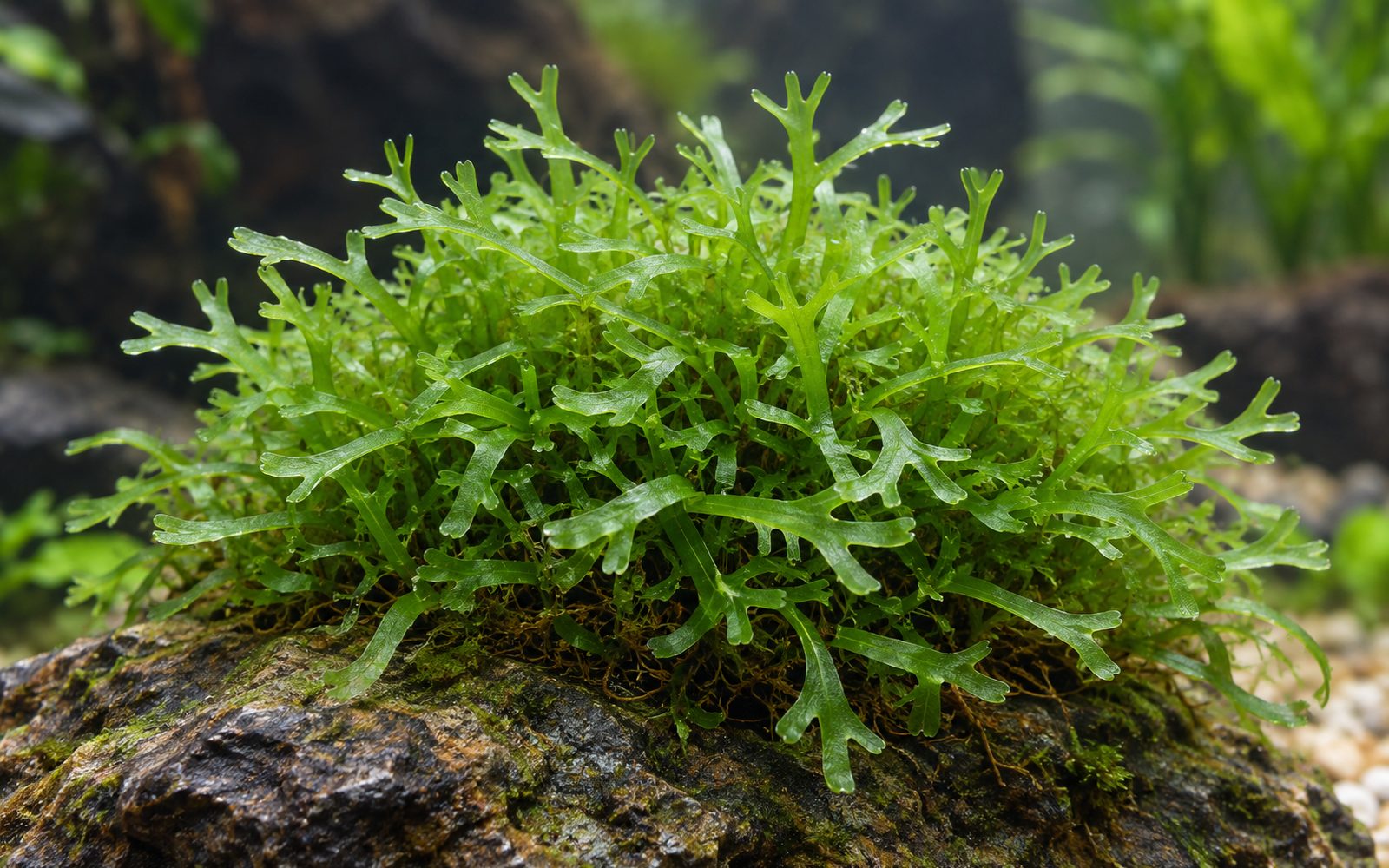
This plant, known to aquarists by the German name "Süßwassertang" (freshwater seaweed), was thought for many years to be a liverwort. DNA studies showed that it is actually the gametophyte of the fern Lomariopsis lineata, that is, the flat stage before the fern forms its fronds. In the aquarium it stays in this stage and multiplies. It forms a soft cushion of flat, forking, light green, semi-transparent ribbons.
Planting and Placement
Unlike Riccia, it sinks in water. It can be tied to stone or driftwood with fine mesh or thread, wedged between stones, or simply placed on the substrate. Because it does not attach firmly on its own, tying it down is recommended.
Care and Fertilization
- Light: Low to medium.
- CO₂: Not required, but speeds up growth.
- Fertilizer: Liquid fertilizer is enough.
- It grows at a slow to moderate rate. If the cushion becomes too thick, the lower parts turn brown; split it and thin it out. The separated pieces form new cushions.
Propagation
This section has not been written yet. How is it propagated?
Be the first to write it
Common Problems
This section has not been written yet. Problems such as melting, yellowing and algae, and how to fix them.
Be the first to write it
Hobbyist notes
Things you won't find in books, learned by trial and error. The most helpful ones are on top.
No notes yet. If you have experience with this species, leave the first note.
Was this page helpful?
Change history and contributors
- Page created · October 16, 2026