
Water parameters
Overview
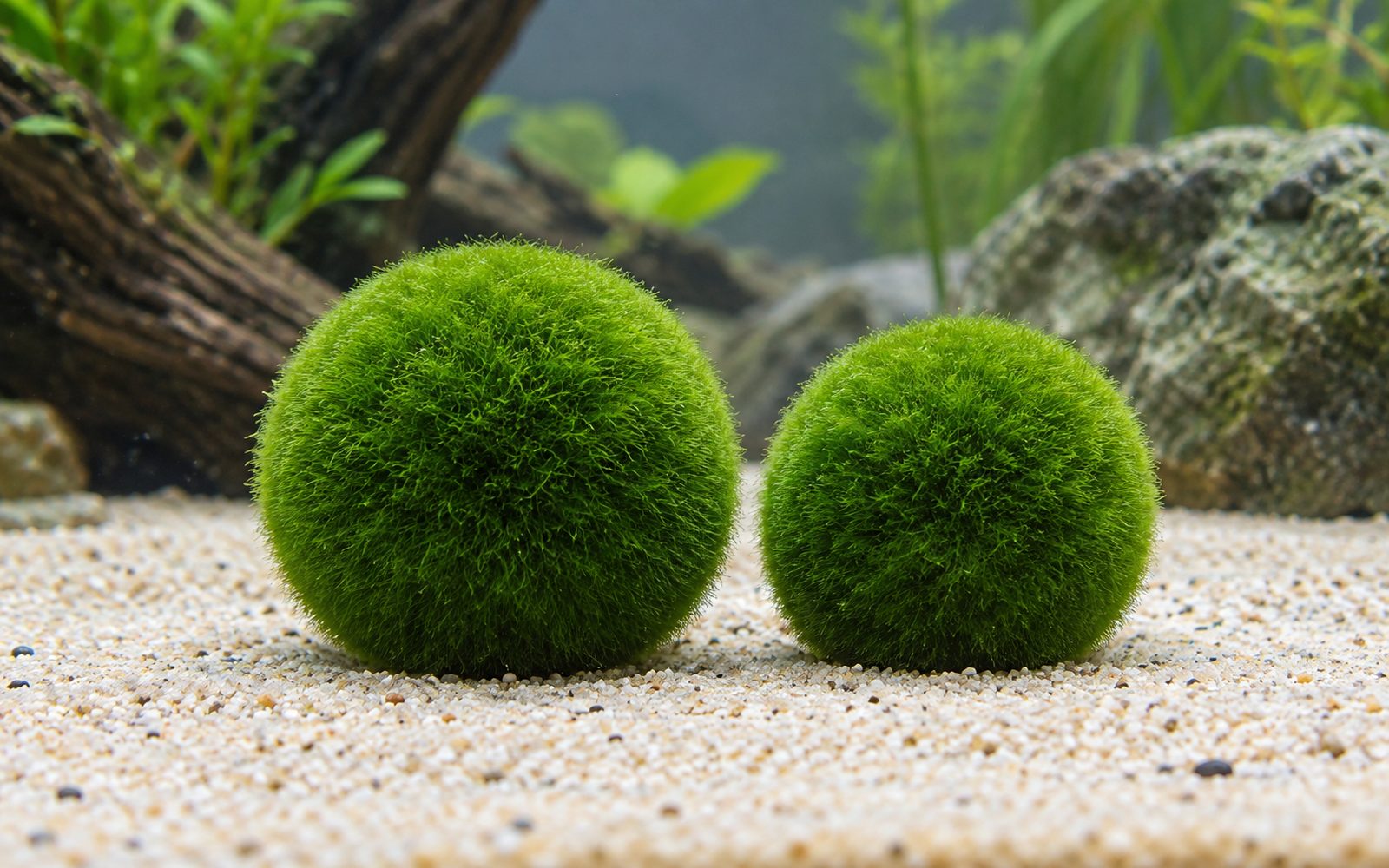
Marimo is not actually a plant but a species of green algae. In nature it takes on its perfect ball shape on the lake bottom as the waves roll it around. The giant marimo of Lake Akan in Japan (reaching 30 cm) are protected and a national symbol; the ones sold in shops are small balls that are cultivated or rolled by hand.
Care is very easy, and it grows only about 5 mm a year. It is popular in shrimp tanks and cool-water nano aquariums.
Planting and Placement
It is not planted; it is simply placed on the substrate. It is used as a decorative piece in the foreground. If you like, it can be opened up, spread out and tied to a stone or root like a "carpet".
Care and Fertilization
- Light: Low; direct sunlight and strong lamps turn it brown.
- Temperature: It likes cool water; prolonged temperatures above 25°C can cause it to rot. In a tropical aquarium keep it in the coolest corner and watch it in summer.
- Shape: Gently turn it by hand every few weeks so every side gets light and it keeps its ball shape. During water changes, clean it by gently squeezing and swishing it in aquarium water.
Propagation
A large marimo can be split in two and each piece rolled back into shape by hand; the pieces gradually become balls again.
Common Problems
- Brown or white patches: too much light, heat or dirt; remove the patchy part and roll the rest back into a ball.
- Floating to the surface: caused by oxygen bubbles trapped inside; a gentle squeeze makes it sink.
- Zebra mussel warning: in 2021, invasive zebra mussels were found in marimo balls sold in several countries and the products were recalled. Inspect new marimo, quarantine them if necessary, and never release them into natural waters.
Hobbyist notes
Things you won't find in books, learned by trial and error. The most helpful ones are on top.
Change history and contributors
- Page created · October 16, 2026