
Water parameters
Overview
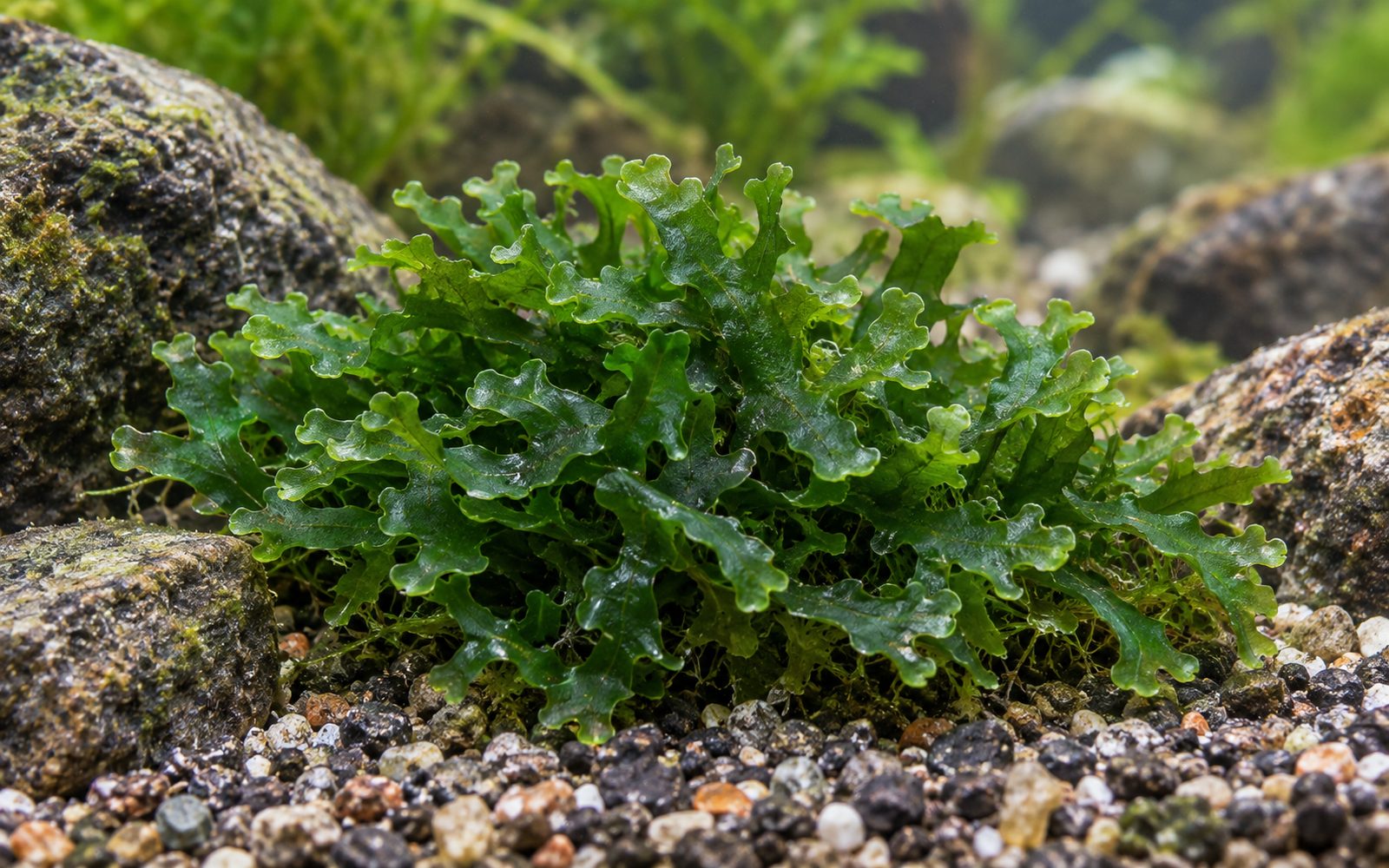
Monosolenium tenerum is a liverwort of Asian origin, known incorrectly in the aquarium trade as "pellia" (true Pellia species are different). It builds dense clumps of flat, dark green, semi-transparent, lobed branches. It resembles Riccia but is larger and darker; the most important difference is that it sinks in water. That is why it does not float up and break apart, and it creates a lasting green texture in the foreground or between stones. It is a good hiding and grazing area for shrimp.
Planting and Placement
It can be wedged between stones, left loose on the substrate, or tied to stone and driftwood with fine mesh. It does not attach firmly on its own; secure it in areas with flow.
Care and Fertilization
- Light: Low to medium; it grows denser under medium light.
- CO₂: Not required, but speeds up growth.
- Fertilizer: Liquid fertilizer is enough.
- When the clump gets thick, the lower parts can turn brown; divide it into pieces and thin it out. The separated pieces form new clumps.
Propagation
Common Problems
Hobbyist notes
Things you won't find in books, learned by trial and error. The most helpful ones are on top.
Change history and contributors
- Page created · October 16, 2026