
Water parameters
Overview
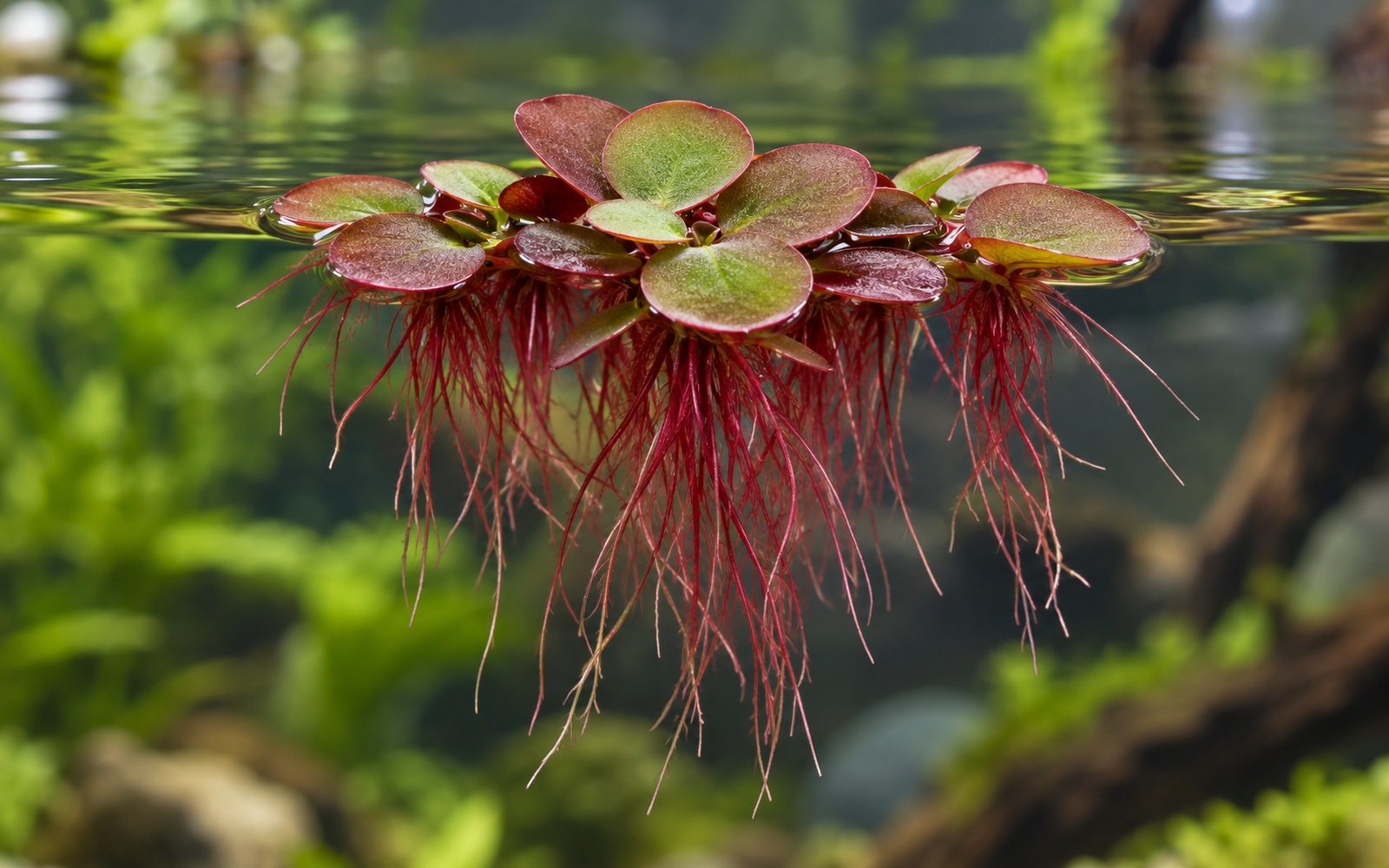
Red root floater is a small floating plant from the still waters of the Amazon basin. Its round leaves, 1–2 cm across, are arranged along a stem and with their upturned edges look like little boats. Under strong light and with the right nutrient balance, the leaves turn crimson and the roots bright red.
Because of its colorful appearance it is one of the most decorative floating plants; it provides both shade and a splash of color at the surface. It is, however, more delicate than salvinia and frogbit.
Planting and Placement
It is not planted; it is placed on the surface with the leaves facing up. It is important that the upper sides of the leaves stay dry.
Care and Fertilization
- Light: Moderate to strong. For the red color it needs a bright surface close to the light.
- CO₂: Not required.
- Surface: It should be still or only very gently moving. Strong surface flow and splashing water wet the leaves and weaken the plant.
- Lid and condensation: Droplets that collect under the lid cause the leaves to rot; leave space between the lid and the water and, if necessary, keep the lid slightly open.
- Fertilizer: Liquid fertilizer containing iron supports the red color. Excess nitrogen can turn the color green.
Propagation
It reproduces as the stem branches and breaks into pieces; each piece becomes a new plant. Under suitable conditions it spreads steadily, though not as fast as salvinia.
Common Problems
- Leaves that stay green: too little light or too much nitrogen; add iron and move the plant to a bright area.
- Melting, translucent leaves: condensation, wetting or strong surface movement.
- Shrinking and yellowing: nutrient deficiency; add liquid fertilizer.
Hobbyist notes
Things you won't find in books, learned by trial and error. The most helpful ones are on top.
Change history and contributors
- Page created · October 16, 2026