
Water parameters
Temperature18–26°C
pH6–7.5
General hardness (GH)2–12 dGH
Recommended range
Overview
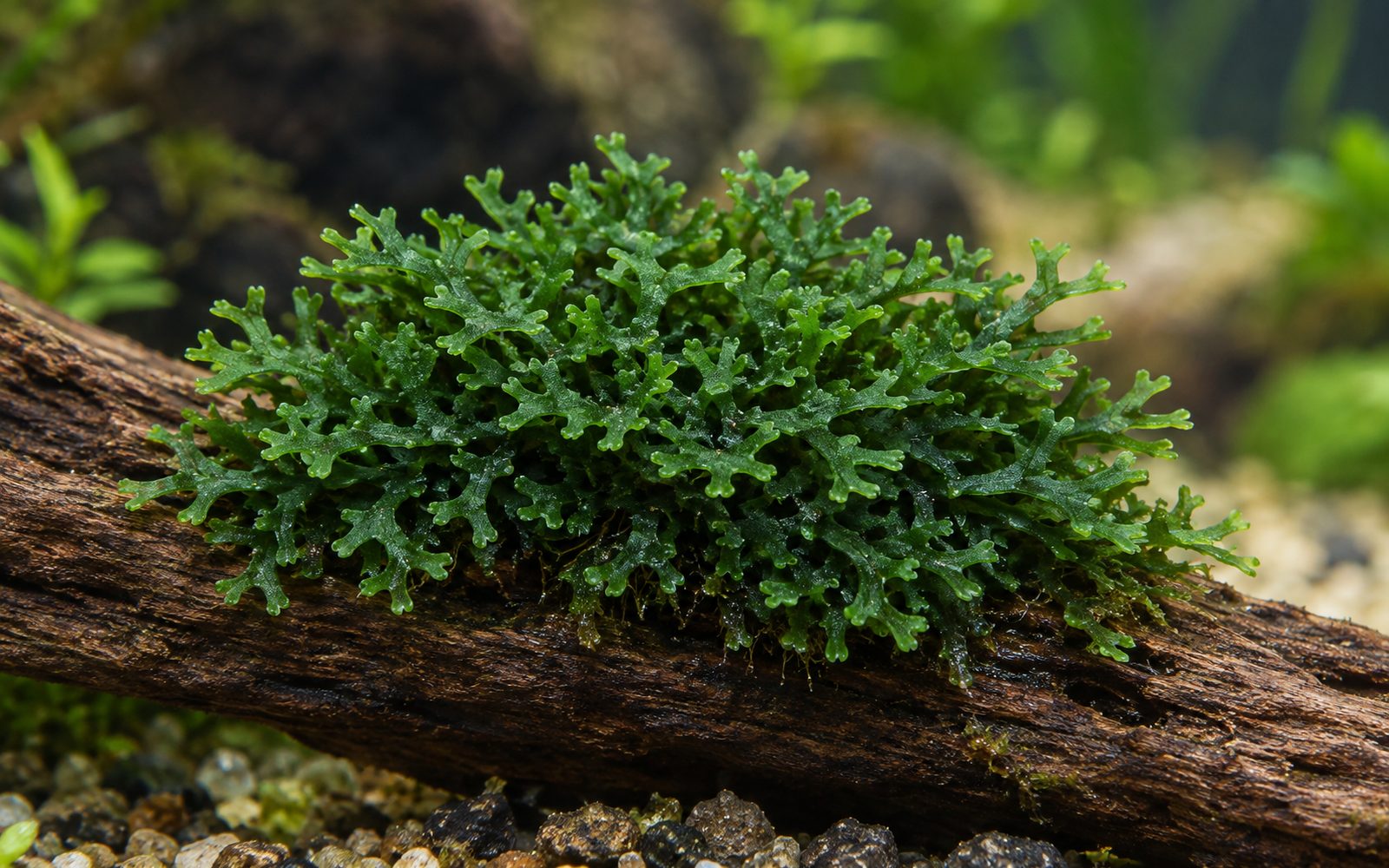
Riccardia is a small plant often mistaken for a moss, but it actually belongs to the liverworts (Marchantiophyta). Its flat, dark green branches fork like antlers and layer on top of one another, forming dense, low cushions that resemble coral. In the trade it is also sold as "mini pellia". Over time it attaches firmly to stone and driftwood with its own rhizoids.
Planting and Placement
It is fixed to stone or driftwood in small tufts with fine mesh, cotton thread or gel glue. Attachment takes a few weeks; during this time it should be protected from flow.
Care and Fertilization
- Light: Low to medium.
- CO₂: Not required, but noticeably supports growth.
- Temperature: It likes cool to mild water; growth slows above 26°C.
- Fertilizer: Liquid fertilizer is enough.
- Because it grows slowly, algae can easily cover it; limit the photoperiod and add algae-eating shrimp. The cushion is propagated by division.
Propagation
This section has not been written yet. How is it propagated?
Be the first to write it
Common Problems
This section has not been written yet. Problems such as melting, yellowing and algae, and how to fix them.
Be the first to write it
Hobbyist notes
Things you won't find in books, learned by trial and error. The most helpful ones are on top.
No notes yet. If you have experience with this species, leave the first note.
Was this page helpful?
Change history and contributors
- Page created · October 16, 2026