
Water parameters
Temperature15–28°C
pH6–7.5
General hardness (GH)2–15 dGH
Recommended range
Overview
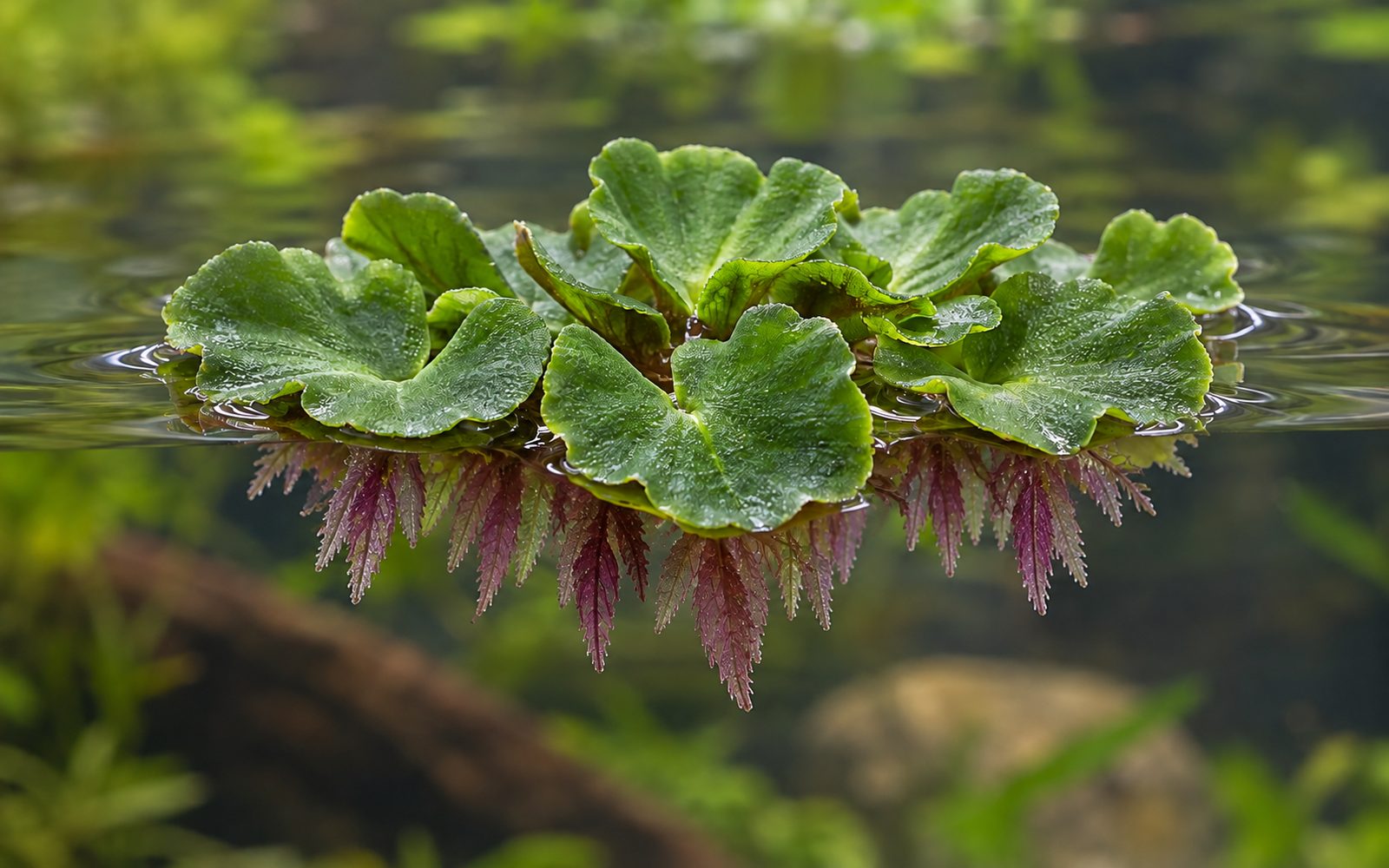
Ricciocarpos natans is a small liverwort that floats freely on the water surface. Its body is about 1 cm long, heart- or fan-shaped, grooved down the middle and dark green. Purple, tassel-like scales hang into the water from its underside; this appearance sets it apart from other floating plants. Although it belongs to the same family as Riccia, it is larger and grows more slowly. In the wild it is found in still lakes, ponds and ditches.
Planting and Placement
It is not planted; it is placed on the surface. A calm, unrippled surface is ideal.
Care and Fertilization
- Light: Moderate.
- CO₂: Not required.
- Surface: Strong surface flow and splashing water cause it to flip over.
- Its bodies reproduce by forking and splitting in two. Remove the excess with a net; do not throw it into natural waters.
Propagation
This section has not been written yet. How is it propagated?
Be the first to write it
Common Problems
This section has not been written yet. Problems such as melting, yellowing and algae, and how to fix them.
Be the first to write it
Hobbyist notes
Things you won't find in books, learned by trial and error. The most helpful ones are on top.
No notes yet. If you have experience with this species, leave the first note.
Was this page helpful?
Change history and contributors
- Page created · October 16, 2026