
Water parameters
Temperature18–28°C
pH6–7.5
General hardness (GH)2–15 dGH
Recommended range
Overview
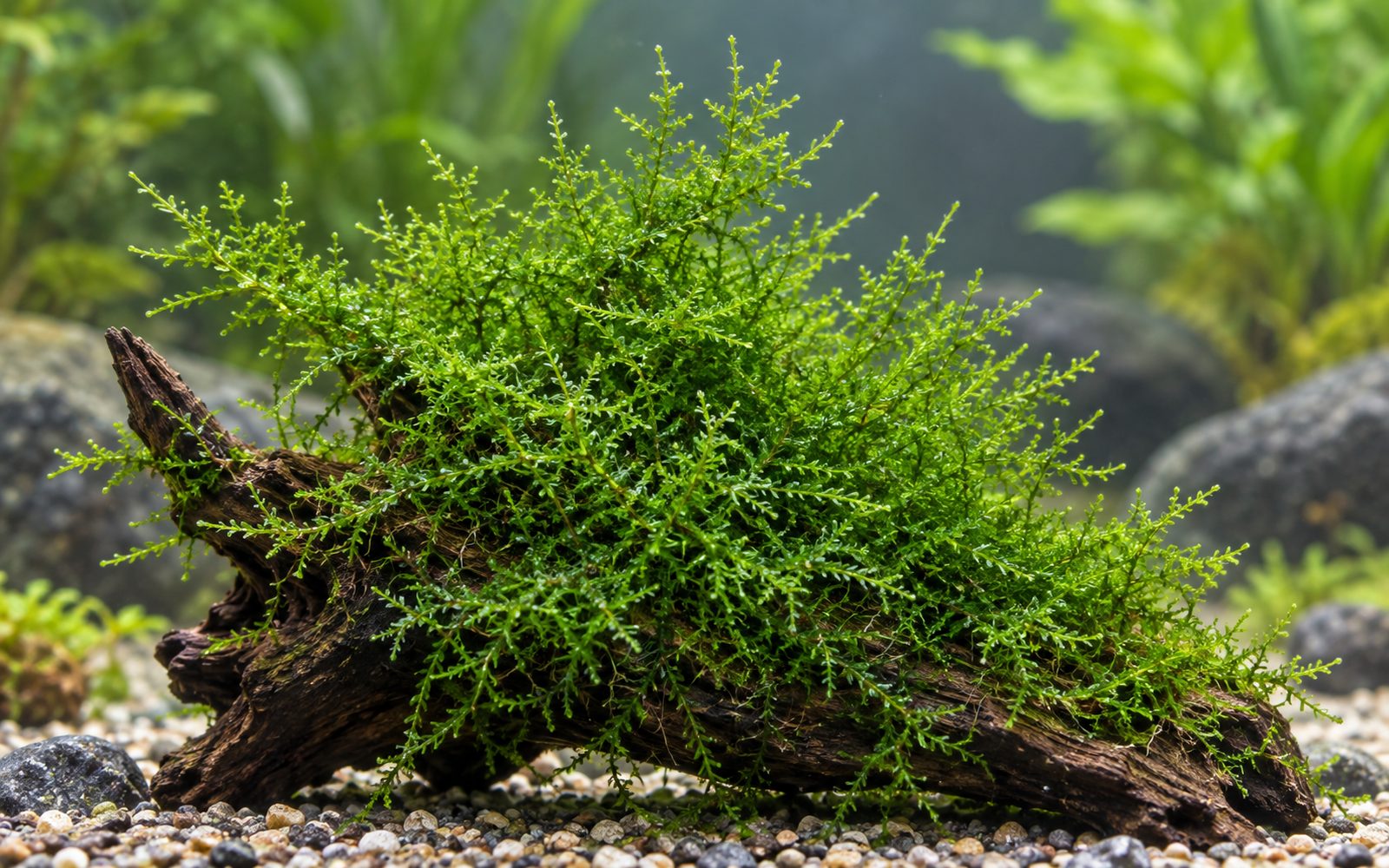
Singapore moss comes from Southeast Asia and is the moss most often confused with Java moss. In older sources even Java moss was referred to by this scientific name; today Java moss is kept separate as Taxiphyllum barbieri. Singapore moss has smaller leaves and more regular, slightly triangular branches; its overall look is finer and neater. When buying, remember that labels cannot always be trusted.
Planting and Placement
It is spread in a thin layer over driftwood or stone and secured with cotton thread, fishing line or gel glue. It is suitable for moss walls and covering driftwood.
Care and Fertilization
- Light: Low to medium.
- CO₂: Not required, but it increases density.
- Fertilizer: Liquid fertilizer and fish waste are enough.
- Trim it regularly and collect the cut pieces; clean the inside of thickening clumps by swishing them during water changes. Trimmings can be tied elsewhere to propagate it.
Propagation
This section has not been written yet. How is it propagated?
Be the first to write it
Common Problems
This section has not been written yet. Problems such as melting, yellowing and algae, and how to fix them.
Be the first to write it
Hobbyist notes
Things you won't find in books, learned by trial and error. The most helpful ones are on top.
No notes yet. If you have experience with this species, leave the first note.
Was this page helpful?
Change history and contributors
- Page created · October 16, 2026