
Water parameters
Overview
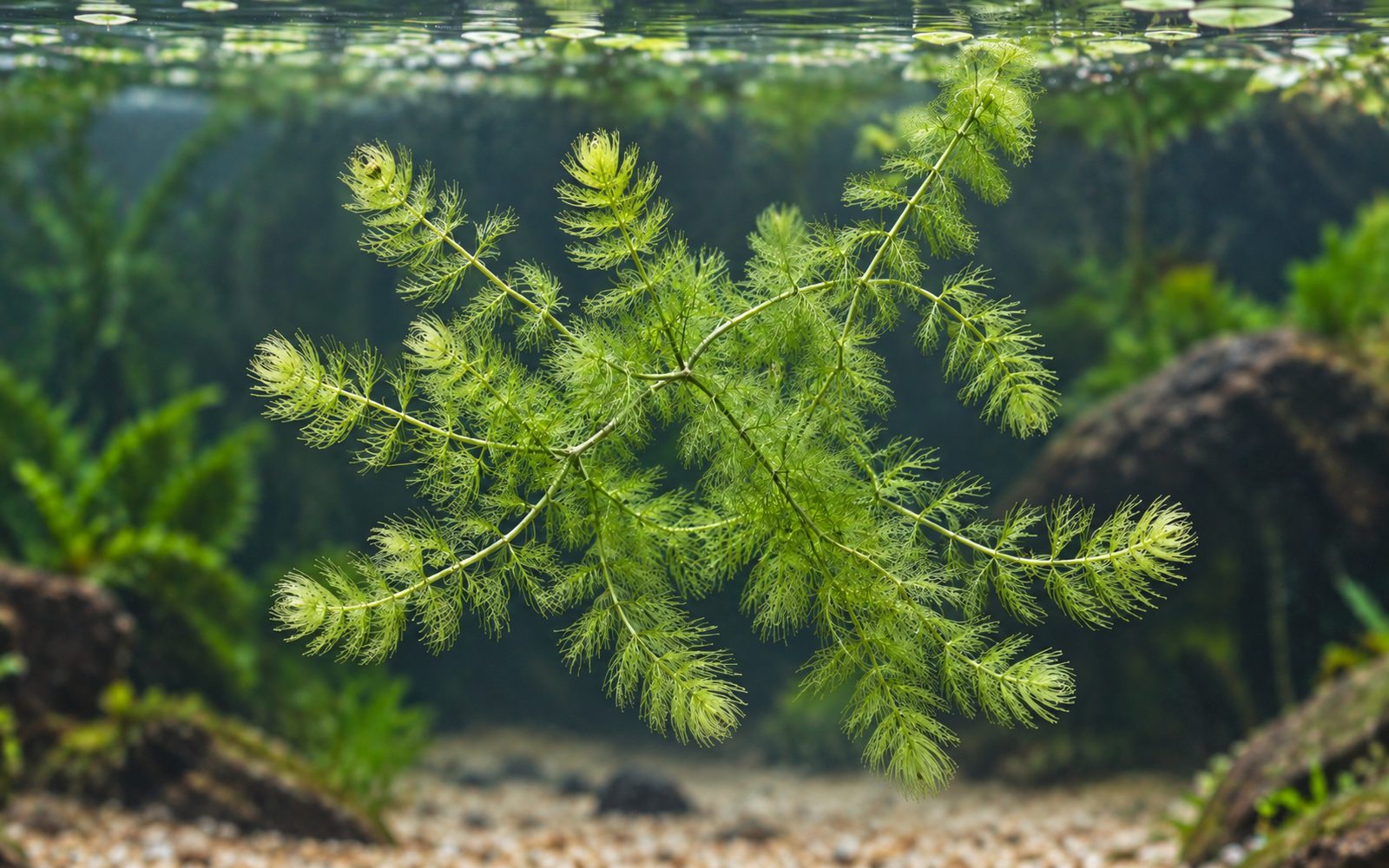
Soft hornwort is a close relative of hornwort (Ceratophyllum demersum), which is described separately on this site. It has no true roots; the needle-like leaves arranged in whorls along the stem fork more times, are finer and, since they lack stiff teeth, feel soft to the touch. Its color is light green and its overall look is more delicate and feathery. It likes warm water; by growing fast it uses up excess nutrients in the water and competes with algae.
Planting and Placement
It can be left to float freely, or kept upright in the background by wedging its lower end under a rock or pressing it lightly into the sand. It does not grow true roots; over time the end anchored in the substrate puts out pale-colored anchoring branches.
Care and Fertilization
- Light: Moderate.
- CO₂: Not required.
- Trimming: It grows long quickly; cut the long shoots and remove the excess. Every cut piece becomes a new plant.
- It may shed its leaves after sudden water changes or after transport; collect the shed needles, and the plant usually regrows.
Propagation
Common Problems
Hobbyist notes
Things you won't find in books, learned by trial and error. The most helpful ones are on top.
Change history and contributors
- Page created · October 16, 2026