
Water parameters
Temperature10–28°C
pH6–8
General hardness (GH)2–20 dGH
Recommended range
Overview
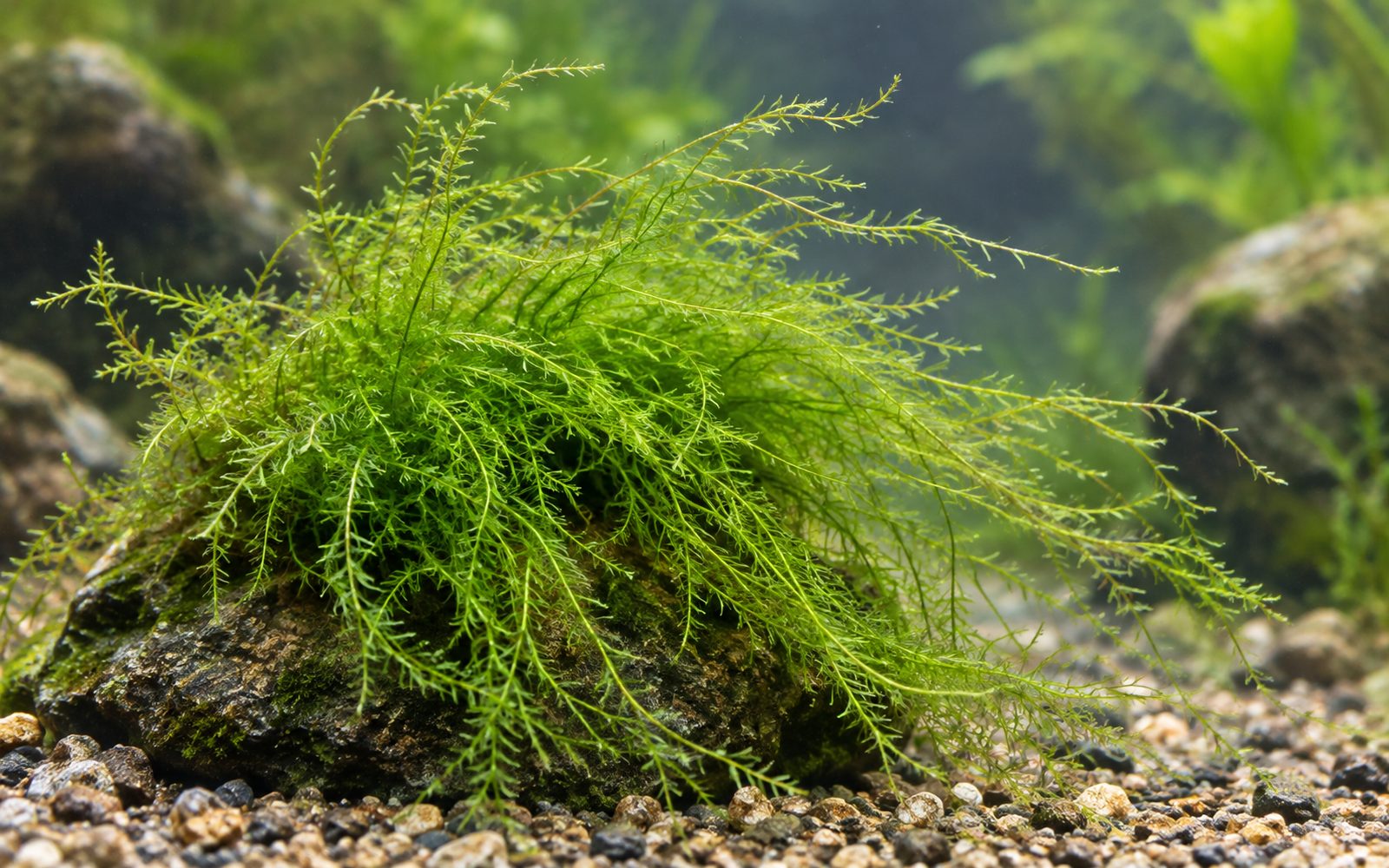
Stringy moss is a common moss in the streams and ponds of the Northern Hemisphere. Its shoots are thin, long and thread-like; because its small leaves are sparsely arranged, it has a light, floaty look. Its shoots waving in the current suit natural-looking aquariums especially well. It grows faster than other ornamental mosses and survives even in cool, hard or nutrient-poor water.
Planting and Placement
It is tied to stone or driftwood with cotton thread or fishing line. If not secured well enough, shoots can break off and float to the surface; check it during the first weeks.
Care and Fertilization
- Light: Low to medium.
- CO₂: Not required.
- Fertilizer: Fish waste is usually enough.
- Because it lengthens quickly, trim it every 2–3 weeks and collect broken pieces from the aquarium; otherwise it spreads into the filter intake and among other plants. Cut pieces become new plants.
Propagation
This section has not been written yet. How is it propagated?
Be the first to write it
Common Problems
This section has not been written yet. Problems such as melting, yellowing and algae, and how to fix them.
Be the first to write it
Hobbyist notes
Things you won't find in books, learned by trial and error. The most helpful ones are on top.
No notes yet. If you have experience with this species, leave the first note.
Was this page helpful?
Change history and contributors
- Page created · October 16, 2026