
Water parameters
Temperature18–28°C
pH6–7.5
General hardness (GH)2–15 dGH
Recommended range
Overview
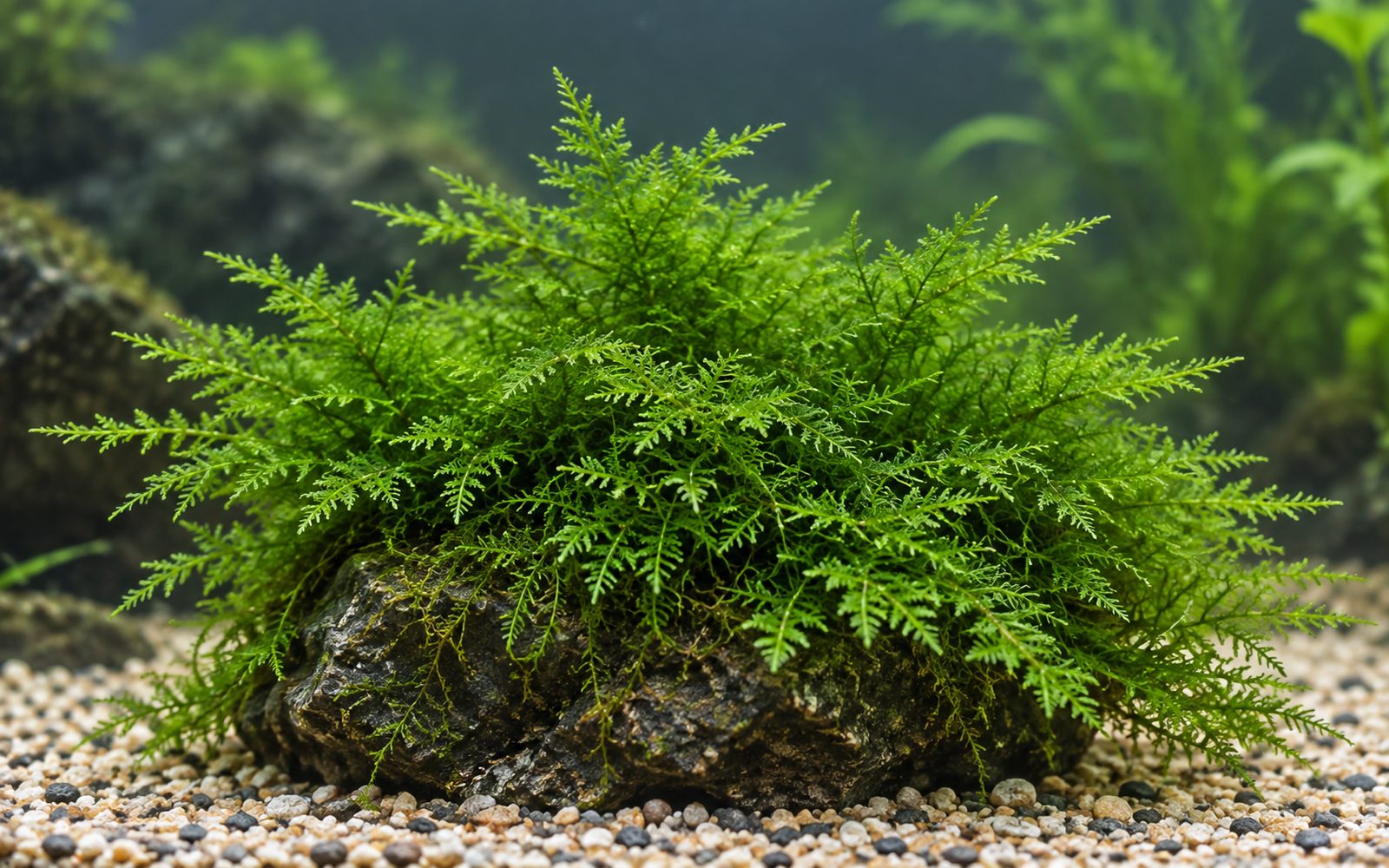
Taiwan moss belongs to the same genus as Java moss and looks very much like it. The difference is that its branches spread in a more regular, horizontal and slightly triangular pattern, so it forms a neater covering. It is as easy to care for as Java moss and adapts to everything from cool water to tropical temperatures. In shrimp tanks it is valued as a hiding place and a food source.
Planting and Placement
It is spread in a thin layer over driftwood or stone and secured with cotton thread, fishing line or gel glue. Thick clumps turn brown from below; prefer a thin layer.
Care and Fertilization
- Light: Low to medium.
- CO₂: Not required, but it increases density.
- Fertilizer: Liquid fertilizer and fish waste are enough.
- Trim it regularly and collect the cut pieces; otherwise it spreads all over the aquarium. Trimmings can be used for new plants.
Propagation
This section has not been written yet. How is it propagated?
Be the first to write it
Common Problems
This section has not been written yet. Problems such as melting, yellowing and algae, and how to fix them.
Be the first to write it
Hobbyist notes
Things you won't find in books, learned by trial and error. The most helpful ones are on top.
No notes yet. If you have experience with this species, leave the first note.
Was this page helpful?
Change history and contributors
- Page created · October 16, 2026