
Water parameters
Overview
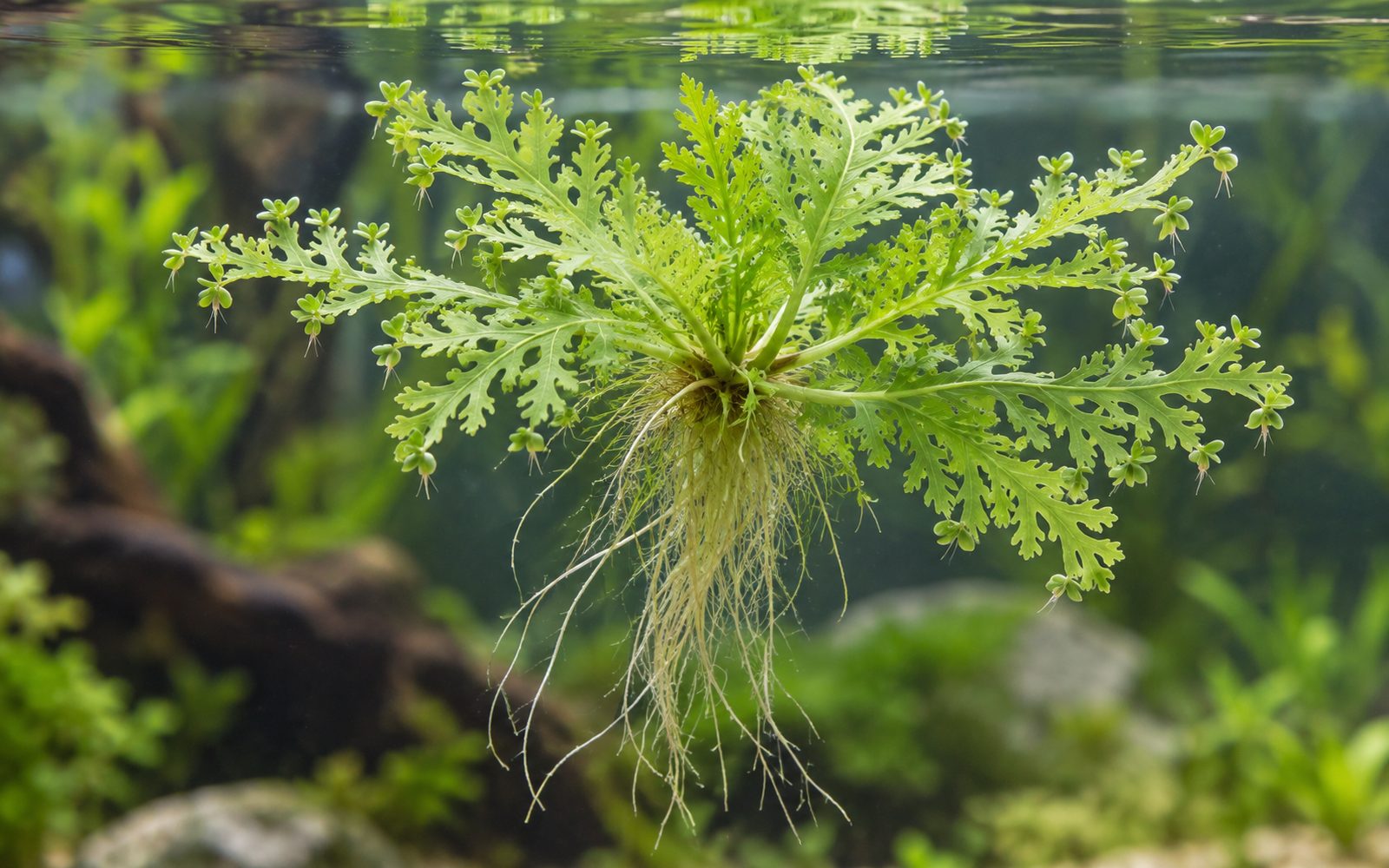
Water sprite is a fern that lives in lakes, marshes and rice paddies in the tropical regions of the world. Its submerged leaves are fine, deeply lobed, light green and lacy; in plants growing at the surface the leaves are broader and thicker. The plant reaches 20–40 cm.
In the aquarium it is used in two ways: floating freely at the surface it provides shade and hiding places for fry, or planted in the substrate it forms a lush clump in the background. Either way it grows very fast and competes with algae by using up excess nutrients in the water.
Planting and Placement
- Floating use: place the plant directly on the surface; its roots hang down into the water.
- Planted use: bury the roots but leave the crown, where the leaves emerge, exposed; if the crown is buried it rots. Plant it in the background or in corners.
Care and Fertilization
- Light: Moderate. Planted specimens stretch and fade in low light.
- CO₂: Not needed when floating; supports growth in planted specimens.
- Fertilizer: Because it grows fast it responds well to liquid fertilizer; when nutrients are lacking, the leaves turn yellow.
- Thinning: Floating plants quickly cover the surface; remove the excess regularly.
Propagation
Plantlets form along the edges of older leaves and between the lobes. These plantlets detach on their own and float to the surface, or can be pinched off by hand; once they have a few leaves they can be floated or planted.
Common Problems
- Melting leaves: may occur after transport or a water change; new leaves quickly replace them.
- Yellowing: nutrient deficiency, especially nitrogen and iron.
- Snails and plant-eating fish: its soft leaves may get nibbled.
- Overgrowth: collect the plantlets regularly.
Hobbyist notes
Things you won't find in books, learned by trial and error. The most helpful ones are on top.
Change history and contributors
- Page created · October 16, 2026