
Water parameters
Overview
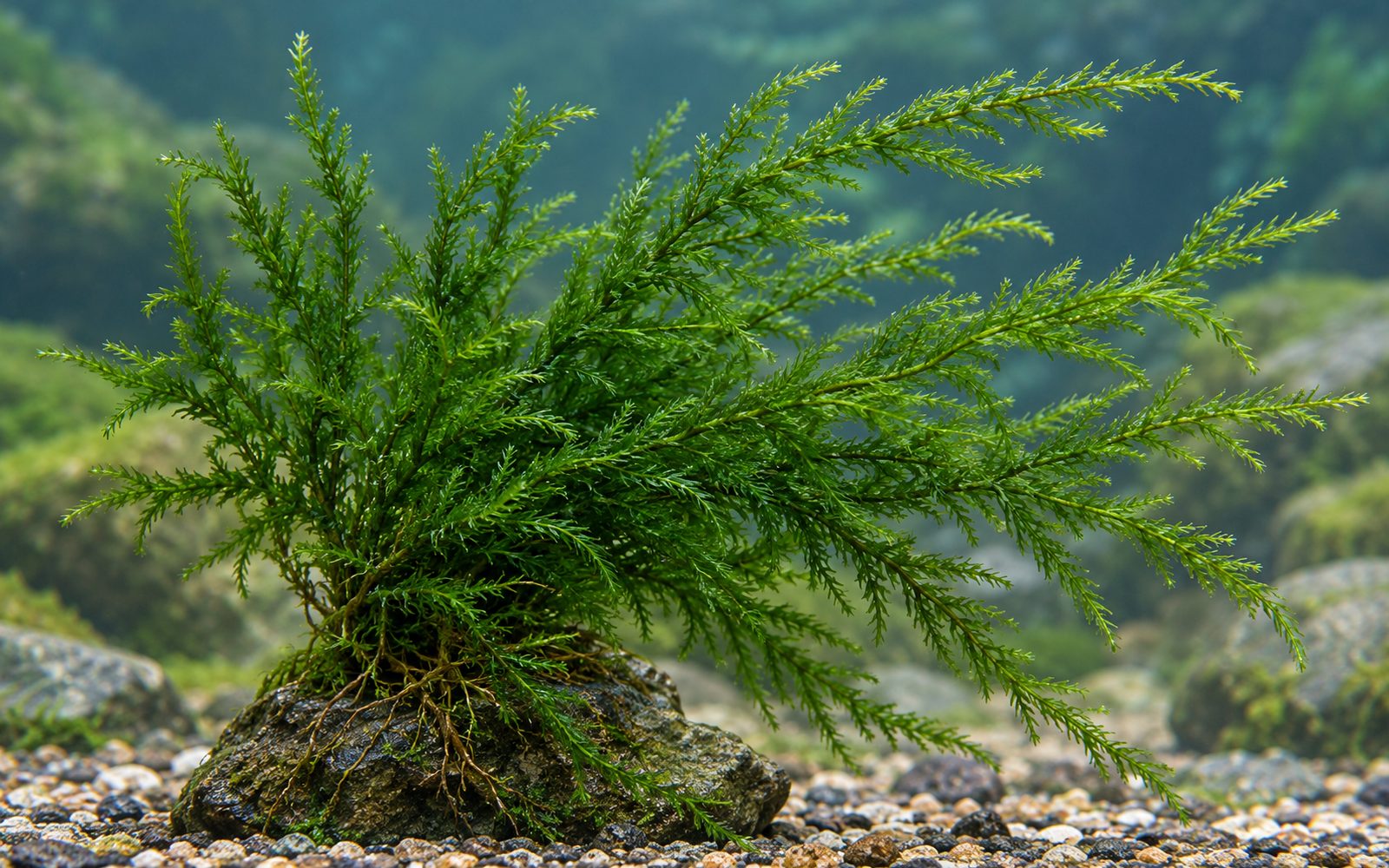
Fontinalis antipyretica is a large moss that lives attached to stones in the cool streams, springs and lakes of the Northern Hemisphere. Its long, branching shoots are covered in dark green leaves arranged in three rows and folded along the back (keeled). In nature the shoots can grow tens of centimeters long. The species name (antipyretica, "against fire") comes from its former use in Scandinavia, where it was stuffed into the gaps between chimneys and wooden walls to protect against fire.
Planting and Placement
It is tied to stone or driftwood with cotton thread or fishing line; over time it attaches with its rhizoids. A cool corner with some flow is ideal. In ponds it can be used tied to stones.
Care and Fertilization
- Temperature: It does best below 20°C; above 24°C it weakens and darkens. It is not suitable for tropical aquariums.
- Light: Low to medium.
- CO₂: Not required, but supports growth.
- It is propagated by cutting its shoots. Do not collect it from natural waters; plants taken from local habitats can carry disease and unwanted organisms.
Propagation
Common Problems
Hobbyist notes
Things you won't find in books, learned by trial and error. The most helpful ones are on top.
Change history and contributors
- Page created · October 16, 2026