
Water parameters
Overview
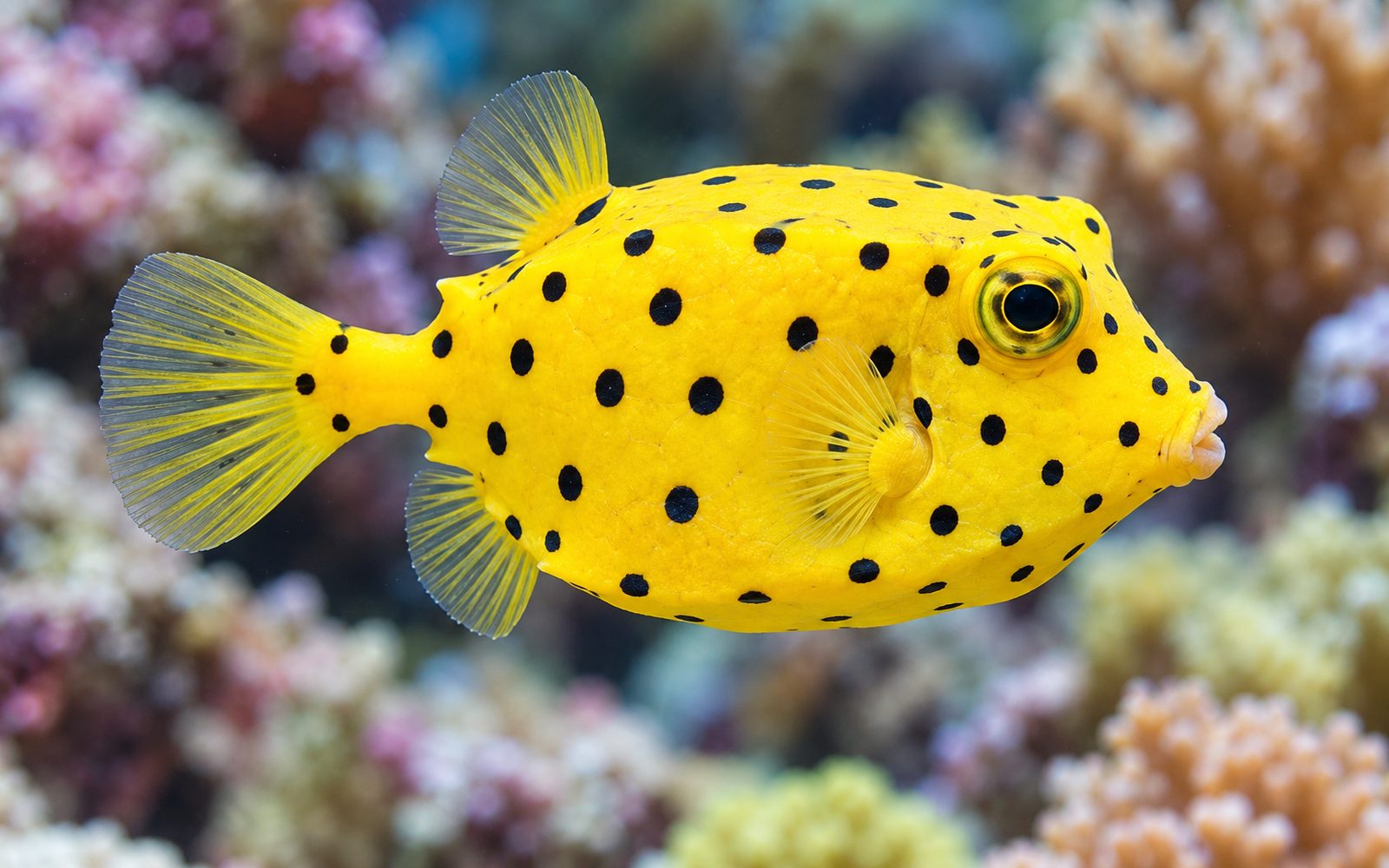
The yellow boxfish lives inside a hard "box" made of bony plates enclosing its body; only its fins, eyes and small mouth move. The 3–5 cm juveniles sold in stores each look like a bright yellow die with black spots. As it grows its color turns yellow–brown or bluish gray, the spots develop white centers and the body lengthens. Adults can reach 45 cm.
Toxin warning: When stressed, sick or dying, boxfish release a toxin called ostracitoxin from their skin. In a small or crowded aquarium this toxin can quickly kill the other fish as well as the boxfish itself. For this reason the species should only be kept in large, calm and well-filtered aquariums by experienced hobbyists. All specimens are wild-collected; tiny juveniles handle shipping and hunger poorly.
Natural Habitat
It lives on reefs and in lagoons of the Indo-Pacific; juveniles hide among branching corals. In the wild it feeds on algae, small crustaceans, worms and bottom-dwelling organisms.
Tank Setup
- Volume: At least 800 liters for an adult; even if a juvenile starts in a smaller aquarium, its growth should be planned for.
- Water: Salinity specific gravity 1.023–1.026, pH 8.1–8.4, temperature 24–27°C.
- Toxin precautions: Use a strong protein skimmer and constantly running activated carbon; if the fish gets sick or dies, do a water change immediately.
- Reef compatibility: Not reef-safe. It picks at tube worms, small crustaceans and some corals; the toxin risk is also dangerous for invertebrates.
Diet
Omnivorous. Frozen mysis, brine shrimp, chopped mussels and shrimp, and foods containing seaweed and spirulina. Since it is a slow eater, fast tankmates may snatch its food; juveniles should be fed small amounts 3 times a day.
Behavior and Compatibility
Peaceful, slow and curious; it recognizes its keeper. It can be cantankerous towards its own kind. Aggressive or fast fish stress it and can cause it to release toxin.
Good companions: Peaceful medium-sized fish in a large, calm aquarium: cardinalfish, calm tangs, foxface, Heniochus.
Avoid: Triggerfish, aggressive wrasses, larger damselfish, fin-nipping species; a second boxfish; small aquariums.
Group and Colony Structure
Kept as a single specimen in the aquarium.
Breeding
In the wild, pairs rise into the water column at dusk and release pelagic eggs. It does not breed in the aquarium.
Health and Common Problems
- Poisoning incident: Toxin release in the shipping bag or in a stressful environment is the biggest risk; do not pour the fish into the aquarium together with the water from the bag.
- Starvation: Tiny juveniles lose condition quickly if they are not fed often.
- Marine white spot and copper: It is prone to disease, but sensitive to copper treatment.
Sexing
Cannot be reliably distinguished externally.
Tank mates
This list is calculated automatically from the species profile and grows as new species are added to the catalog. Try it in the planner for a definite answer.
Should not be kept together
Hobbyist notes
Things you won't find in books, learned by trial and error. The most helpful ones are on top.
Change history and contributors
- Page created · October 16, 2026