
Water parameters
Overview
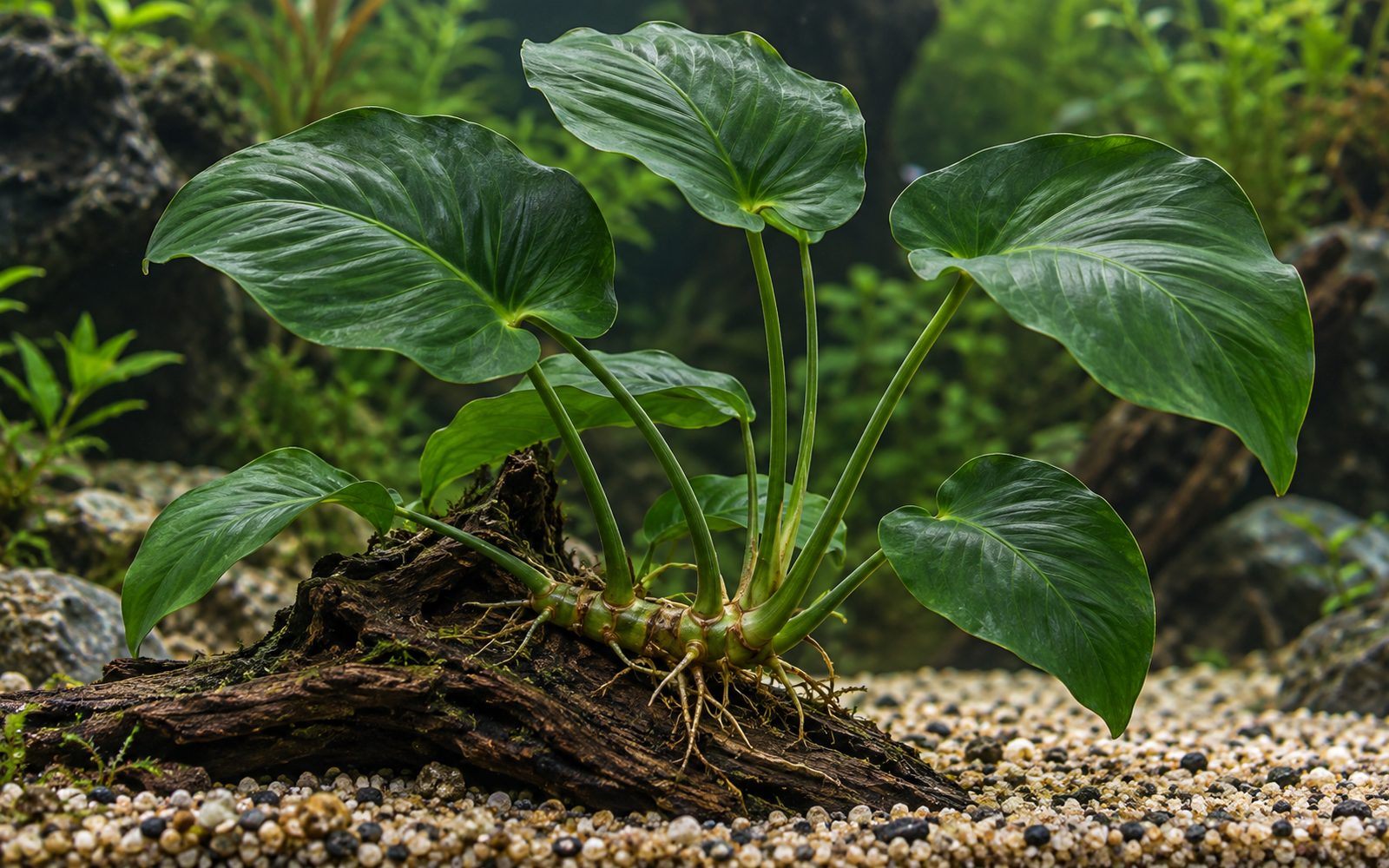
Anubias barteri var. caladiifolia is the largest variety of the species. In the wild it forms large stands in the rainforests of Cameroon and Nigeria, clinging to rocks along fast-flowing streams and waterfalls. It is named for its leaves, which resemble those of the ornamental plant Caladium: the leaf blade is 10–23 cm long, ranging from broadly oval to heart-shaped, and in older plants the base clearly splits into two lobes. The leaf stalks can exceed 30–40 cm.
With these dimensions, in tanks of 100 liters or more it forms a focal point on its own on wood in the background or midground. Its most common form in the trade is a broad, heart-leaved clone sold under the number '1705'. The puckered-leaved 'Coffeefolia', however, does not belong to this variety but to a separate form of the species and is described in its own profile.
Planting and Placement
Never bury the rhizome in the substrate; a buried rhizome rots.
- Tie it to wood or large rocks with fishing line or cotton thread; over time the roots grip the surface firmly.
- On large plants, tying the rhizome at two points keeps the heavy leaves from toppling the plant.
- The roots may grow down into the sand; there is no problem as long as the rhizome stays exposed.
- Because of its long stalks, leave room in front of it for lower plants.
Care and Fertilization
- Light: low to medium; it also tolerates strong light, but the leaves collect algae.
- CO₂: not required.
- Fertilizer: liquid fertilizer is enough; if the roots have reached the substrate, placing a root tab nearby supports growth.
- Trimming: cut only old and algae-covered leaves at the base of the stalk.
- Temperature: 22–26°C is ideal; in cooler water growth almost stops.
Propagation
Divide the rhizome with sharp scissors so that each piece keeps a few leaves. Daughter shoots that grow from the sides of the rhizome can also be separated and tied elsewhere once they have formed their own roots. It takes a few weeks for new pieces to settle in and start growing.
Common Problems
- Rhizome rot: occurs in a buried or damaged rhizome; cut away the soft part and reattach the plant.
- Algae on the leaf surface: because the leaves live a long time, green spot and brush algae build up when there is too much light. Reduce the light and keep it in the shade.
- Leaf loss in emersed-grown plants: plants that arrive in pots may shed some soft leaves while adapting to life underwater; if the rhizome is healthy, new ones will grow.
Hobbyist notes
Things you won't find in books, learned by trial and error. The most helpful ones are on top.
Change history and contributors
- Page created · October 16, 2026