
Water parameters
Overview
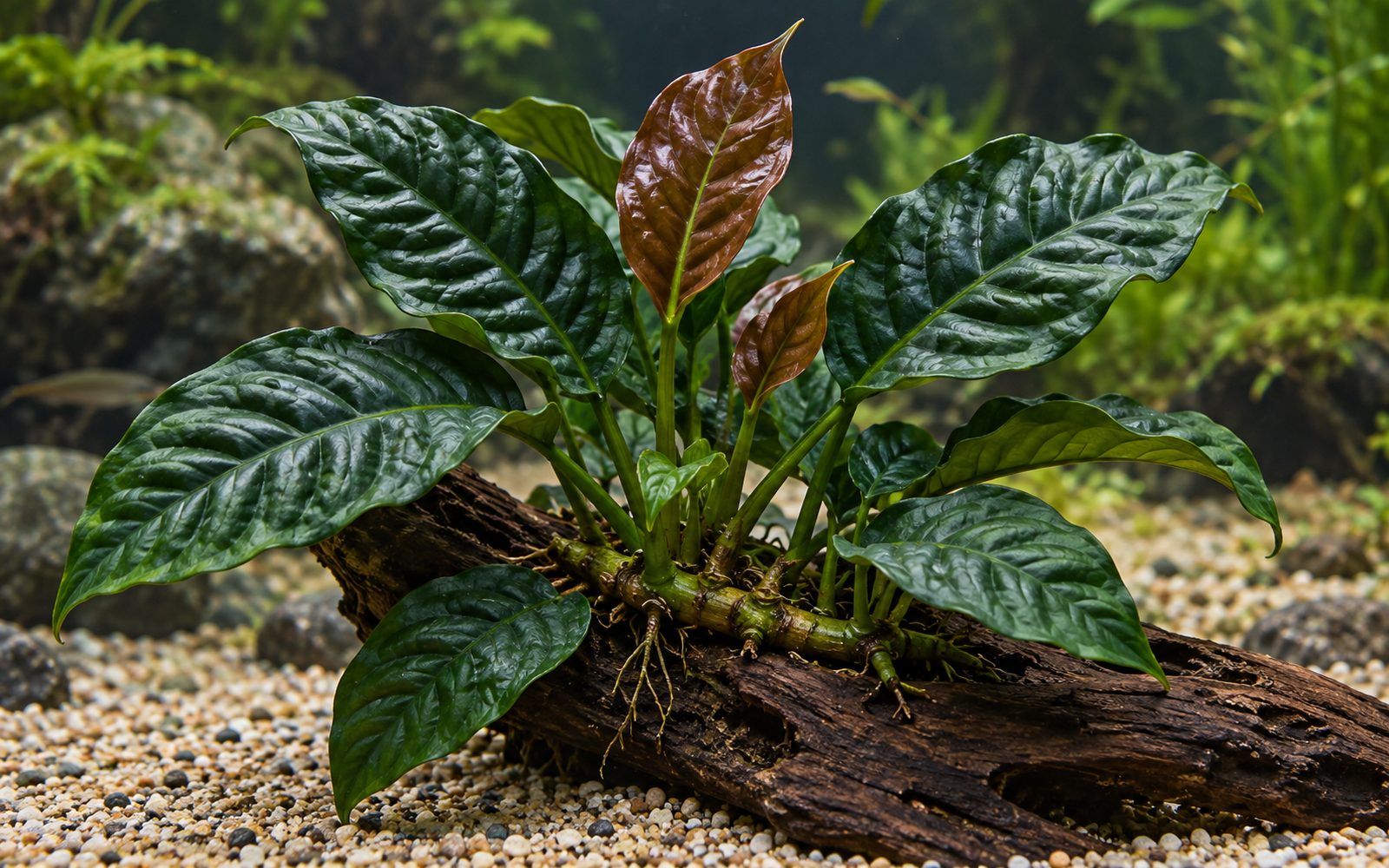
Anubias 'Coffeefolia' is a form of the West African Anubias barteri that became widespread through aquarium cultivation. The surface between the veins of its leaves is distinctly puckered; this wrinkled texture resembles the leaves of the coffee plant and gives the form its name. Mature leaves are a dark, glossy green; new leaves open reddish-brown or copper-colored and turn green within a few days.
The plant reaches 15–25 cm in height. Like other anubias, its tough, leathery leaves withstand nibbling by many plant-eating fish; it can also be used in goldfish and cichlid tanks.
Planting and Placement
Never bury the rhizome (the thick, horizontal stem from which the leaves grow) in the sand; a buried rhizome rots and the plant dies.
- Tie it to wood or rock with fishing line or cotton thread; the roots grip the surface in a few weeks.
- Or fix it at a few points with aquarium-safe cyanoacrylate gel glue.
- If you like, its roots can grow down into the substrate, as long as the rhizome stays exposed.
- Choose a shaded spot in the midground, between rocks or on wood.
Care and Fertilization
- Light: low to medium. In strong light, green spot algae builds up on the leaves.
- CO₂: not required.
- Fertilizer: liquid fertilizer and fish waste are enough.
- Trimming: cut only old and algae-covered leaves at the base of the stalk.
Propagation
Divide the rhizome with sharp scissors so that each piece keeps at least 3–4 leaves, and tie the pieces in separate places. Over time side branches form at the tip of the rhizome; these can also be separated. Since growth is slow, propagation also takes patience.
Common Problems
- Rhizome rot: the rhizome has been buried; cut away the soft parts and reattach the plant.
- Green spot algae: too much light and low phosphate. Reduce the light; nerite snails help.
- Yellowing leaves: may be a nitrogen or potassium deficiency; add liquid fertilizer.
Hobbyist notes
Things you won't find in books, learned by trial and error. The most helpful ones are on top.
Change history and contributors
- Page created · October 16, 2026