
Water parameters
Temperature22–28°C
pH6–7.5
General hardness (GH)2–12 dGH
Recommended range
Overview
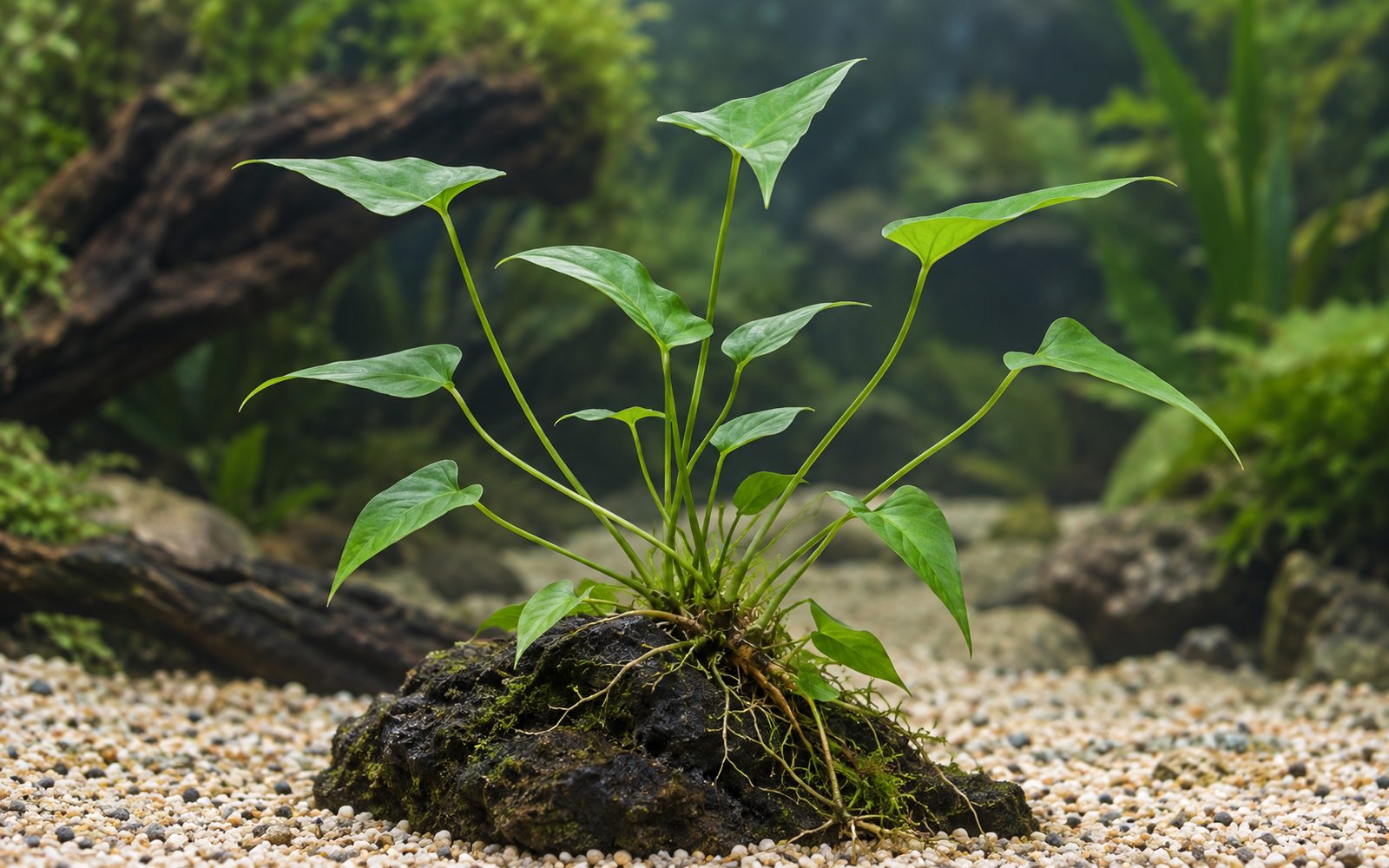
Anubias gracilis is an anubias from the Guinea and Sierra Leone regions of West Africa. Its name means "slender, graceful": it carries triangular or arrow-shaped, light to medium green leaves on long, thin leaf stalks. The plant reaches a height of 20–35 cm. In the trade it is mostly sold grown emersed; once submerged it adapts slowly, and its new leaves come out somewhat smaller.
Planting and Placement
Do not bury the rhizome. Tie it to stone or driftwood with thread or glue it on. In an aquarium it can be placed in the midground; in a paludarium, on stones and roots at the water's edge.
Care and Fertilization
- Light: Low to medium.
- CO₂: Not required.
- Fertilizer: Liquid fertilizer is enough.
- It is normal for a few old leaves to yellow after the plant is submerged. The rhizome is propagated by division.
Propagation
This section has not been written yet. How is it propagated?
Be the first to write it
Common Problems
This section has not been written yet. Problems such as melting, yellowing and algae, and how to fix them.
Be the first to write it
Hobbyist notes
Things you won't find in books, learned by trial and error. The most helpful ones are on top.
No notes yet. If you have experience with this species, leave the first note.
Was this page helpful?
Change history and contributors
- Page created · October 16, 2026