
Water parameters
Overview
Anubias nana is one of the hardiest plants in the hobby. Its thick, leathery leaves withstand nibbling by many fish; it survives in low light and without CO₂. Because it grows slowly, it keeps its shape for a long time and needs no maintenance. Even smaller forms such as mini, "petite" and "bonsai" are used for the foreground in nano tanks.
It is one of the safest plant choices for beginners and for goldfish and Malawi cichlid tanks.
Planting and Placement
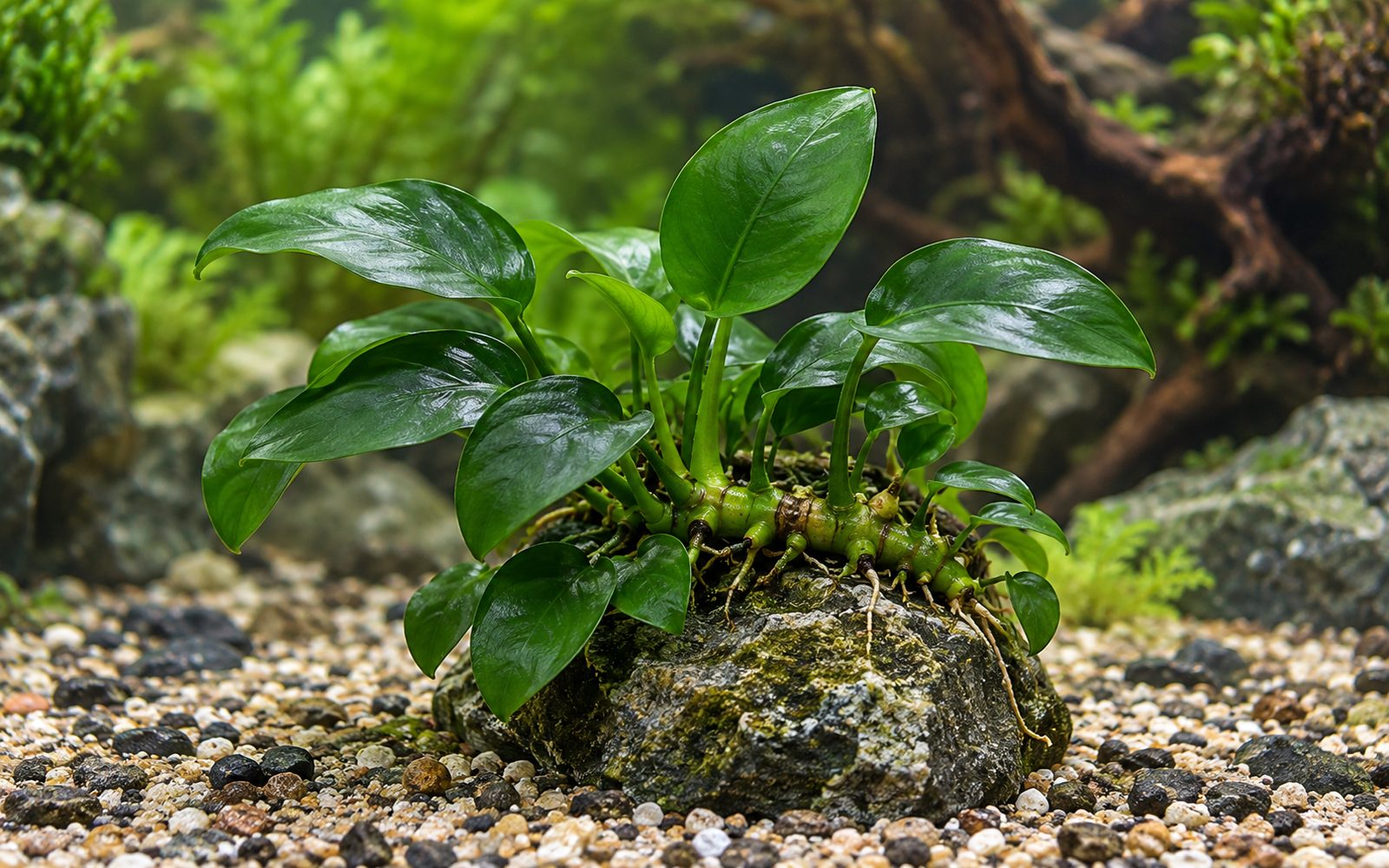
Never bury the rhizome (the thick, horizontal stem from which the leaves grow) in the sand; a buried rhizome rots and the plant dies. Instead:
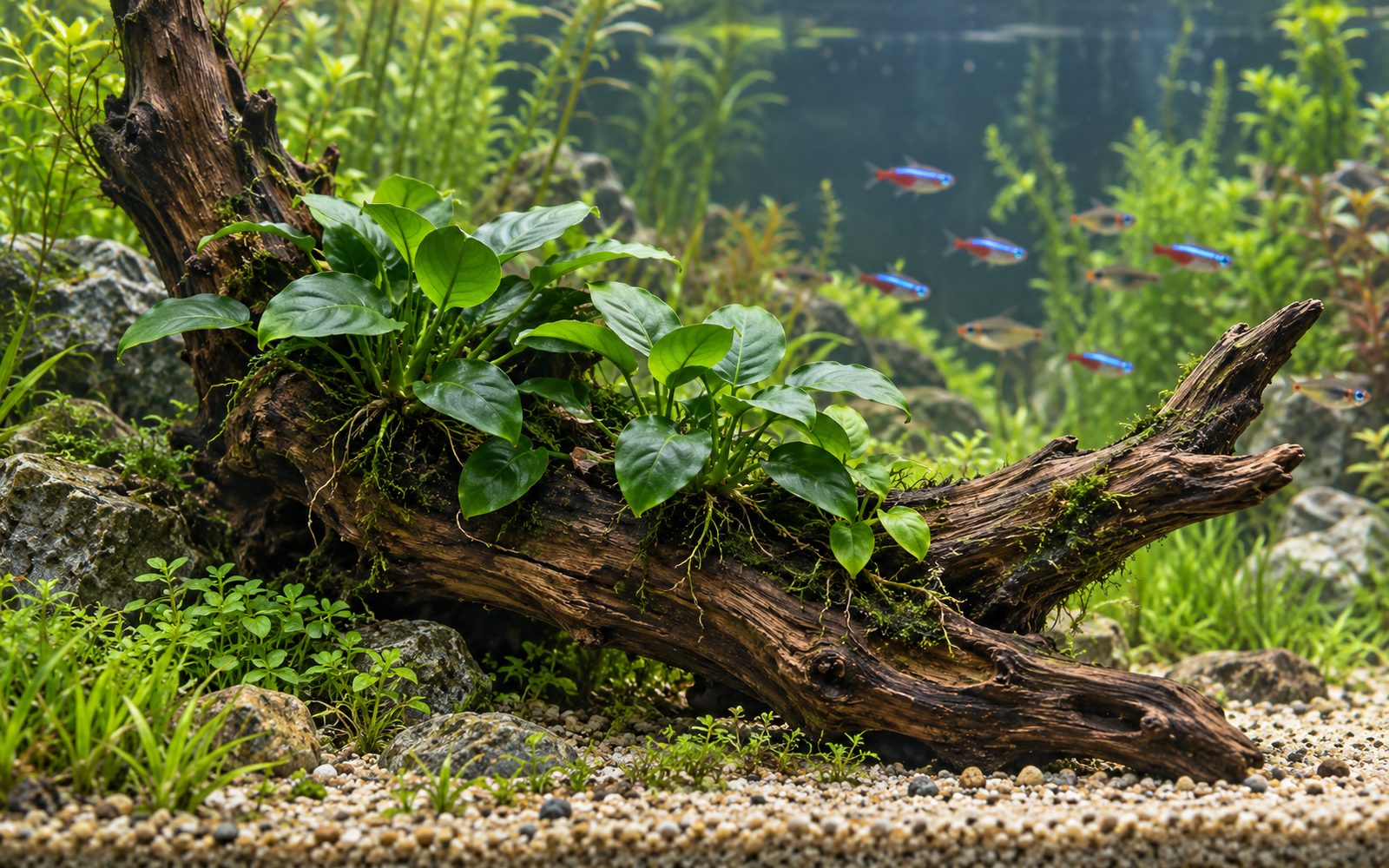
- Tie it to rock or wood with fishing line or cotton thread; the roots grip the surface within a few weeks.
- Or glue it at a few points with aquarium-safe cyanoacrylate (super glue gel).
- The roots may grow down into the sand; that is not a problem as long as the rhizome stays exposed.
For plants sold in pots, carefully remove the rock wool and the pot.
Care and Fertilization
- Light: low to medium. In strong light, green spot algae forms on the leaves; place it in shaded spots.
- CO₂: not required.
- Fertilizer: liquid fertilizer and fish waste are enough. Yellowing leaves may indicate a nitrogen/potassium deficiency.
- Trimming: cut only old and algae-covered leaves at the base.
Propagation
Divide the rhizome with sharp scissors into pieces with at least 3–4 leaves each and tie each piece in a separate place. Since the plant grows slowly, propagation is slow too.
Common Problems
- Rhizome rot: the rhizome has been buried; cut away the soft, foul-smelling parts and reattach the plant.
- Green spot algae: too much light and low phosphate. Reduce the light; nerite snails and otocinclus help.
- Anubias melt: rarely, softening of the rhizome and leaf loss after a sudden water change; separate the affected part.
Hobbyist notes
Things you won't find in books, learned by trial and error. The most helpful ones are on top.
Change history and contributors
- Page created · October 16, 2026