
Water parameters
Overview
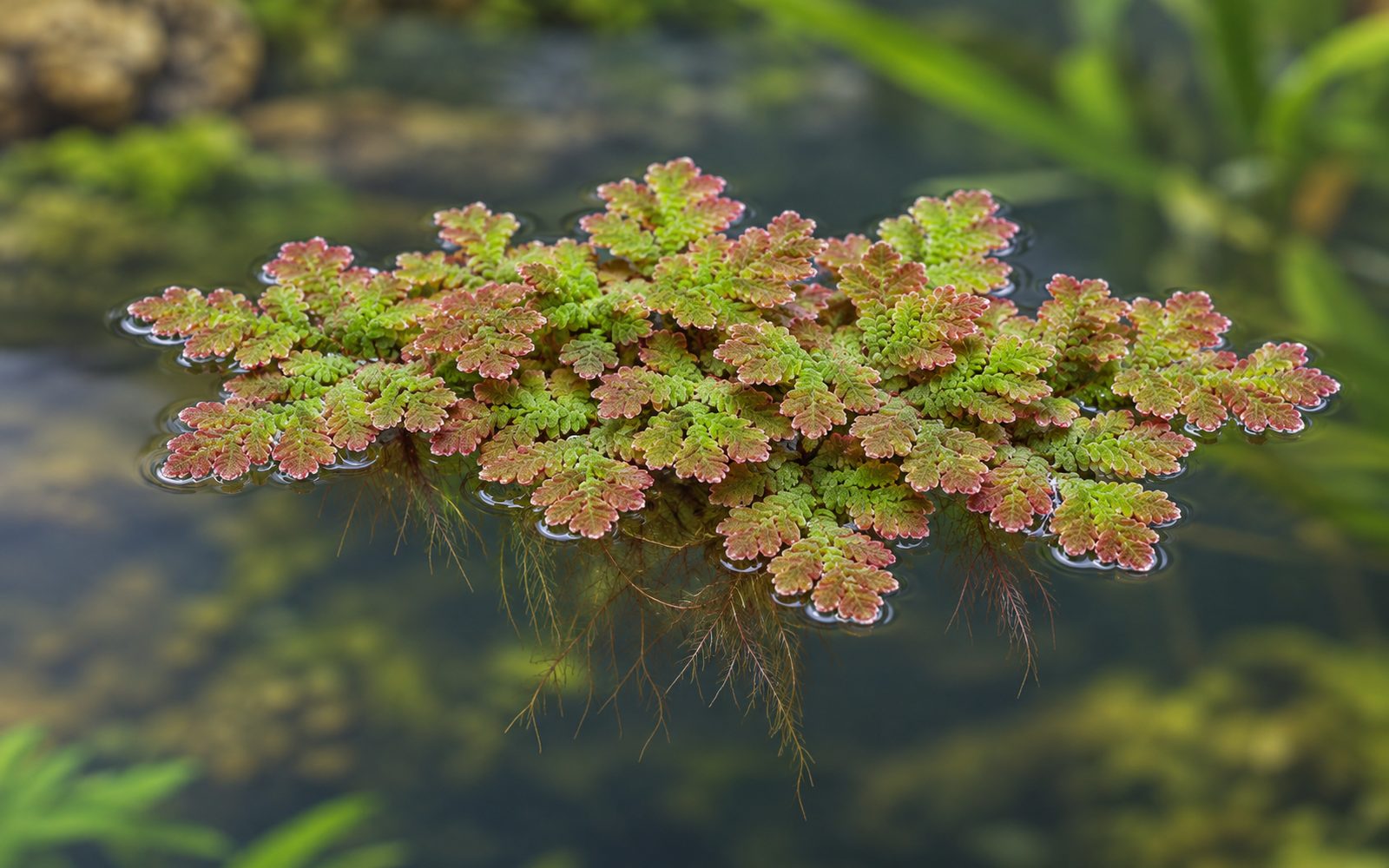
Azolla is a small floating fern, 1–2 cm in size, made of tiny scale-like leaves overlapping on a branching stem. Its leaves are normally green; under strong light, in cool weather or when nutrients run low, they turn crimson-bronze. In its leaf cavities it lives in symbiosis with a cyanobacterium (Anabaena) that can fix nitrogen from the air; for this reason it has been used for centuries in Asia as a natural fertilizer in rice paddies. It is also sold in the trade as Azolla caroliniana; the distinction between the two names is debated among botanists.
Azolla filiculoides, which is native to the Americas, has escaped into the wild in many parts of Europe and become an invasive plant that covers the surface of ponds and canals. The excess must never be thrown into natural waters.
Planting and Placement
It is not planted; it is placed on the surface. It is better suited to open-top aquariums and ponds than to covered aquariums.
Care and Fertilization
- Light: Moderate to strong.
- CO₂: Not required.
- Humidity: Condensation under the lid and constant wetting rot its leaves.
- It multiplies very fast; remove the excess with a net once a week. It is eaten by plant-eating fish and goldfish.
Propagation
Common Problems
Hobbyist notes
Things you won't find in books, learned by trial and error. The most helpful ones are on top.
Change history and contributors
- Page created · October 16, 2026