
Water parameters
Temperature20–30°C
pH6–7.5
General hardness (GH)2–15 dGH
Recommended range
Overview
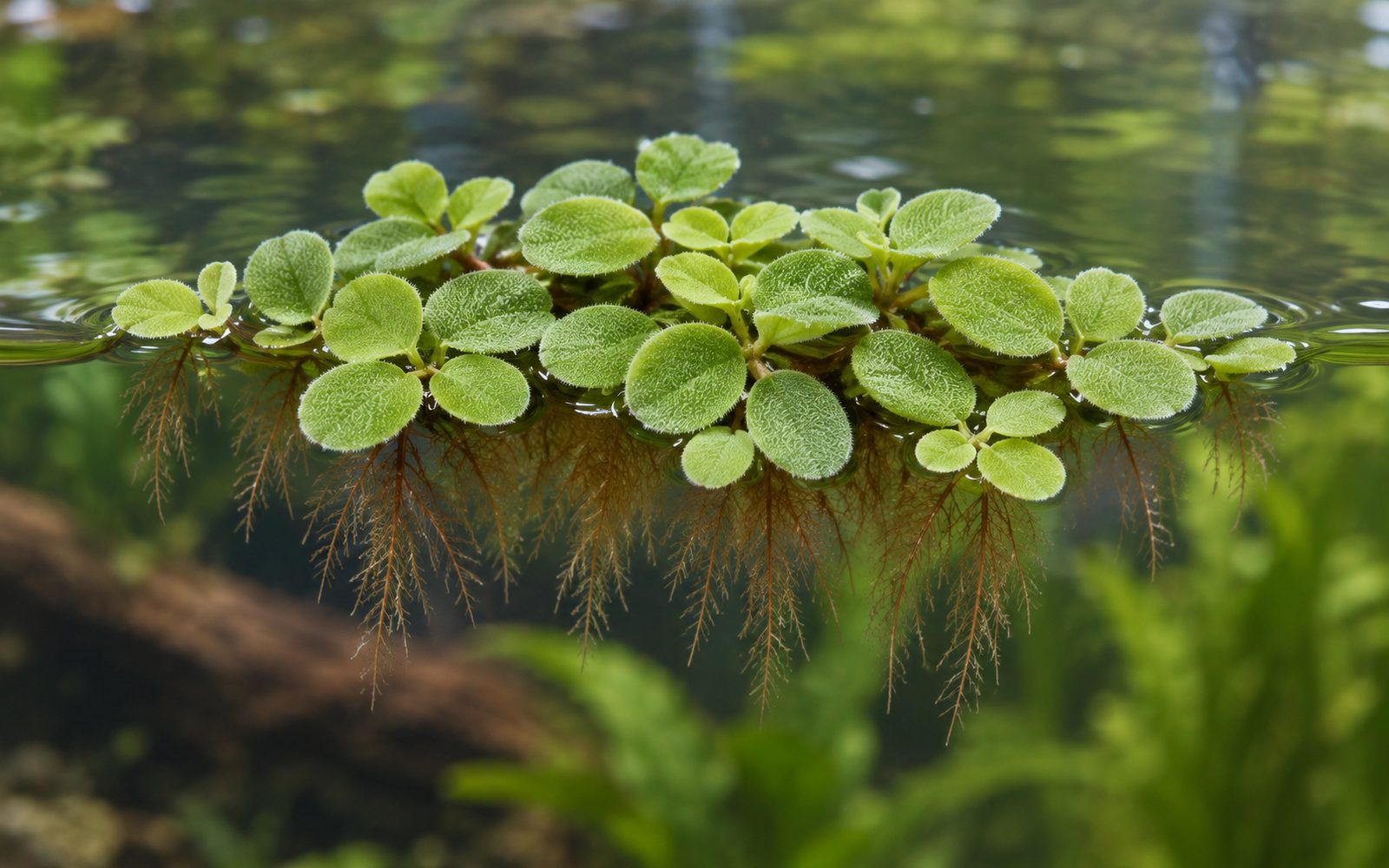
Salvinia minima is a small, rootless floating fern from Central and South America. Its nearly round leaves, 1–2 cm across, are covered on top with velvety hairs and repel water. It likes warm water and multiplies very fast in tropical aquariums. In the lakes and canals of the southern United States, where it has escaped into the wild, it has become an invasive plant that covers the surface; excess plants must never be thrown into natural waters.
Planting and Placement
It is not planted; it is placed on the surface. To keep part of the surface open, it can be confined with a floating ring.
Care and Fertilization
- Light: Moderate; condensation droplets under the lid can rot the leaves.
- CO₂: Not required.
- Fertilizer: Fish waste is usually enough.
- Remove the excess with a net once a week; do not let it cover more than half of the surface. It does not like strong surface flow.
Propagation
This section has not been written yet. How is it propagated?
Be the first to write it
Common Problems
This section has not been written yet. Problems such as melting, yellowing and algae, and how to fix them.
Be the first to write it
Hobbyist notes
Things you won't find in books, learned by trial and error. The most helpful ones are on top.
No notes yet. If you have experience with this species, leave the first note.
Was this page helpful?
Change history and contributors
- Page created · October 16, 2026