
Water parameters
Temperature24–30°C
pH5–7
General hardness (GH)1–6 dGH
Recommended range
Overview
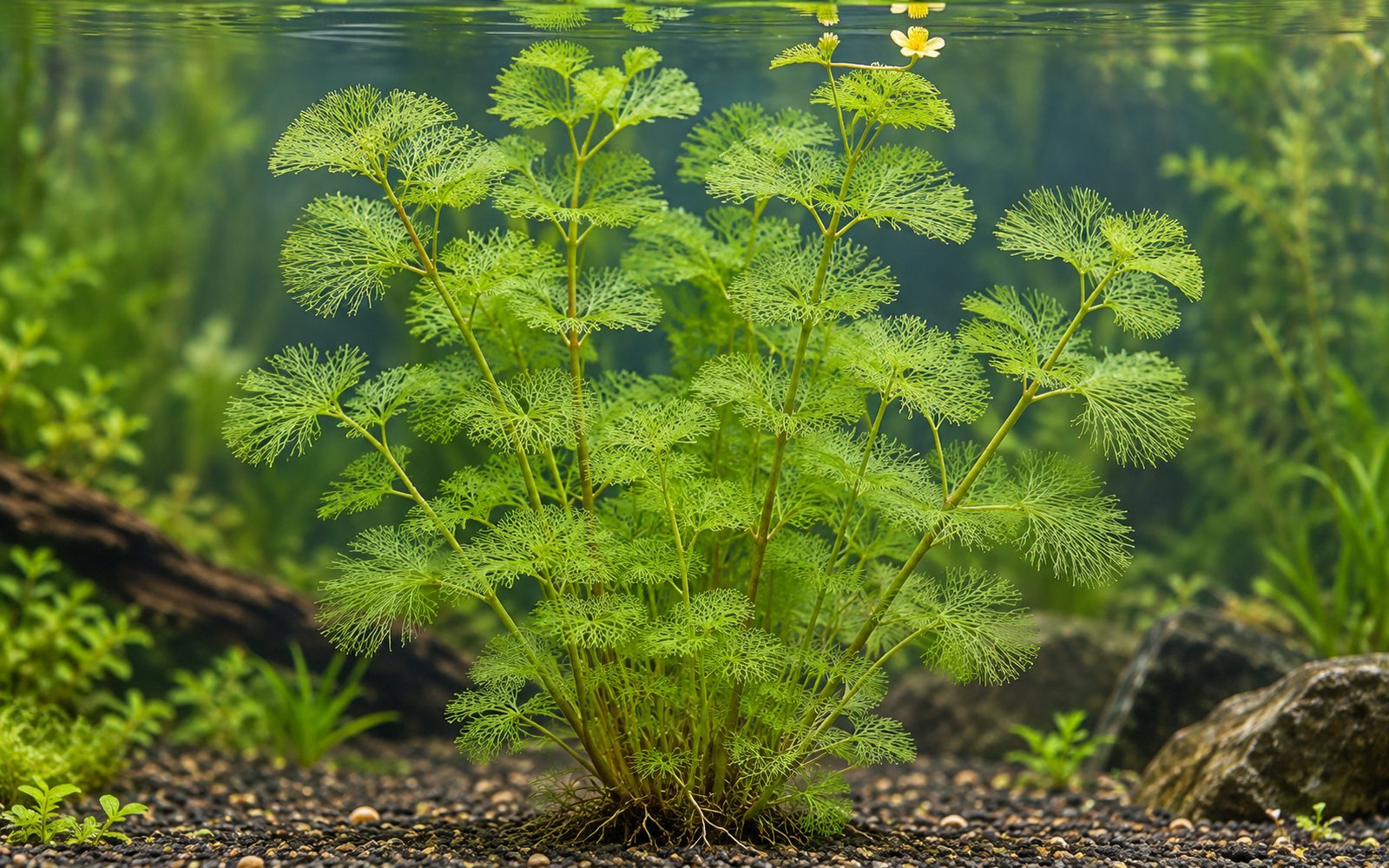
Cabomba aquatica is a cabomba from the warm, soft waters of the Amazon basin. Its leaves are much more finely divided and wider than those of green cabomba (C. caroliniana); each leaf pair forms a light green, lacy, round fan. When the stems reach the surface, it can produce small floating leaves and yellow flowers, whereas the flowers of other cabombas are white or purple. Despite its beauty, it is demanding: without warm, soft water, strong light, CO₂ and regular iron, it drops its lower leaves and falls apart.
Do not release it into the wild: Cabomba species can become invasive when they get into natural waters; trimmings should go in the trash.
Planting and Placement
- Stems are planted one by one with 4–5 cm between them, held gently with tweezers and buried 3–4 cm deep.
- It is placed in the background, in a spot that gets direct light and where the current is not strong.
Care and Fertilization
- Light: High.
- CO₂: Required.
- Water: Very soft (GH 1–6), acidic, warm water.
- Fertilizer: Regular iron and micronutrient supplementation.
- Trimming: Cut from the top and replanted; good filtration is needed so that debris does not cling to the fine leaves.
Propagation
This section has not been written yet. How is it propagated?
Be the first to write it
Common Problems
This section has not been written yet. Problems such as melting, yellowing and algae, and how to fix them.
Be the first to write it
Hobbyist notes
Things you won't find in books, learned by trial and error. The most helpful ones are on top.
No notes yet. If you have experience with this species, leave the first note.
Was this page helpful?
Change history and contributors
- Page created · October 16, 2026