
Water parameters
Temperature22–28°C
pH6–7.5
General hardness (GH)2–12 dGH
Recommended range
Overview
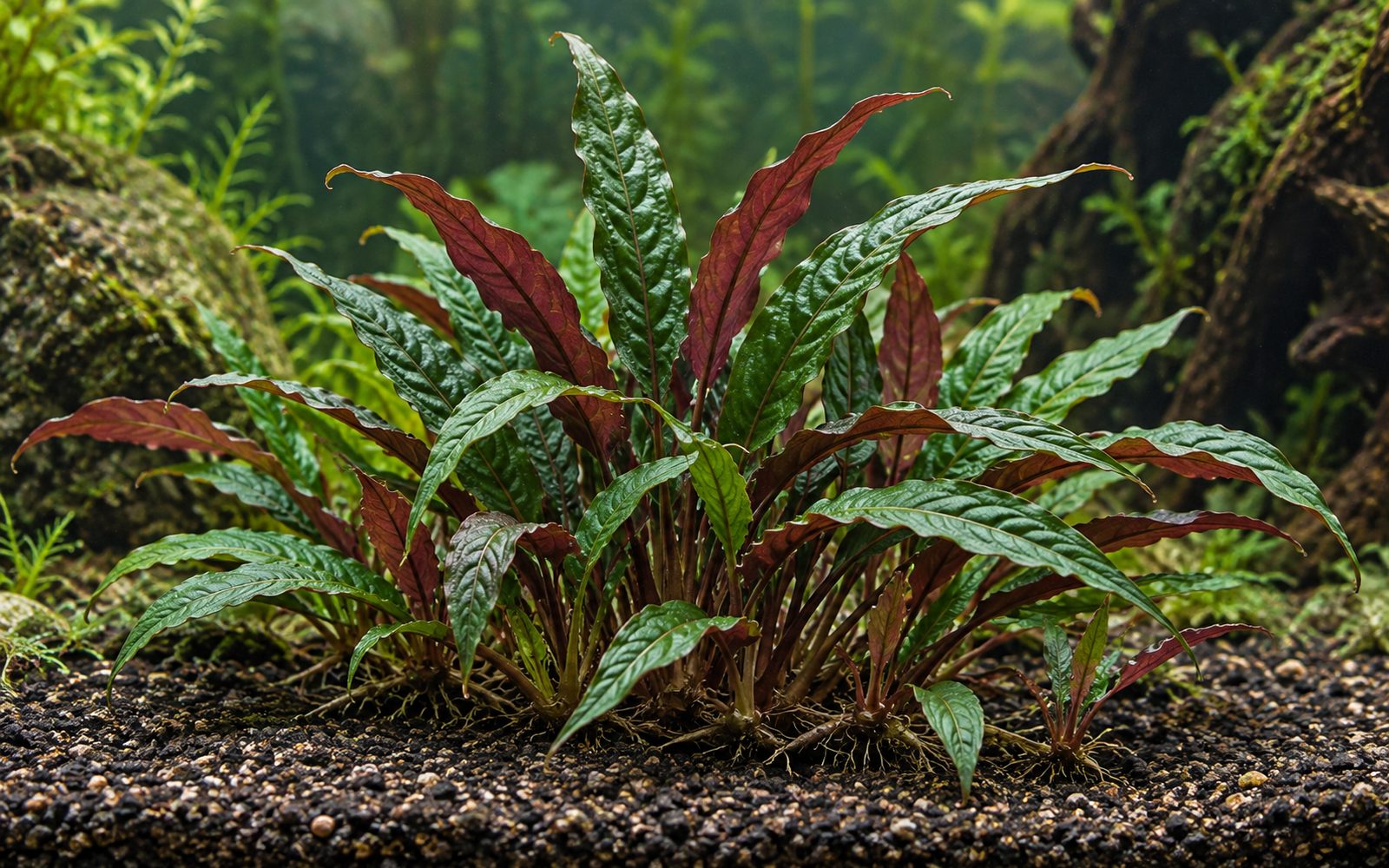
Cryptocoryne affinis is a common crypt in the rivers of the Malay Peninsula. Its lance-shaped leaves are dark, sometimes bluish green and slightly puckered on top, and a distinct wine red underneath. Its height is usually between 10 and 25 cm. Once established, it spreads quickly through underground runners and forms wide clumps that cover the midground; in this respect it is one of the "fast" crypts.
Planting and Placement
It is planted with the roots buried and the crown left exposed. Root tabs or a nutrient-rich substrate speed up growth. Because it tends to spread, leave space around it or regularly separate its runners.
Care and Fertilization
- Light: Low to medium; in low light the leaves grow longer.
- CO₂: Not required.
- Fertilizer: A root tab every 2–3 months.
- It does well in soft to moderately hard water. Sudden temperature differences during water changes can cause melting.
Propagation
This section has not been written yet. How is it propagated?
Be the first to write it
Common Problems
This section has not been written yet. Problems such as melting, yellowing and algae, and how to fix them.
Be the first to write it
Hobbyist notes
Things you won't find in books, learned by trial and error. The most helpful ones are on top.
No notes yet. If you have experience with this species, leave the first note.
Was this page helpful?
Change history and contributors
- Page created · October 16, 2026