
Water parameters
Overview
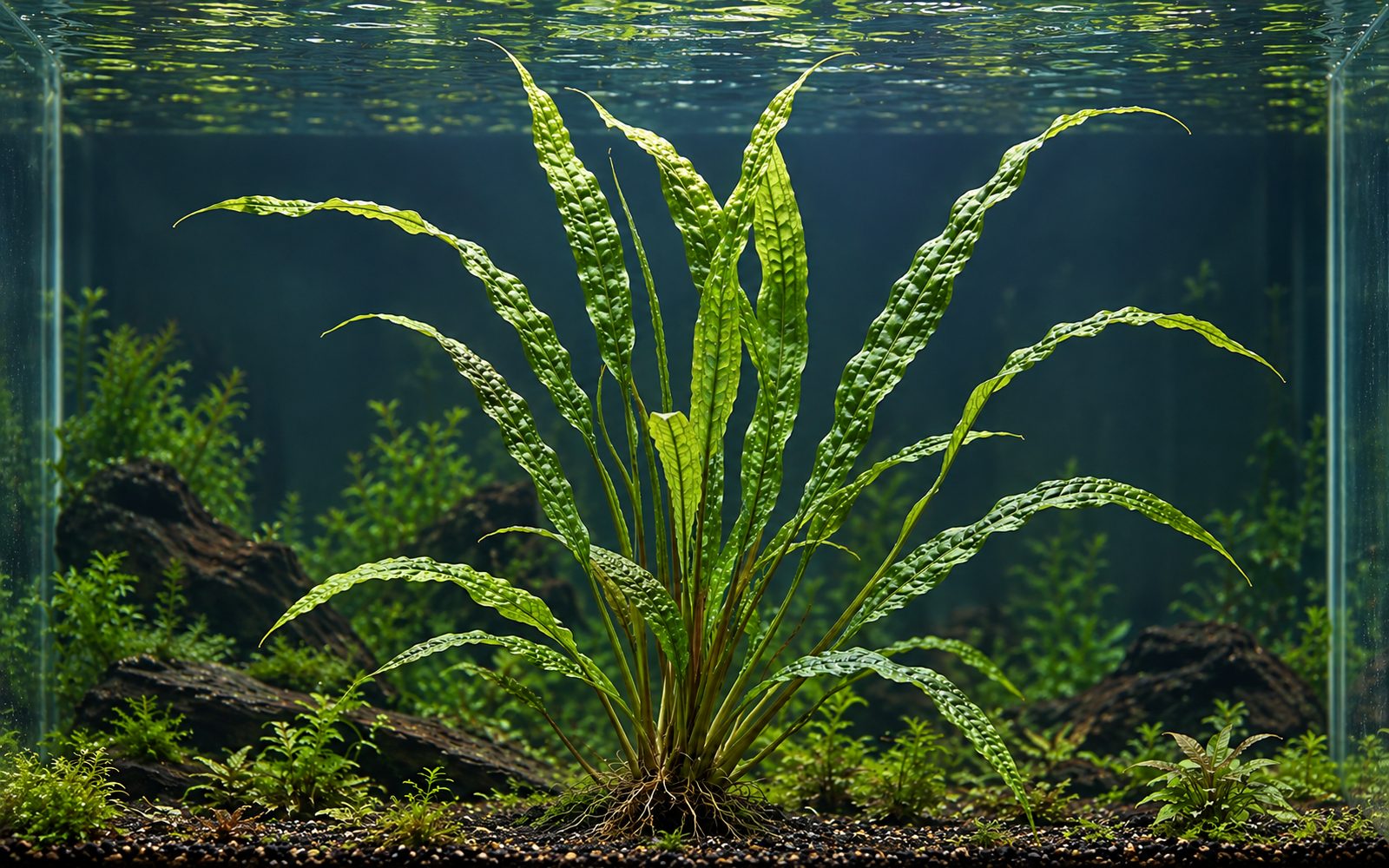
Cryptocoryne aponogetifolia comes from rivers in the limestone regions of the Philippines and is one of the largest crypt species. The surface of its long, ribbon-shaped leaves has a distinctly puckered, bubbly texture; its name comes from the resemblance of the leaves to some Aponogeton species. Under the right conditions the leaves can grow between 60 cm and 1 m long. It is distinguished from the very similar C. usteriana mainly by the structure of its flower.
Planting and Placement
It is planted with the roots buried deep and the crown left exposed. Its strong roots need at least 6–8 cm of substrate fed with root tabs. It is suitable only for the background of aquariums 60 cm tall or more.
Care and Fertilization
- Water: Wants hard, slightly alkaline water; in soft water the leaves stay small and the plant declines.
- Light: Medium.
- CO₂: Not required, but it supports growth.
- Fertilizer: A root tab once a month.
- It grows slowly and does not like being moved often; melting may occur after planting.
Propagation
Common Problems
Hobbyist notes
Things you won't find in books, learned by trial and error. The most helpful ones are on top.
Change history and contributors
- Page created · October 16, 2026