
Water parameters
Temperature22–28°C
pH5.5–7
General hardness (GH)1–8 dGH
Recommended range
Overview
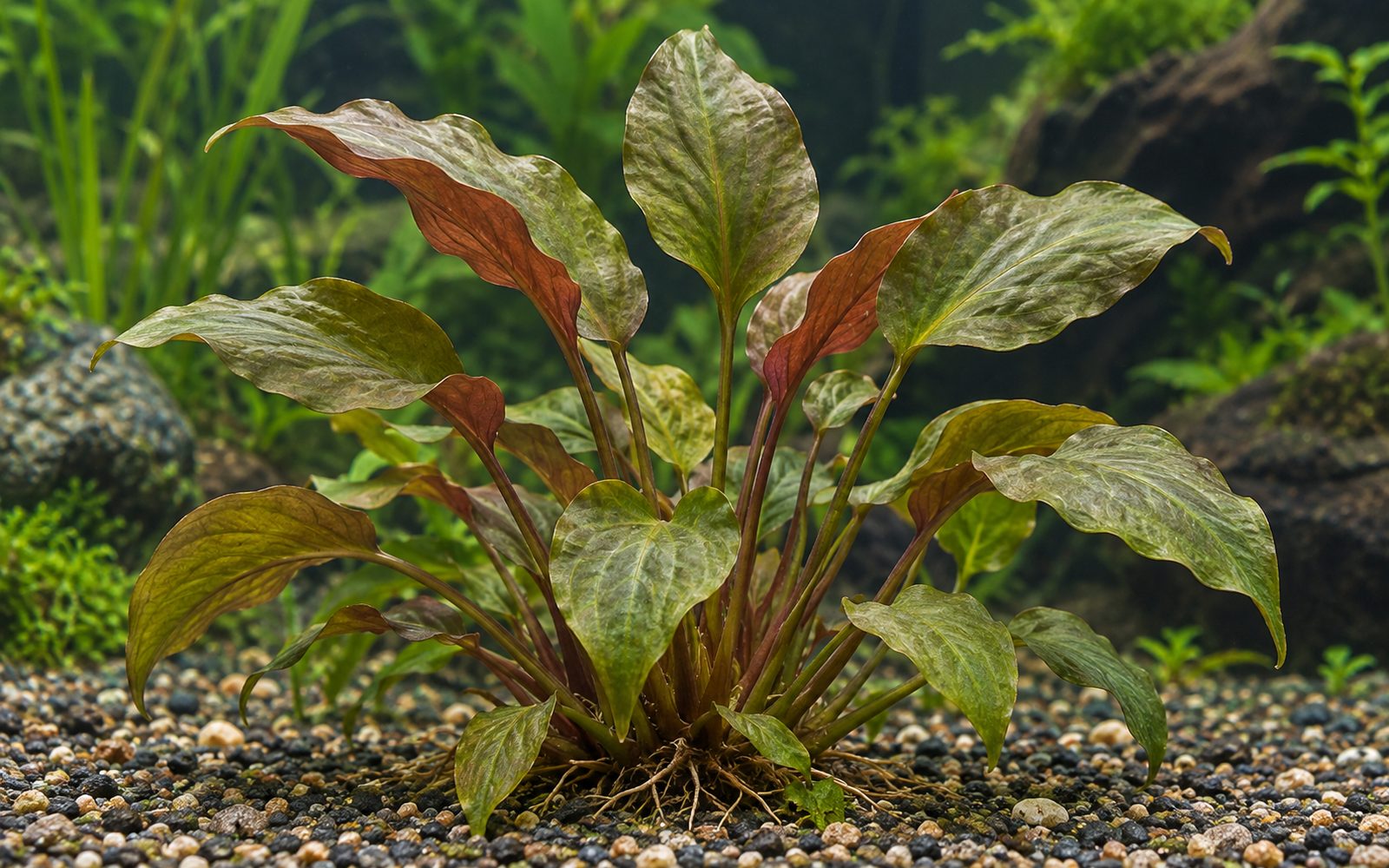
Cryptocoryne cordata is a widespread species living in the peaty, soft and acidic waters of Southeast Asia. Its leaves are oval or have a heart-shaped base; color and texture vary greatly from region to region: from plain green to bronze, to forms with a red underside. The famous "Rosanervig" form, whose veins look pink, is also attributed to the Thai variety of this species (var. siamensis).
Planting and Placement
It is planted with the roots buried and the crown left exposed. A nutrient-rich, slightly acidic substrate (aquasoil) is ideal. It is used in the midground alone or in small groups.
Care and Fertilization
- Water: Wants soft, slightly acidic water; above GH 8 and pH 7 it declines over the long term.
- Light: Medium.
- CO₂: Beneficial, and it also helps keep the pH low.
- Fertilizer: Root tabs are essential.
- It is sensitive to swings in water parameters; it is more prone to melting than other crypts.
Propagation
This section has not been written yet. How is it propagated?
Be the first to write it
Common Problems
This section has not been written yet. Problems such as melting, yellowing and algae, and how to fix them.
Be the first to write it
Hobbyist notes
Things you won't find in books, learned by trial and error. The most helpful ones are on top.
No notes yet. If you have experience with this species, leave the first note.
Was this page helpful?
Change history and contributors
- Page created · October 16, 2026